



Sensor solutions for cranes in intralogistics
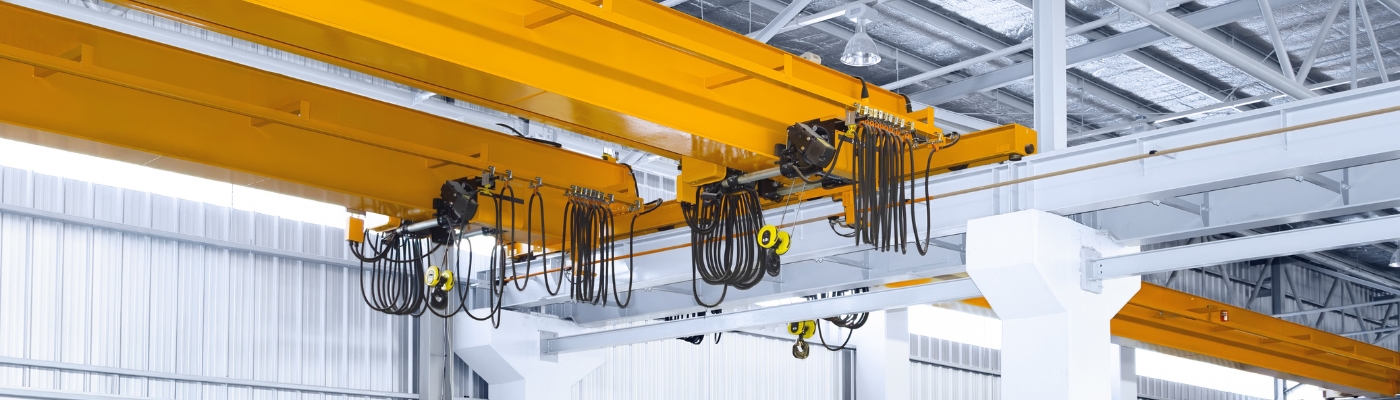
Conventional transport systems often have limited capabilities when it comes to moving very large or heavy goods. Industrial crane systems make it possible to automatically store or temporarily store such loads, transport them between different process stations, and load and unload them precisely.
Automated position detection and control of the crane help to accelerate transport processes and make production workflows more efficient. Depending on the crane design, it is also necessary to ensure that both sides of the crane move in sync. Another important aspect is the reliable transmission of control signals to the crane’s moving components.
In addition, the monitoring of travel movements and the detection of final positions are essential components of the control concept. Appropriate sensor solutions also support collision protection by detecting potential obstacles and helping to prevent damage to systems and transported goods.
Sensor technology for crane applications
Automated crane systems handle the loading, unloading, and temporary storage of goods, as well as transport between different process stations. Powerful sensor solutions play a key role in ensuring process reliability, productivity, and system availability. They ensure reliable data transmission, enable precise positioning of cranes and load receptacles, and help prevent collisions by monitoring transportation paths and movement areas. At the same time, appropriate sensor and safety solutions help protect people, systems, and transported goods.
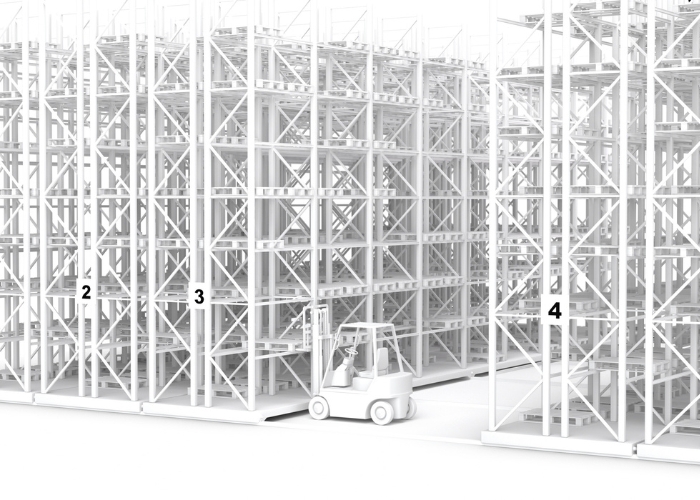
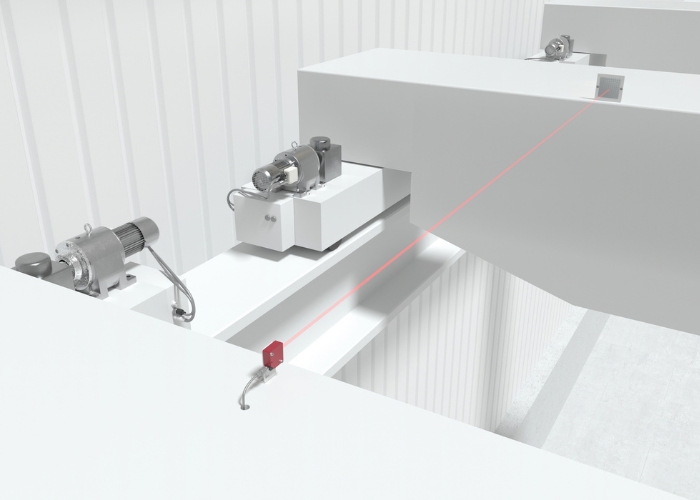
Click on the numbered applications to learn more about the respective sensor solutions.

Key applications for cranes
Collision-avoidance object detection, reliable transmission of control signals, and precise positioning of the crane's moving components are crucial for reliable and efficient crane operation.
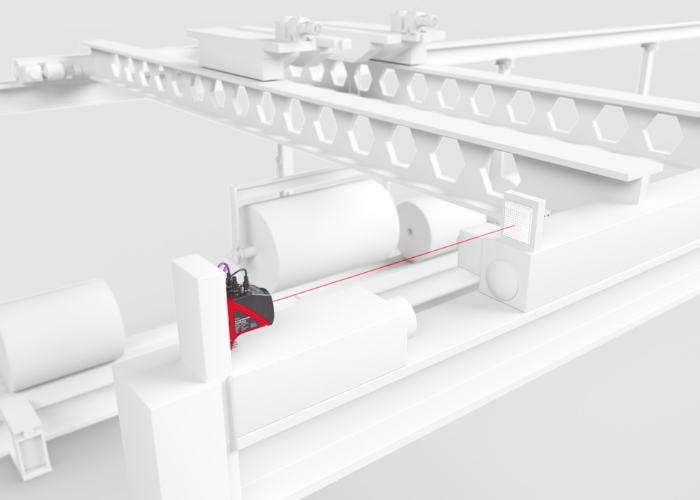
Detection applications for cranes
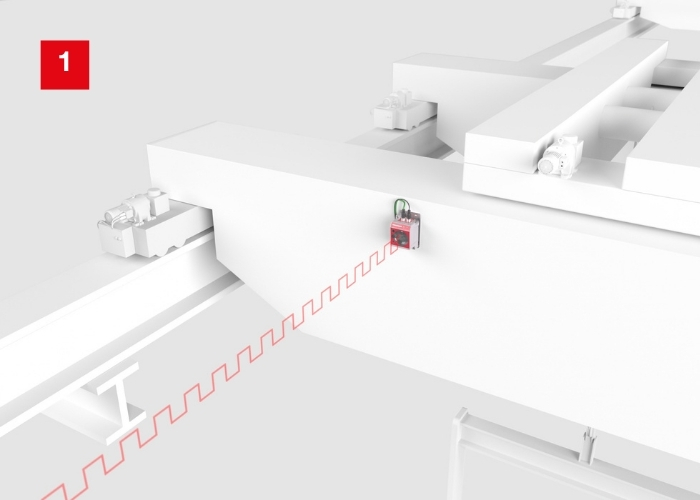
Optical data transmission up to 100 Mbit/s
Requirement:
From Ethernet-based fieldbuses such as PROFINET, EtherCAT and Ethernet TCP/IP, data should be transmitted wirelessly to the gantry crane or trolley at a transmission rate of up to 100 Mbit/s.
Solution:
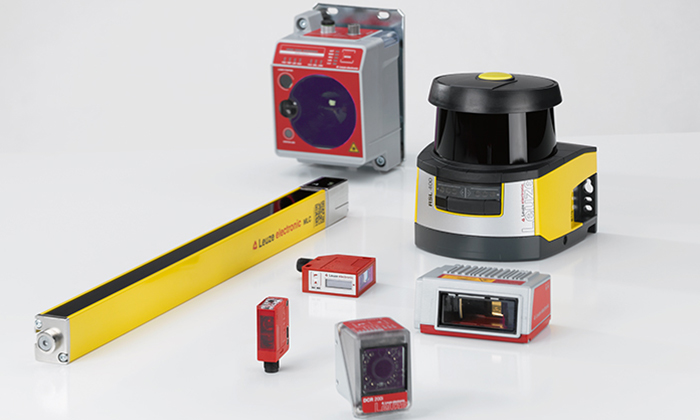
The DDLS 500 data transmission photoelectric sensor with industrial Ethernet interfaces transmits data at a rate of up to 100 Mbit/s. The alignment laser and the pre-mounted mounting plate make it particularly easy to align the devices, and the integrated web server ensures fast and location-independent remote diagnosis.
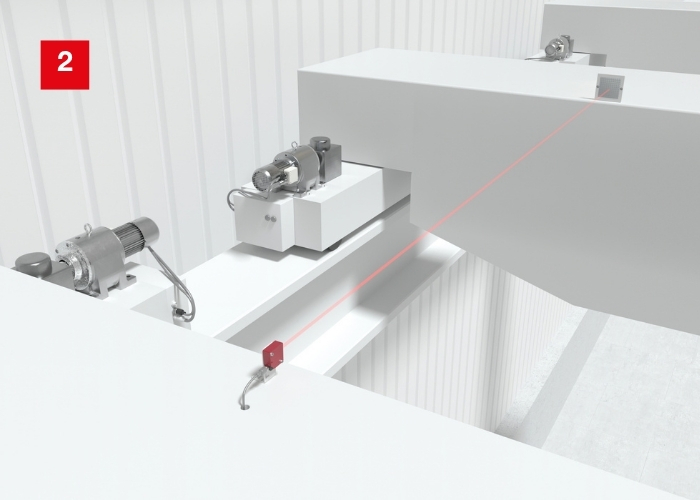
Collision protection / distance monitoring
Requirement:
If several cranes are working on the same guide rails, the distance between the cranes must be monitored.
Solution:
The ODS 10 / HT 10 optical distance sensors measure the distance between the individual cranes. Their operating range is up to 8 m when measuring any object and up to 25 m when measuring a cooperative reflector. The data is provided via an analog output or digital outputs.
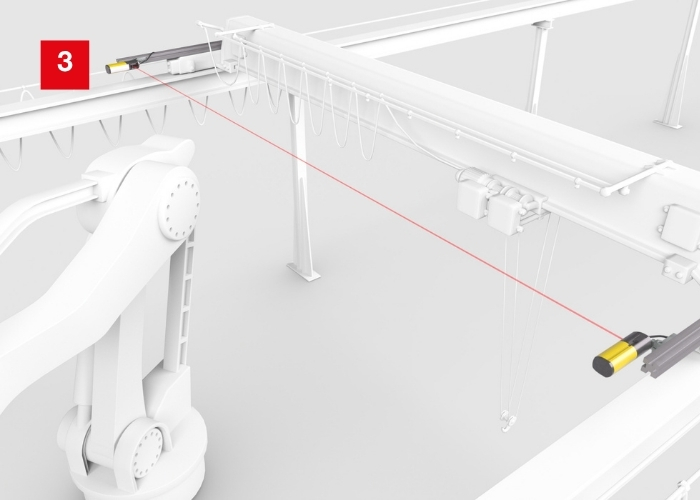
Collision protection to protect against damage
Requirement:
In order to safely protect the crane from an uncontrolled approach, a setup with safe components must be used to detect the approach and stop the drive.
Solution:
The compact SLS 46C single light beam safety devices are used together with the MSI-TR evaluation units for periodic testing. Testing is already built into the MLD 500 series optical safety sensors. They are used wherever there are no space restrictions or extremely large operating ranges are required.
Detection of the final position
Requirement:
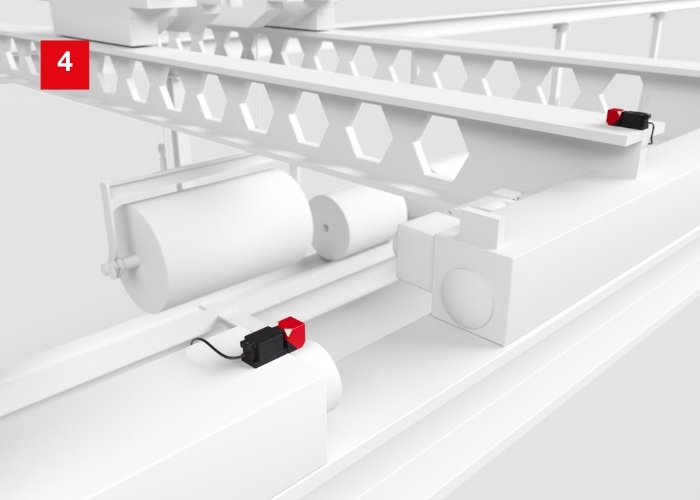
The final position of the crane or trolley should be detected.
Solution:
The IS 244 series inductive sensors detect the final position of the crane or the trolley. Thanks to their sensor field, which can be aligned in five directions, the devices can be mounted flexibly. Versions with M12 connector or comfortable terminal compartment are available for the connection.
Applications in crane positioning
Positioning with bar code positioning system
Requirement:
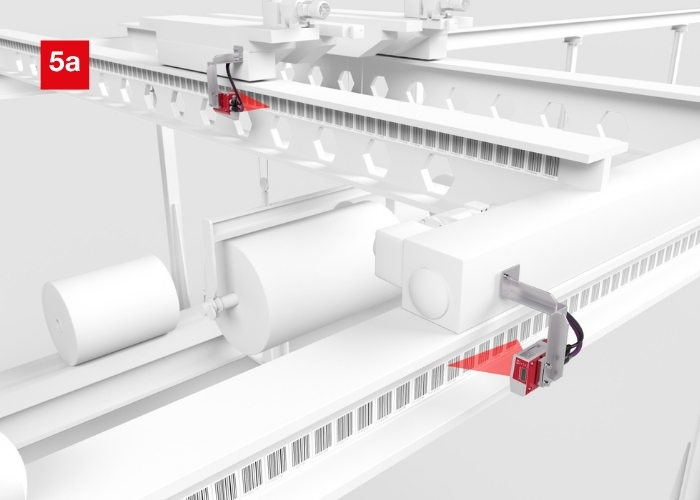
The crane or trolley must be positioned according to the position to be approached. Several cranes can be located on one guide rail.
Solution:
The compact BPS 300i bar code positioning systems enable exact positioning. The devices can be easily integrated into the control thanks to a wide range of interfaces. The self-adhesive bar code tapes are optimized for industrial application and are extremely durable.
Synchronous positioning of the gantry crane
Requirement:
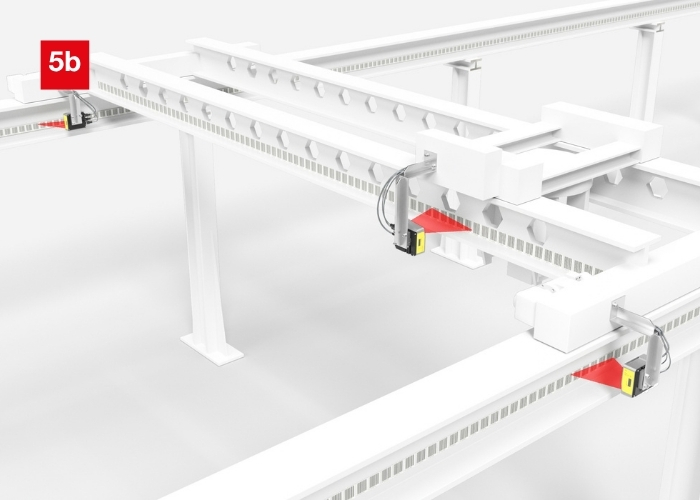
The gantry crane must be positioned in line with the point to be reached. Several cranes can be located on one guide rail.
Solution:
The BPS 300i bar code positioning systems or its safe version FBPS 600i enable exact positioning. The devices can be easily integrated into the control thanks to a wide range of interfaces. The self-adhesive bar code tapes are optimized for industrial application and are extremely resilient.
Positioning with laser positioning system
Requirement:
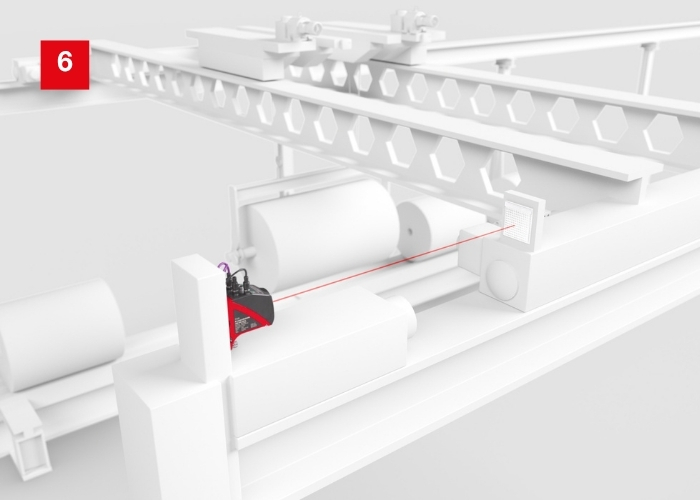
The crane or trolley must be positioned according to the position to be approached. It is not possible to attach a bar code tape for positioning.
Solution:
The AMS 300i laser positioning system quickly determines distances to moving system components with a high degree of absolute accuracy over a range of up to 300 m. The devices provide measurement values at millisecond intervals via a wide range of Industrial Ethernet and fieldbus interfaces for dynamic control applications.