






Sensor solutions for package formation
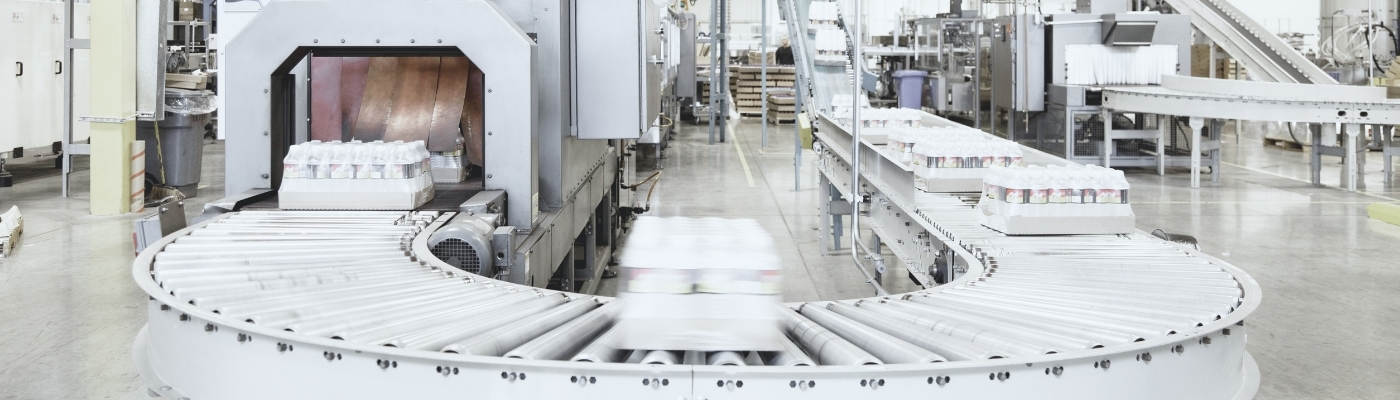
For package consolidation, multi-track accumulation sections are often used on conveyor systems, where groups of objects are collected accordingly and transported to downstream packaging processes. For the automatic combination and handling of products, grippers, conveyor systems, and machine components must be precisely coordinated with the number, size, and position of the objects.
Despite varying colors, surface structures, and irregular shapes, sensors must reliably detect the individual products and the consolidated packages with precise positioning and reliability. They thus contribute significantly to reliable product grouping, high process stability, and efficient further processing.
Sensor solutions along the package consolidation process
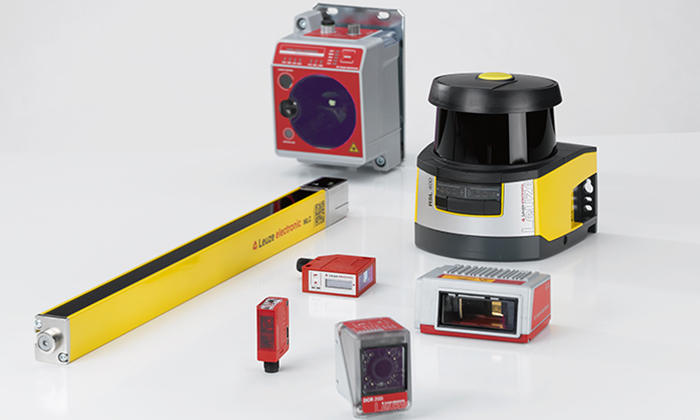
Specially optimized sensor solutions are available to meet the diverse package consolidation requirements. They enable the reliable detection of individual products and complete packages, support precise positioning, and provide additional measurement data for process and quality control.
In addition, object dimensions, stack heights, and volume data can be reliably captured. The information obtained supports downstream processes such as carton packaging, palletizing, or the creation of an accurate layer pattern. In addition, robust sensor and safety solutions ensure high system availability and the safe operation of the machines.
Click on the numbered applications to learn more about the respective sensor solutions.
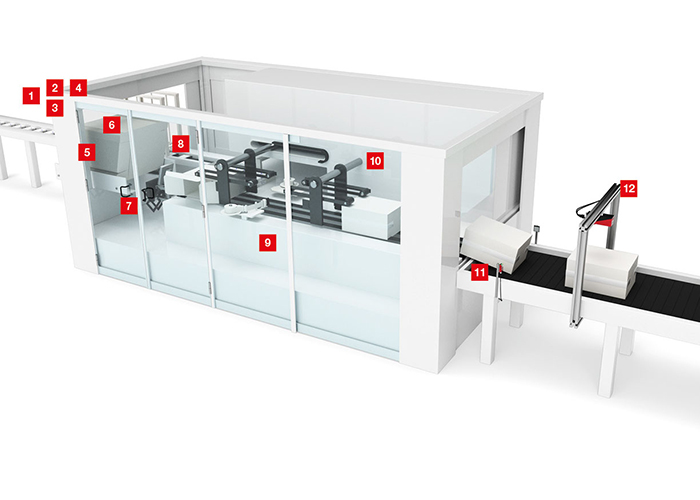
Application areas in package consolidation
Four key areas of application can be identified for package consolidation: the feeding of packaging materials, product grouping, quality control, and ensuring workplace safety.


Grouping applications
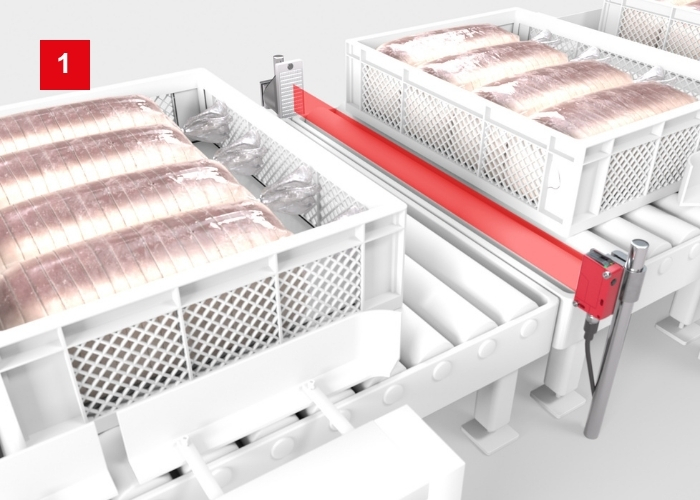
Detecting perforated objects
Requirement:
Food is transported in plastic baskets between individual process steps. Sensors with suitable light spot shape are required for reliable detection of the baskets. Small interruptions, different colors, surfaces or container heights must not impair detection.
Solution:
The RK46C.DXL VarOS light-band sensor reliably detects objects with a 45 mm wide light-band. Detection takes place at any point within the light-band. Irregular front edges or interrupted containers, e.g. baskets, are thereby reliably detected. Standard reflectors can be used on the opposite side.
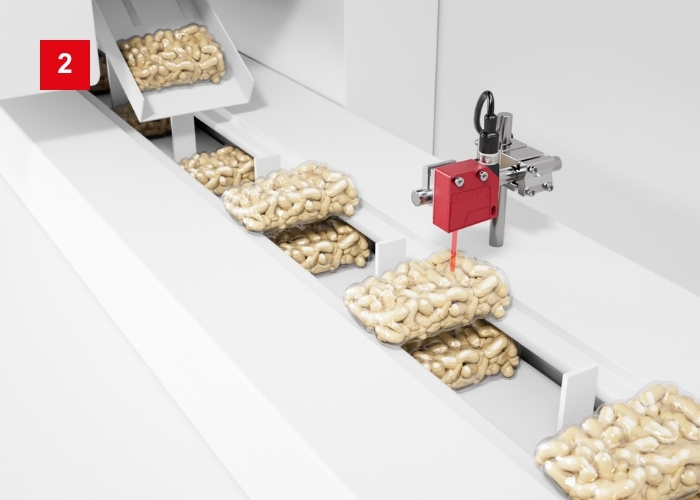
Combination monitoring
Requirement:
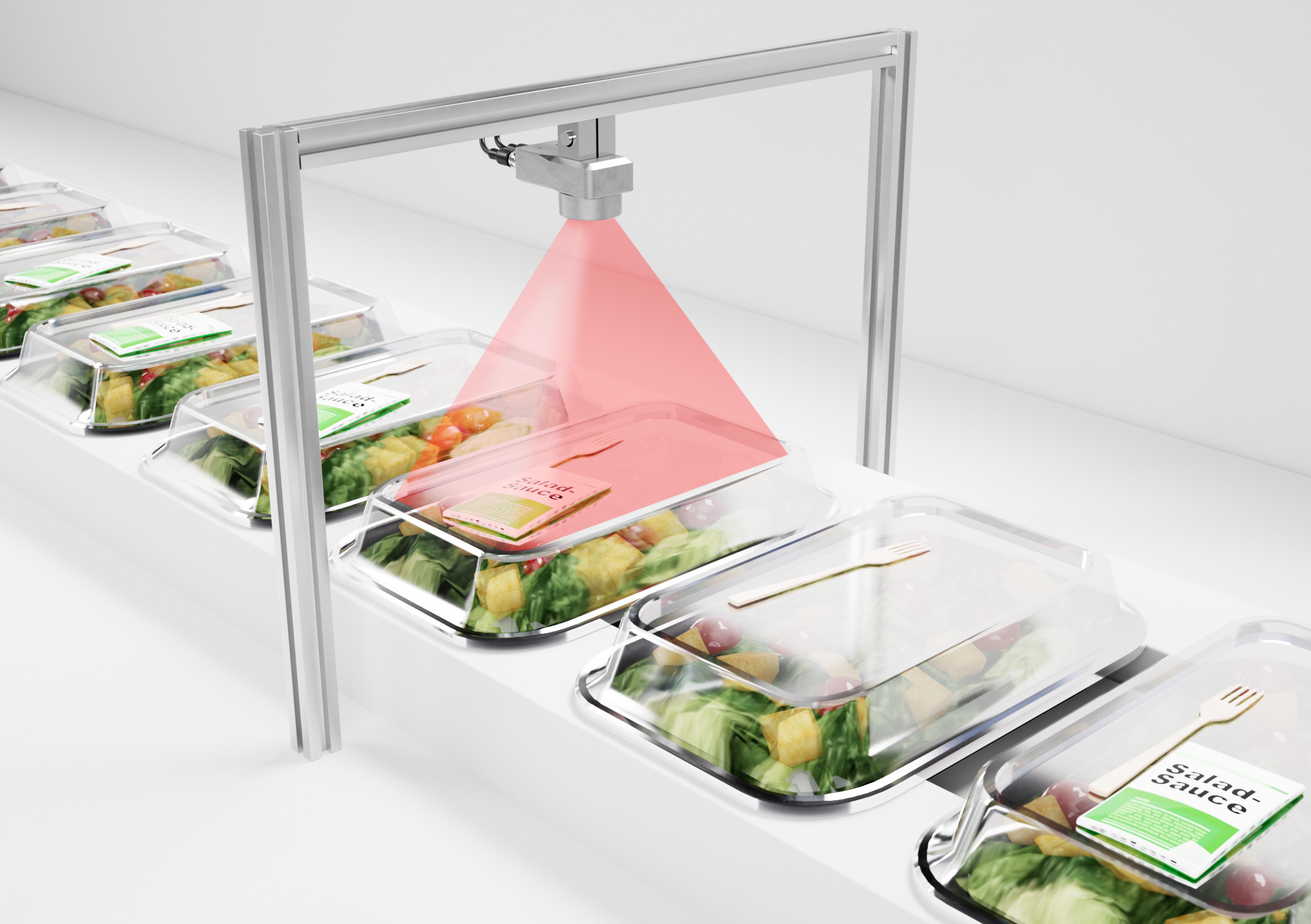
Several objects are to be combined and packed together in a secondary packaging. To prevent missing parts in the packages, the presence of the objects is to be checked.
Solution:
The ODS 9 measuring sensor provides distance values of objects on stacked tracks to the machine. By evaluating the difference in distance, objects that belong together can be detected.

Counting products
Requirement:
The produced (and primary-packaged) parts are transported via a chute to a collection bin or packages container. It must be monitored to check if the desired quantity has been reached. Monitoring must function reliably even when the parts have irregular shapes or shiny surfaces.
Solution:
The CSL 710 switching light curtains convince with their ease of configuration and large function reserves – even with extremely small parts. Various fastening materials enable optimum mechanical integration in the machine. For applications with IO-Link interface, measuring light curtains are available.
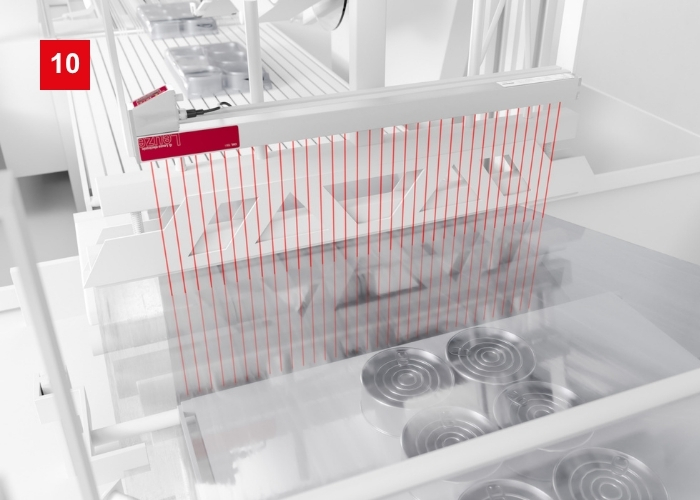
Detection of objects in film
Requirement:
Objects must be detected in a packaging film to avoid collision with the weld bar. The objects to be packed can have any shape.
Solution:
The CML 730i measuring light curtains are developed for the detection of objects in film. With the aid of the power setting, different packaging films can be transilluminated in one or more layers and the products inside can be detected.
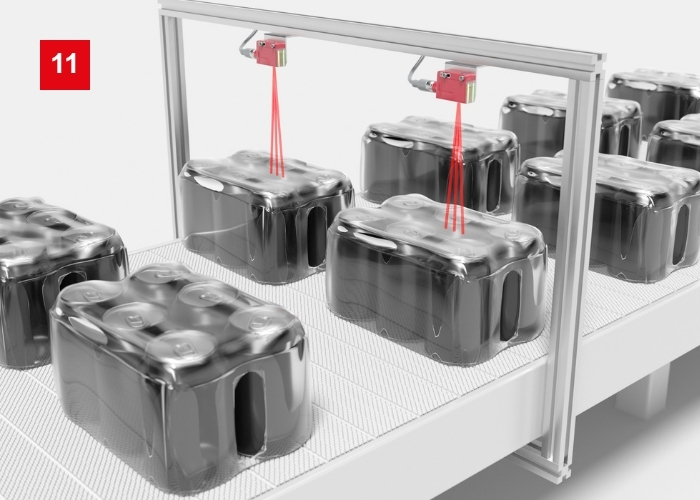
Detection of packages
Requirement:
If bottles and cans are shrink-wrapped into packages using film, or held together with cardboard clips, they must also be detected on multitrack conveyors. Different types of packages with transparent film or different (film) printing are to be reliably detected.
Solution:
The DRT 25C.R or DRT35C.R unit pack sensor uses the surface of the conveyor belt as a reference. As a result, it reliably detects the complete range of package types. Therefore, no adaptations to the sensor are necessary when changing products.
Alignment control
Requirement:
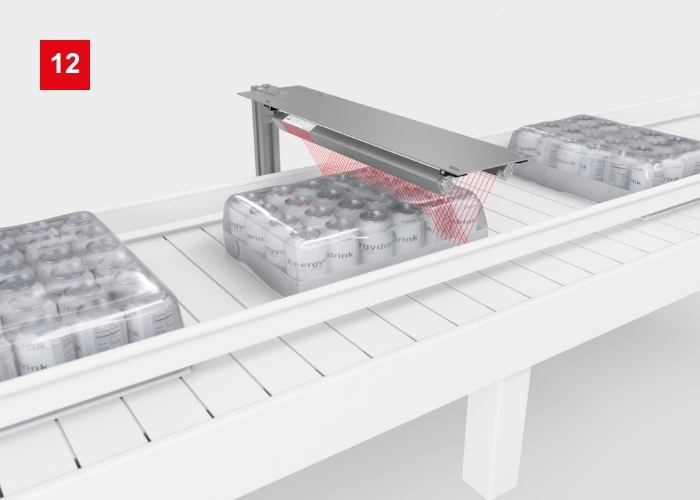
If packages of different widths are transported on a conveyor system, the alignment of the packages must be checked before palletizing. The sensors used for this purpose must reliably detect the full width of the packages and all possible variations.
Solution:
The CML 730i measuring light curtain in V-arrangement allows the width and completeness of packages to be evaluated from above. For this purpose, emitted light beams are reflected by the object onto the receiver. Various beam spacings and measurement lengths are available.
Applications for packaging materials
Stack positioning
Requirement:
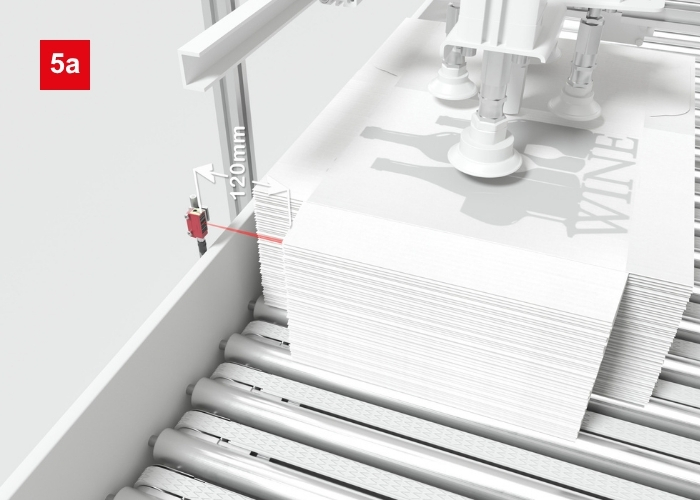
The pre-cut cartons prepared on a stack must be automatically removed from the stack, separated and then provided for the gluing and folding process. To ensure optimum performance of the downstream process steps, the carton stack must be positioned at a specific point on the conveyor belt.
Solution:
The compact ODT 3C distance diffuse sensor checks the presence of the carton stack with the switching sensor function. The exact position of the stack can be output with the measuring sensor function via the IO-Link interface.
Film supply and feeding
Requirement:
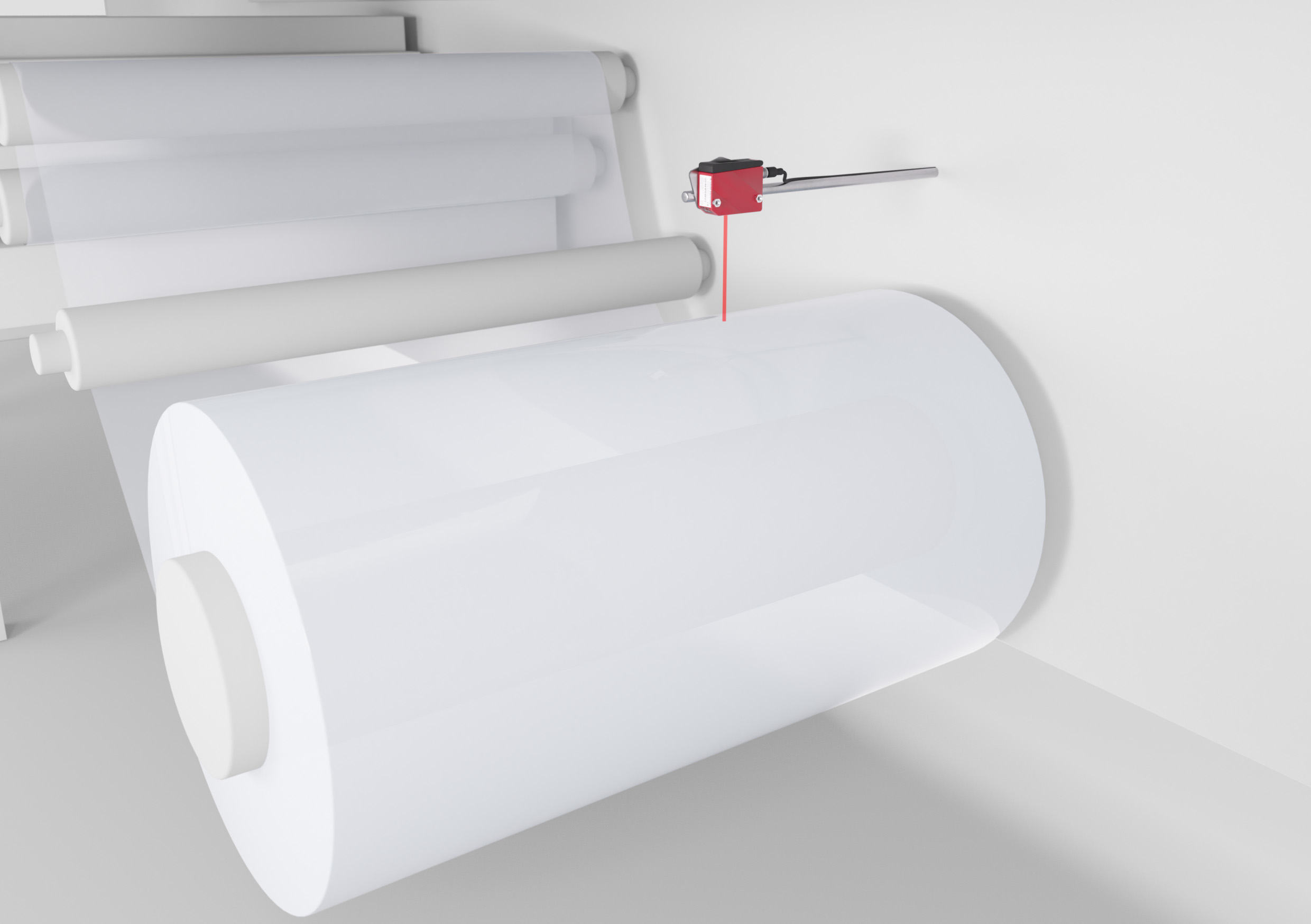
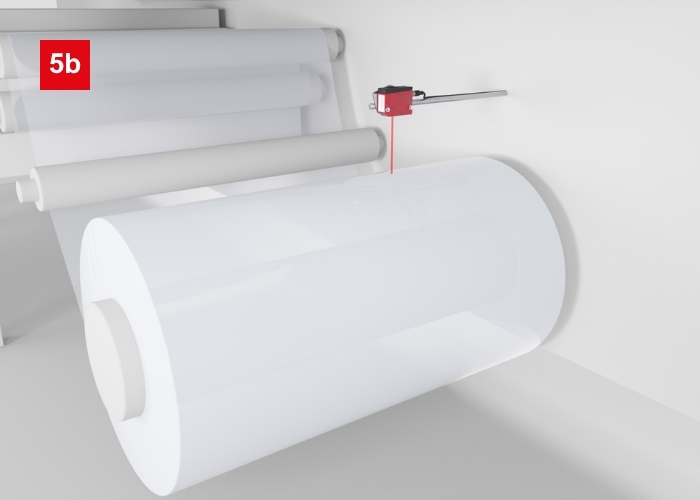
The wrapping or shrink film for packages is supplied in large rolls. To ensure uniform unrolling of the film, the axis is motor-driven. A sensor must permanently detect the diameter of the roll.
Solution:
The ODS 9 or ODS 96 measuring sensors send an analog signal proportional to the roll diameter to the control system. An alternative for diameter measurement are the DMU318 and DMU418 ultrasonic sensors. Distance sensors are available with different measurement ranges.
Detection of positions
Requirement:
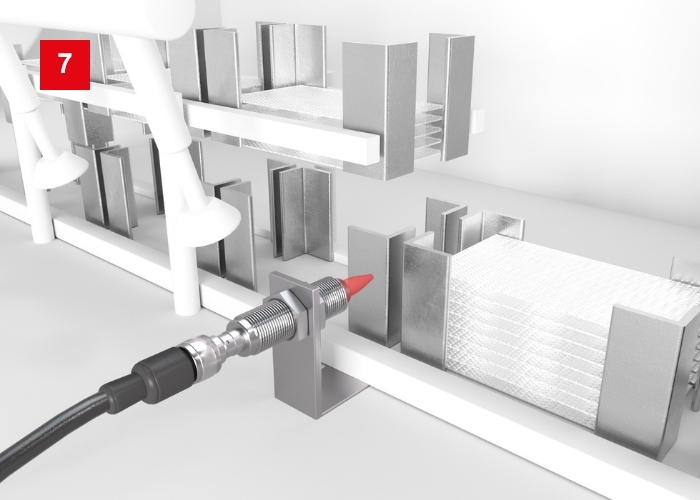
Primary packaging is often stacked and fed in magazines. The position of these magazines or feeder fingers must be detected to prevent collisions and to control the feed.
Solution:
Inductive sensors from the IS 288 or IS D08 series reliably detect the metal structures of the magazines with high positional accuracy. Their compact design and defined switching intervals makes them particularly well-suited for this application.
Quality control applications
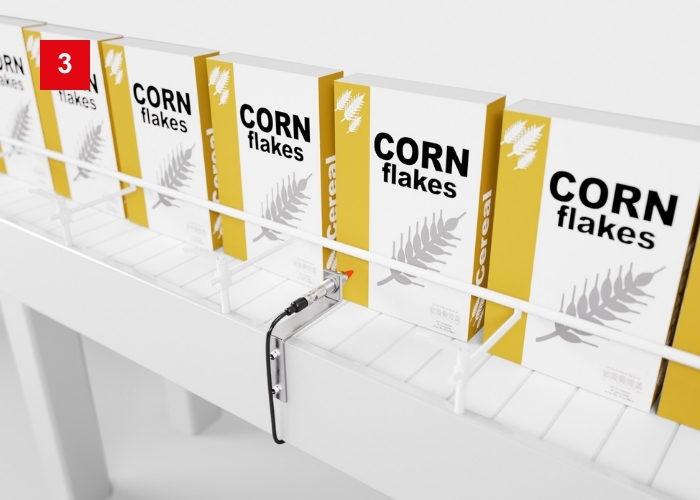
Checking content
Requirement:
It must be verified whether the carton has been filled as intended. Opaque packaging makes this a very challenging task, for which capacitive sensors are particularly well-suited.
Solution:
The LCS capacitive sensors check for content through the carton during single-lane transport. The cylindrical design of the sensors allows for space-saving integration.
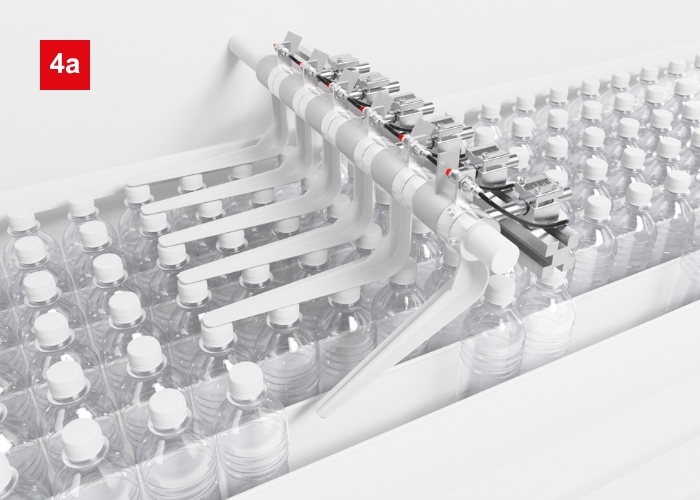
Aisle control for round objects
Requirement:
To ensure proper aisle control in the feed to the package formation area, gaps must be avoided. To this end, the containers are lined up in aisles and held back at appropriate points. Any gaps that occur must be detected and corrected via the conveyor control system.
Solution:
A simple solution is provided by mechanical brackets combined with sensors for end-position detection. Using metal brackets attached to the plastic brackets, the end position can be detected with an inductive sensor from the ISS 212 series in metal or stainless steel housings.
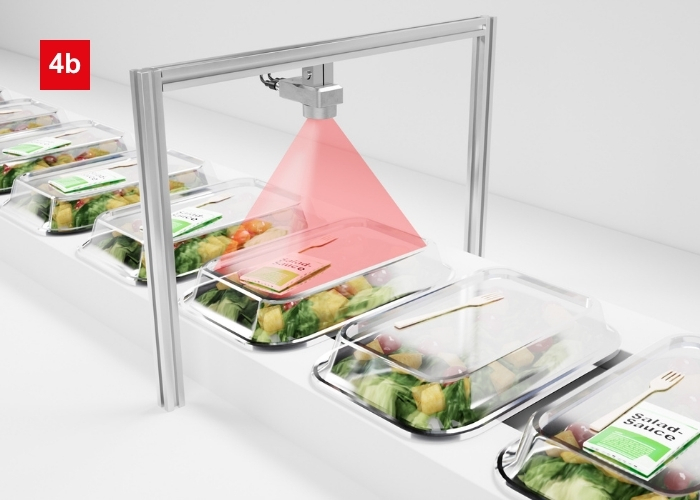
Monitoring completeness
Requirement:
In the feed system of a sealing machine, the completeness and the presence of multiple products can be detected. Incomplete packages are to be discharged.
Solution:
The IVS 108 Simple Vision sensor detects missing products via reference images or/and via pattern matching. The sensor can be quickly and easily adapted to various inspection tasks using integrated software tools.
Applications in occupational safety
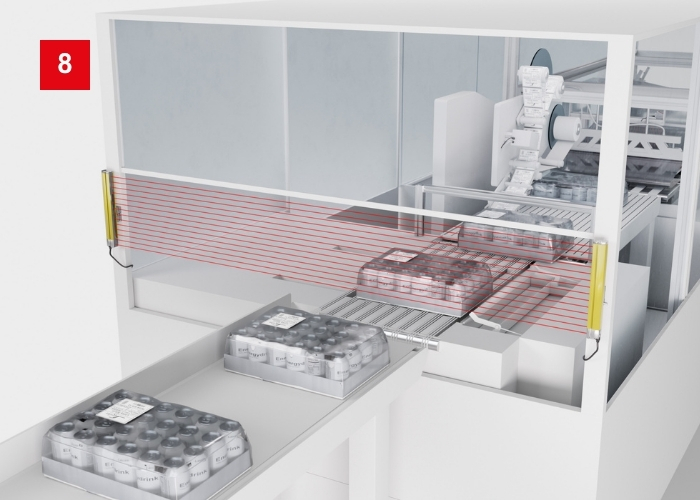
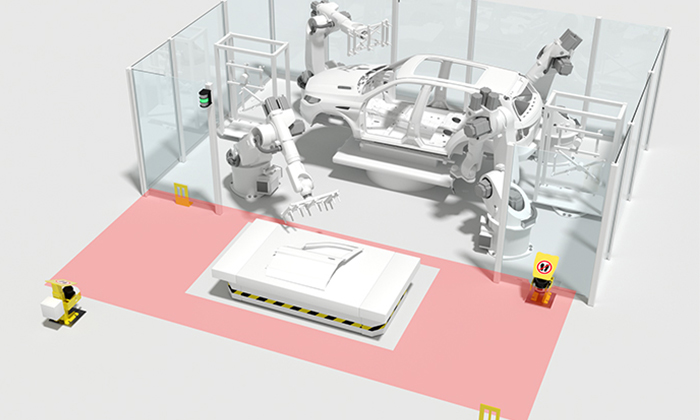
Safeguarding of points of operation in machines
Requirement:
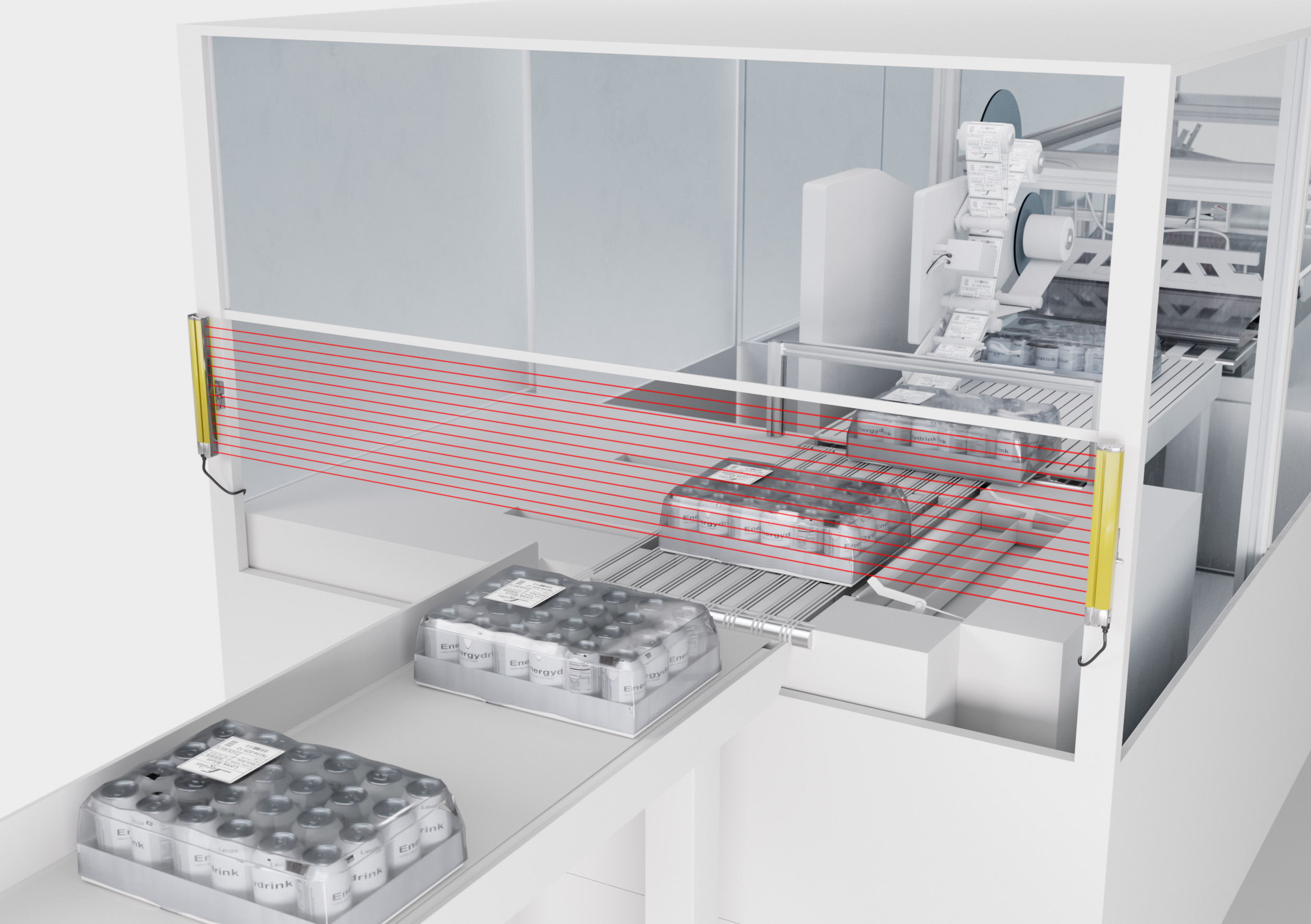
On packaging machines, openings are required at the machine infeed and outfeed. To prevent access to dangerous movements within the machine, the openings must be safeguarded mechanically or with optical safety sensors.
Solution:
The ELC 100 and MLC 500 safety light curtains with their wide selection of protective field lengths and resolutions offer the right solution for safeguarding points of operation. Here, the ELC 100 devices focus on a cost-efficient machine design. The extensive MLC 500 series is also suitable for special application cases.
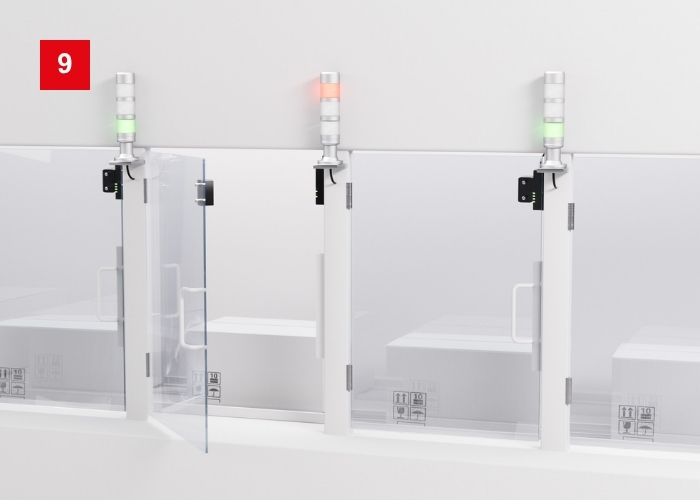
Monitoring of protective doors
Requirement:
For access to individual machine areas, machines are equipped with doors and flaps, e.g. to allow magazines to be changed or areas to be cleaned. While the machine is in operation, these doors and flaps must remain closed and monitored for safety.
Solution:
The RD 800 safety proximity sensors monitor doors and flaps and with their RFID-coded actuators provide maximum protection against tampering. Thanks to protection class IP 69K and an operating temperature up to 70°C, the devices can be used for a wide variety of applications. OSSD outputs and performance level PL e ensure easy integration. The TL305 tower lights clearly display the status.
Other topics in the packaging industry

Frequently asked questions about package consolidation
In many cases, individual objects are quite small and come grouped into pre-counted units of four, six, or more products for transportation purposes. Consolidating products into packages makes them easier to handle, transport, and store. The additional packaging ensures that the individual objects are held together securely and supports a smooth flow of materials.
Sensors support various process steps in package consolidation. These include identifying individual products, checking product spacing, monitoring groupings, and detecting completed packages. This enables products to be reliably combined and supports subsequent packaging processes.
In packaging systems, products often differ in terms of color, surface structure, or shape. Nevertheless, sensors must reliably detect these objects and precisely determine their position. This lays the foundation for safe grouping and precise handoff to downstream processes.
Before they are wrapped in film or placed in boxes, it must be ensured that all intended products are present. Sensor systems can be used for this purpose to check the number, position, or arrangement of the objects. This allows for the early detection and removal of missing packages.
Sensors collect information about the size, position, or volume of cases and packages. This data can be used to support downstream processes such as boxing, film wrapping, or palletizing. This enables efficient material flow and handling.