






53C/ 55C series
TOF technology meets hygiene: laser distance diffuse sensors for demanding applications
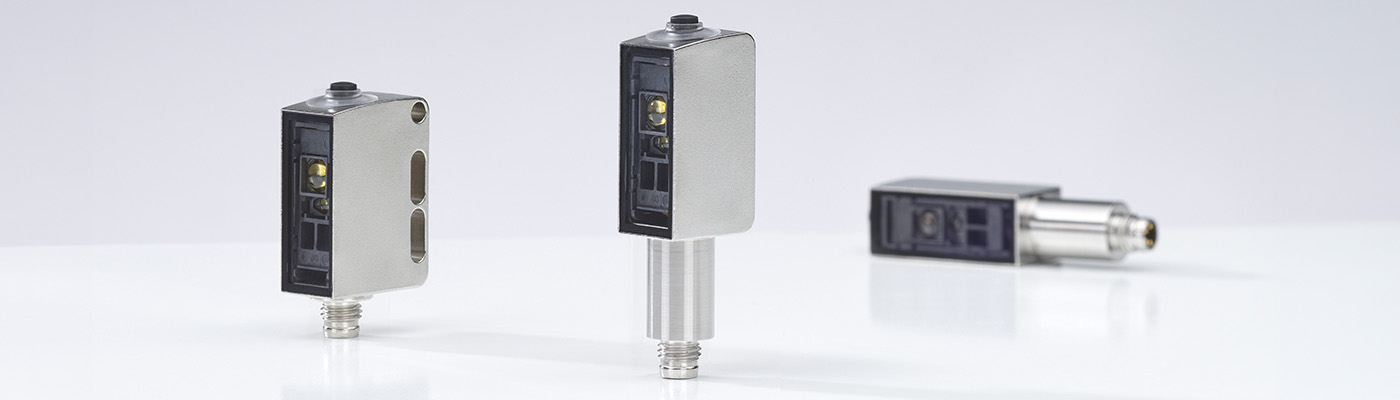
The ODT 5xCL1-2M diffuse sensors have been developed for applications in demanding environments where the presence of objects is to be detected and measurement values are to be output via IO-Link over long distances. The laser sensors with background suppression work reliably with TOF (Time of Flight) technology, even with difficult objects and surfaces, and achieve operating ranges of two meters. Application solutions can be redesigned on this basis.
The switching sensors in a stainless steel housing with measurement value output have two independent switching points and can be used for a wide range of applications: In the pharmaceutical industry, the sensor is ideally suited to provide a solution that meets the requirements of the EU GMP Directive Volume 4, Annex 1 (see white paper). Typical fields of application are presence inspection, positioning and quality control.
The 53C / 55C series includes compact photoelectric sensors and diffuse sensors with long operating ranges, precise switching behavior and large function reserves in FDA-compliant stainless steel housings in numerous variants. The 53C series sensors in hygienic design and 55C in wash-down design have been specially developed for applications with increased hygiene and robustness requirements. The ODT 53CL1-2M and ODT 55CL1-2M laser diffuse sensors expand our range of distance sensors for long operating ranges.
Other applications for the 55C series stainless steel sensors include the automotive industry, wood processing, and any other applications that require robust housings.
Advantages for you
- For OEMs: New placement options thanks to long operating ranges (detecting over 2 m) and precise detection with ToF technology as well as compact housing for use in confined spaces
- For operating companies: Makes compliance with GMP directive’s sterilization requirements easier and more cost-effective
- High-quality V4A (AISI 316L, FDA compliant) stainless steel housing with smooth surface and glass-free optics cover made of PMMA+ with special scratch-resistant coating to prevent bacterial carryover
- 2in1 sensor: The detection and output of measurement values using just one sensor saves time and money during procurement, installation, commissioning and operation
Go directly to the item selection series 53C
Go directly to the item selection series 55C
Highlights
- Well-thought-out solution for hygiene-sensitive areas
- Optical distance diffuse sensors in wash-down and hygienic design
- Cables and wires for hygiene applications
- Lateral mounting possible thanks to long operating range for compliance with the GMP directive
Application
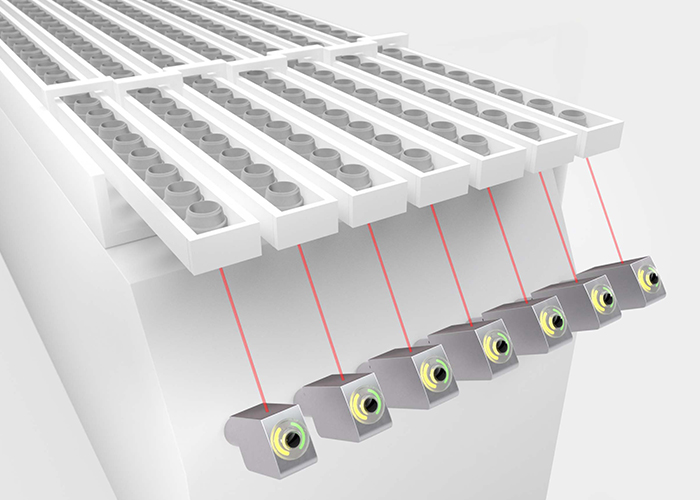
Pharmaceutical industry: Detection of stopper plugs on the stopper plug conveyor
Requirement:
Under the current EU GMP Directive (Volume 4, Annex 1) for pharmaceutical production plants, components that interrupt the ‘first air’ must be sterilized. This means reflectors should, where possible, no longer be installed above the stopper plug’s path. Since the stopper plugs come in different colors, it is particularly important to ensure that dark materials are detected.
Solution:
The operating range of diffuse sensors using the triangulation principle in a similar design is not sufficient to reliably detect dark plugs. The ToF laser scanners with an operating range of up to 2 m and reliable detection of all colors can replace retro-reflective photoelectric sensors at these points as well as the reflector above the conveyor belt.
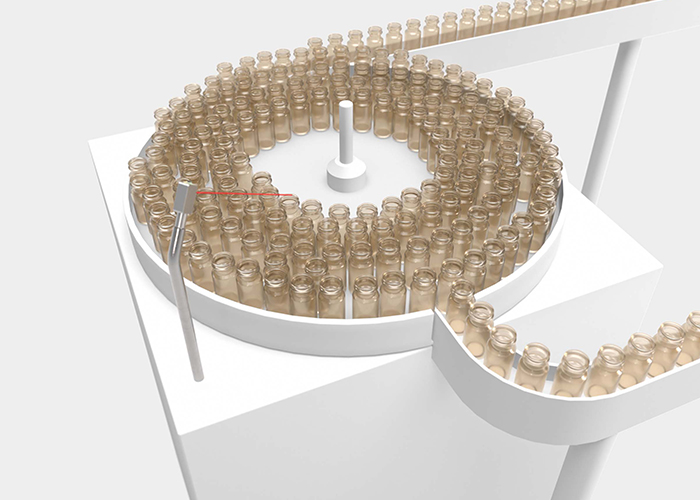
Food/packaging industry: Detection of vials and glasses
Requirement:
Under the current EU GMP Directive (Volume 4, Annex 1) for pharmaceutical production, components that interrupt the ‘first air’ must be sterilized. This means sensors should, where possible, no longer be installed above the infeed of e.g. vials. Transparent containers must also be detected reliably.
Solution:
For lateral alignment, the operating range of standard triangulation-based laser sensors in a similar design is insufficient. The ToF laser scanners with an operating range of up to 2 m and reliable detection of all colors, even at awkward angles, replace previous solutions without reflectors or solutions from above. They reliably detect the edges of the vials.
Further applications for robust sensors
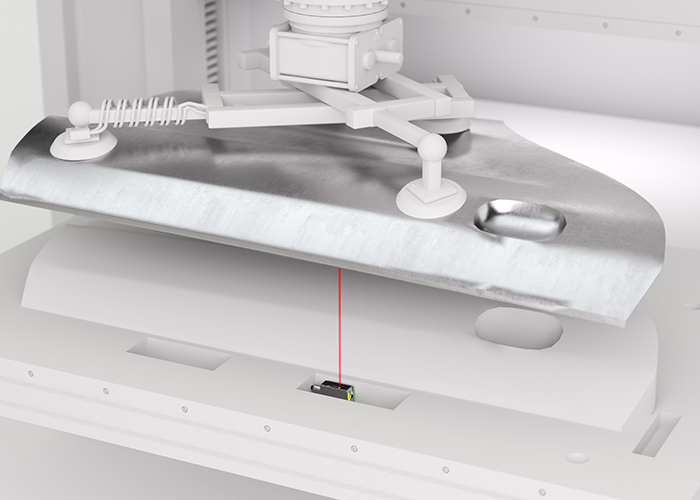 | Reliable object detection in confined spaces, even with strong vibrationsRequirement:In metal processing, e.g. in the press shop, the circuit boards or body parts must be reliably detected before, during and after the press process. The sensors need to operate reliably regardless of color and surface due to variations in material and angle. The process also involves severe shocks and vibrations, which must not affect detection. Solution: The ToF laser scanners ODT 55CL1 with an operating range of up to 2 m in miniature format are ideal for these conditions because this technology is insensitive to vibrations and still enables reliable detection of all colors, even at awkward angles. |
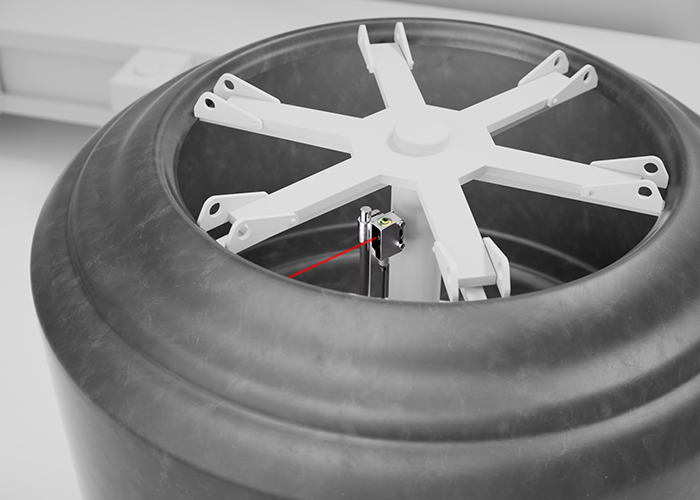 | Presence detection of very dark objects in confined spacesRequirement:During tire production and the tread press, the raw tires must be reliably identified, regardless of their color and surface. Regular cleaning cycles are required due to the high level of contamination in the process. Sensor placement is only possible in very confined spaces, and the process involves vibrations and significant temperature fluctuations. Solution: Even very dark and textured objects are reliably detected with the ODT 55CL1 laser scanners (with ToF technology) in miniature format with an operating range of up to 2 m. The large working range, starting at just a few centimeters, allows use in a wide variety of applications. The sensor’s stainless steel housing makes it ideally suited for cleaning cycles. |
Technical features
|
Feature |
ODT 53CL1-2M |
ODT 55CL1-2M |
|
Operating principle |
Diffuse sensors with background suppression |
Diffuse sensors with background suppression |
Housing design and dimensions (W x H x D) | Hygienic design (14.0 x 35.4 x 20.4 mm) | Wash-down design (14.0 x 35.4 x 25.0 mm) |
|
Housing material |
Stainless steel V4A (AISI 316L) with FDA approval |
Stainless steel V4A (AISI 316L) with FDA approval |
Operating range | 2,000 mm | 2,000 mm |
|
Light source |
Laser, red (laser class 1) |
Laser, red (laser class 1) |
|
Switching frequency |
7–15 Hz, depending on diffuse reflectance |
7–15 Hz, depending on diffuse reflectance |
|
IO-Link |
V1.1 (COM3) |
V1.1 (COM3) |
Switching output | IO-Link variants: | IO-Link variants: |
|
Operation |
Teach button / IO-Link only |
Teach button |
Protection class | IP 67 / IP69K | IP 67 / IP69K |
|
Temperature range Operation |
-30 – +50°C |
-30 – +50°C |
|
Certifications |
CE, UL, ECOLAB, CleanProof+, JohnsonDiversey |
CE, UL, ECOLAB, Clean-Proof+, JohnsonDiversey |
|
Connection |
M8 |
M12 / pigtail M12 / cable |
Download White Paper
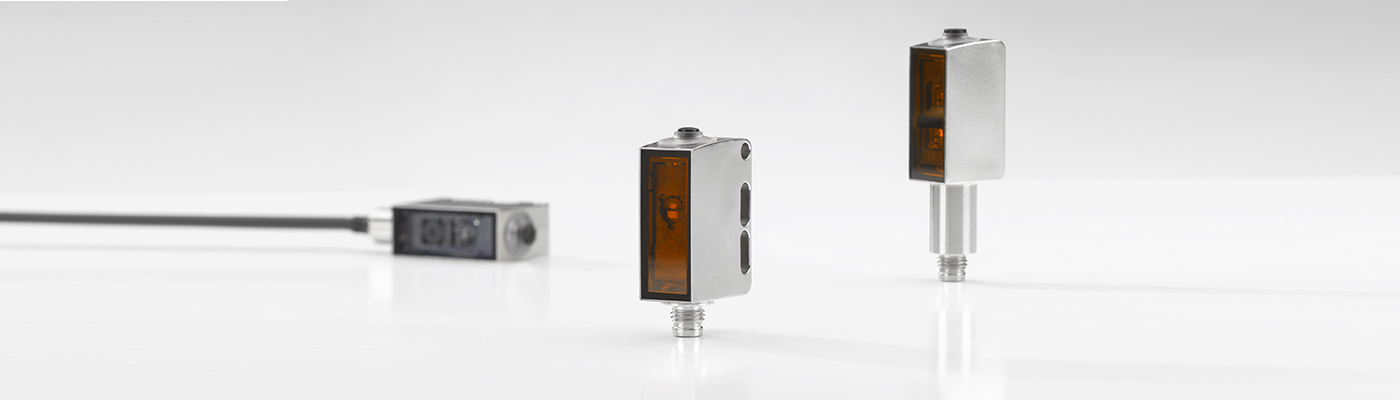
53C and 55C series: Sensor portfolio for hygiene-sensitive production processes
Two stainless steel series in a miniature housing for detection tasks in production and packaging processes
When processing, filling or packaging food or pharmaceutical products, very strict requirements apply with regard to the hygiene and cleaning of the systems.
Not only the production systems, but also electronic components such as sensors, must withstand regular intensive cleaning and disinfection cycles with sometimes aggressive cleaning agents. In particular, the use of sensors with a hygienic design in accordance with the DIN EN 1672-2 standard (“Food processing machinery – Basic concepts – General design principles”) is recommended for applications involving direct contact with food or for detection tasks above unpackaged products. These sensor solutions are characterized by a special design as well as high resistance to cleaning agents and tightness.
Our stainless steel sensor platform with the 53C series in hygienic design and the 55C series in wash-down design was specially developed for applications with increased hygiene requirements. To withstand the harsh conditions, the housings of both sensor series are made of high-quality stainless steel V4A (AISI 316L). The smooth stainless steel surfaces (typical value ≤ 0.8 Ra) ensure that cleaning agents drip off immediately, preventing the spread of bacteria in production plants. During the design phase, great importance was placed on making both the glass-free optics cover and the operating elements absolutely tight and gap-free. All housing materials are FDA-compliant and approved for direct contact with food. This ensures additional safety in food processing and packaging.
Advantages for you
- Two full series with all operating principles: Throughbeam photoelectric sensors, retro-reflective photoelectric sensors and sensors for specific areas of application and tasks
- 2 housing designs for use in wet areas (wash-down) and hygienic areas (hygienic design)
- High-quality V4A (AISI 316L) stainless steel housing with smooth surface and glass-free optics cover made of PMMA+ with special scratch-resistant coating to prevent bacterial carryover
- IP69K protection class for reliable functionality and completely watertight housing
- Thermal and chemical resistance (tested and certified according to ECOLAB, CleanProof+, JohnsonDiversey)
- FDA-compliant housing materials enable the sensor to be used in applications with direct food contact
- Simple configuration and condition monitoring through IO-Link interface, as well as variants with electronic range adjustment and measurement value output via IO-Link
Highlights
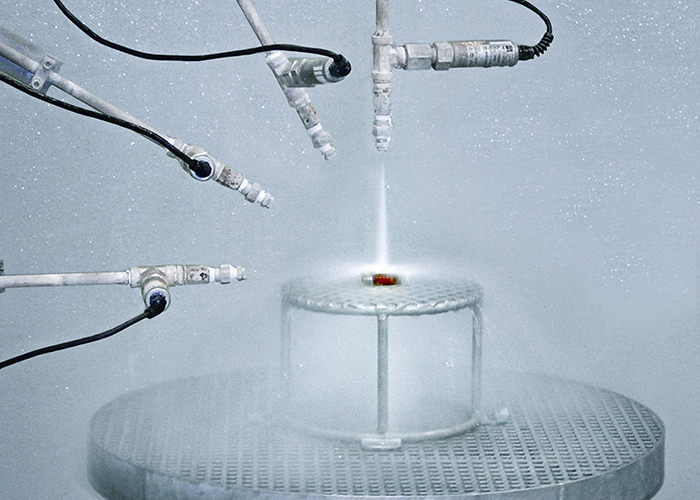
All components of the stainless steel sensors have been specially developed for use in hygiene-sensitive areas. Regular cleaning of the systems with high-pressure cleaners and aggressive cleaning agents plays a significant role.
- The stainless steel housings made of V4A (AISI 316L) are absolutely dust- and waterproof and achieve protection class IP67, IP68 and IP69K
- Particularly smooth stainless steel surfaces with around 0.8 Ra prevent bacterial carryover
- The glass-free optics cover (scratch-resistant and diffusion-tight plastic (PMMA+) with an indium protective layer) withstands tough cleaning cycles and ensures reliable operation
- All materials are approved for direct food contact (FDA-compliant)
- High chemical and thermal resistance, tested and certified by ECOLAB, CleanProof+ and JohnsonDiversey
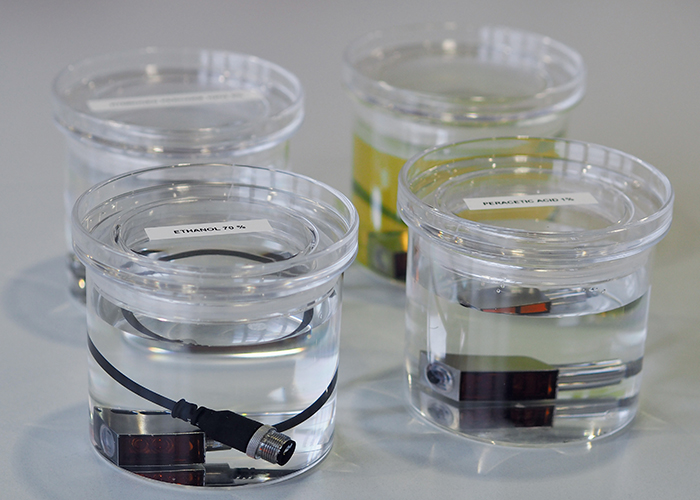
The 55C series in wash-down design is suitable for use in the wet area of production lines. The closed housing technology and the extended temperature range guarantee that the systems will function properly for years.
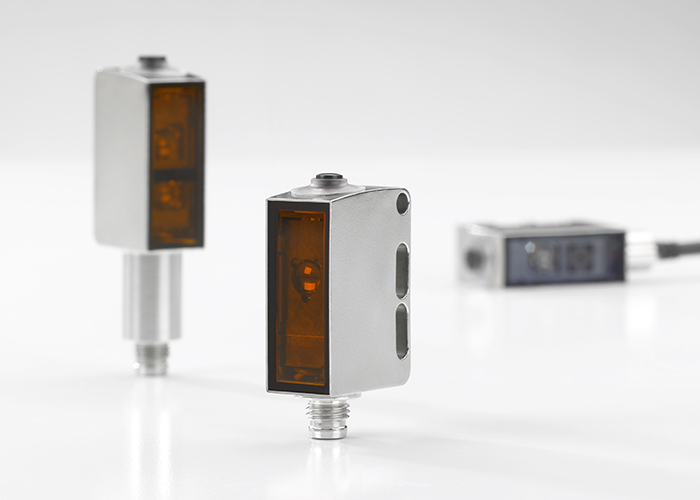
The two sensor series in a miniature stainless steel housing include all operating principles: throughbeam photoelectric sensors, reflective photoelectric sensors and diffuse sensors. Various models have been developed for special areas of application and solve challenges in production and packaging processes in a customized, reliable and economical way.
Our product highlights for special applications:
- Retro-reflective photoelectric sensors for glass and PET detection or film detection
- Laser retro-reflective photoelectric sensors for small parts detection
- Throughbeam photoelectric sensors for detecting watery liquids and for fill level control
- Sensors with background suppression and small light spot for detecting shiny and color-structured objects
- Sensors with background suppression and elongated line light spot for detecting transparent objects as well as objects with openings, holes and cutouts
- Sensors with background suppression and electronic scanning range adjustment; measured value output via IO-Link
- Sensors with background suppression and special V-optics for detecting transparent, planar, reflective, and high-gloss objects, as well as the top layers of syringe or ampoule trays

The 55C and 53C series sensors are equipped with an IO-Link interface, which makes it possible to implement innovative machine concepts with remote maintenance, diagnostics or sensor configuration. The sensors can be parameterized, operated and maintained (condition monitoring) via IO-Link. Format changes are also much more flexible and economical with IO-Link.
Special sensor variants are electronically adjustable and equipped with a measurement value transmission for monitoring a specific window area. The scanning range can be set numerically via IO-Link (Remote Set Distance). The device calibration enables high accuracy during remote adjustment. When replacing a defective sensor, the default settings can be transferred to the new device via IO-Link without any loss and without having to repeat the teach-in process.
Cables and reflectors for hygienic applications
Our 55C and 53C series’ range of sensors for applications in the food and pharmaceutical industry is complemented by a range of suitable cable solutions and reflectors.
The special connection cables are made of FDA-compliant materials (thermoplastic elastomers (TPE) and V4A stainless steel) and are therefore approved for direct contact with food.
If the cables are mounted with a tightening torque of 0.4 Nm or 0.6 Nm, they achieve protection class IP69. This means that the cable solutions prevent the ingress of liquids, dust or steam and can withstand intensive cleaning processes with high-pressure cleaners. ECOLAB certification confirms the cables' resistance to aggressive cleaning agents. The cables can be used in a temperature range from -40°C to +105°C.
The cable portfolio for use in hygienically demanding industrial areas includes M8 and M12 as well as cable lengths of 2, 5 and 10 meters.
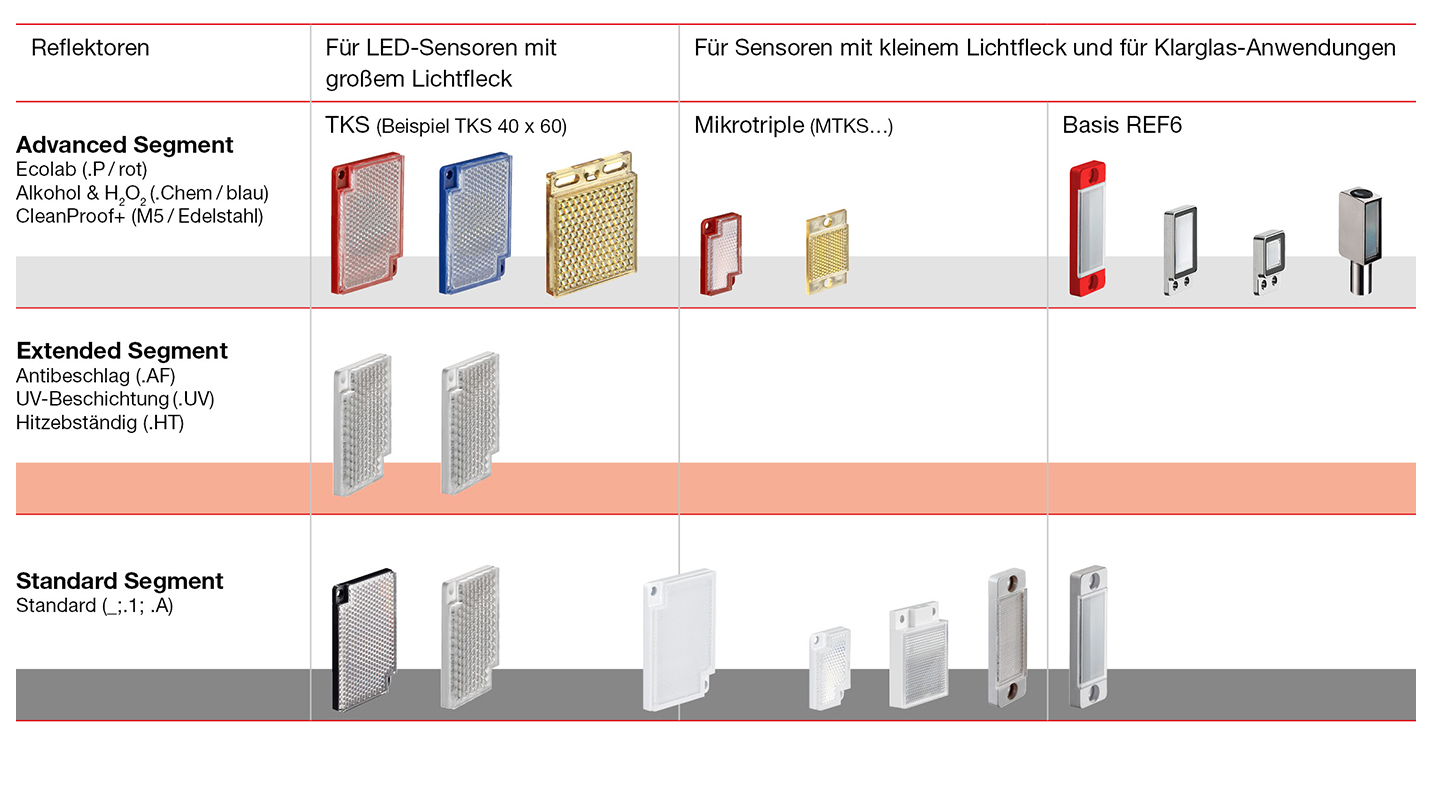
Reflectors
Just how reliably retro-reflective photoelectric sensors can detect depends upon the selected reflector, among other things. We offer reflectors with plastic or stainless steel housings as well as reflective tapes for different requirements: Reflectors in the Advanced segment are often used in the food and pharmaceutical industries due to their resistance to cleaning agents. The Solidchem reflectors made of chemically resistant plastic also stand out for their high temperature resistance. Reflectors from the Extended segment are suitable for production areas with high humidity or high temperature differences.
Application
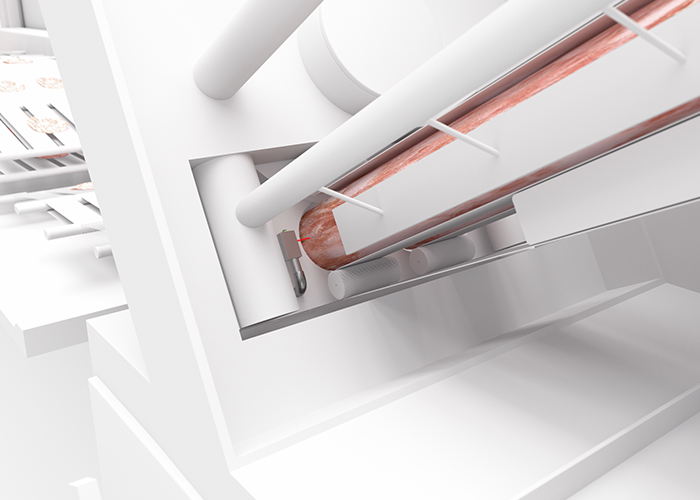
Monitoring the loading of a sausage slicer
Requirement:
In the food industry, sausage is delivered in large bars and sliced into fine slices in a slicing machine. The product in the machine feed must be reliably detected so that the gripper can push the material evenly towards the blade and all the cut slices have the required thickness.
Solution:
Our HT53C.S diffuse sensor in hygienic design reliably monitors the product feed to the sausage cutting machine. If there is enough material for the machine to operate, the system starts up automatically. The particularly small light spot is characterized by excellent performance, especially with color-structured objects, while the sensor’s background suppression ensures reliable color-independent product detection.
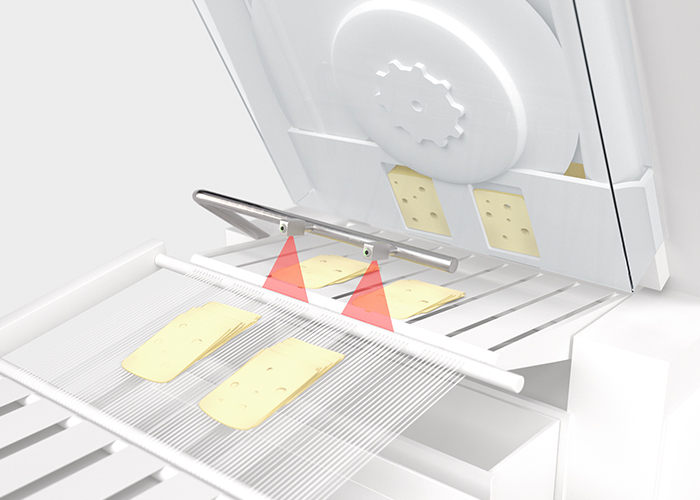
Detecting the front edge of products being cut
Requirement:
In an industrial cutting machine, products are cut into small stacks and pre-portioned into trays for later packaging. The challenge for the sensor system is that the front edge of the sliced goods must be reliably detected at the same switching point, regardless of whether they are on the conveyor belt with a slight lateral offset. The sensors are mounted directly above the conveyor belt. In this application, it must be ensured that no cleaning agent residues drip onto the cheese or the sliced goods.
Solution:
The HT53CL1.X diffuse sensor with background suppression is optimized for detecting the front edges of products with a long laser light spot. Thanks to the line light spot, sliced products are reliably detected at the same switching point even if they are offset to the side on the conveyor belt. This ensures that the cut goods are neatly positioned when loaded into the tray packaging and ensures that the edge of the tray does not come into contact with the food and that traces of grease do not affect the subsequent hygienic welding of the tray. The 53C series housing is designed without drill holes for hygienic applications and is suitable for areas of application with direct food contact.
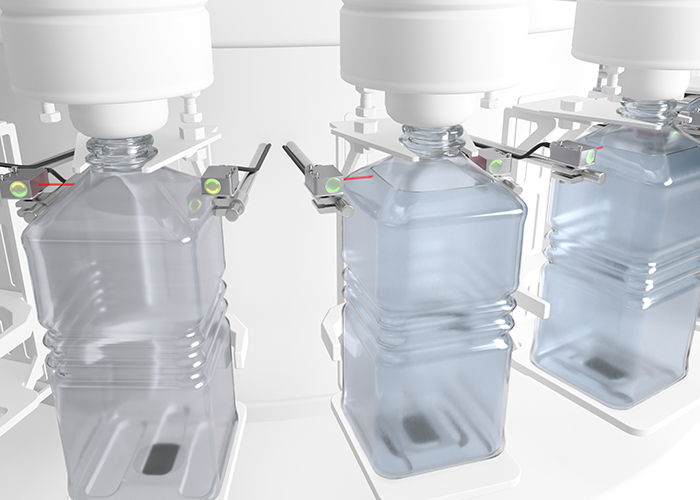
Fill level detection when bottling liquids
Requirement:
In the beverage industry, a filler is used to fill water into 3-liter bottles. The fill level must be exactly the same for all bottles – underfilling must be prevented. Reliably detecting the fill level of aqueous liquids in any container is one of the most challenging detection tasks for sensors and requires particularly powerful sensor solutions.
Solution:
The LS55C.H2O and LE55C.H2O throughbeam photoelectric sensors have been developed for detecting aqueous liquids and for fill level control, and reliably stop the filling process. The 55C Series stainless steel transmitter and receiver system in a wash-down design has a high transmission capacity and can also be used with colored containers and containers with plastic labels.
This solution can replace an expensive filling control system, such as a scale or a flow meter, and is easy to set up: No further settings are required via a control element other than the exact alignment of the optical axis.
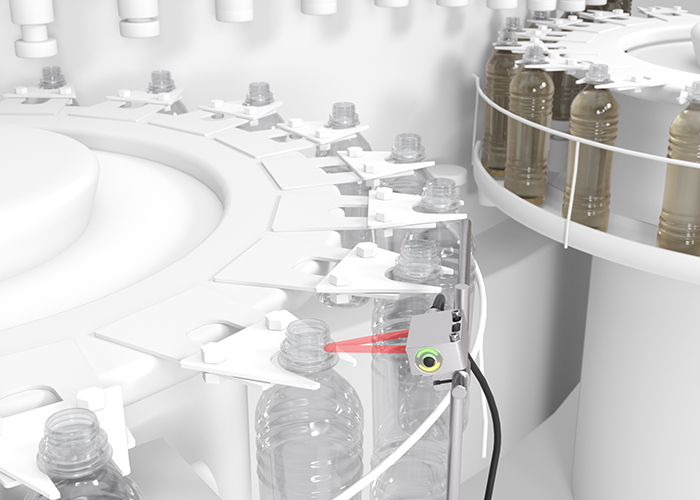
Presence checking in bottle filling in the transfer star
Requirement:
Bottle filling is characterized by very high speeds. To ensure a smooth process, it must be ensured before filling that all positions of the transfer star are occupied by bottles.
Solution:
The HT55C diffuse sensor with background suppression detects containers in the bottle filling reliably and without a reflector. The sensors are designed for wet areas and can withstand intensive cleaning processes. ECOLAB certification and our extended CleanProof+ cleaning agent long-term test ensure the reliable functionality of the sensor even under harsh conditions.
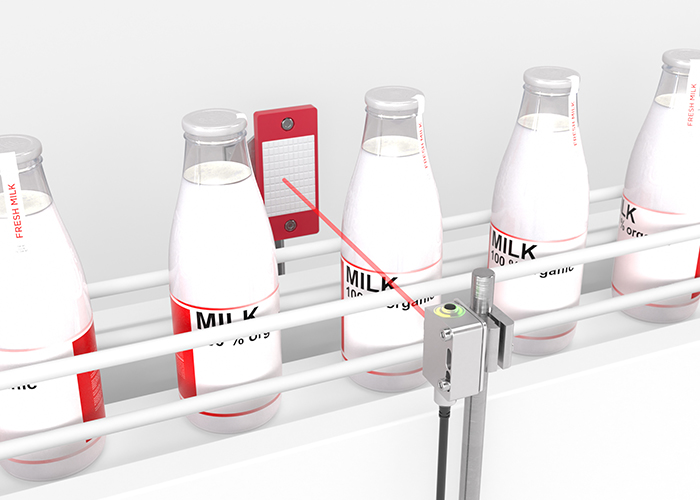
Bottle detection during transport
Requirement:
In a filling plant for milk bottles, the position of the bottles on the conveyor belt must be reliably and precisely detected for the further packaging steps in the plant.
Solution:
The PRK55C.TT3 retro-reflective photoelectric sensor also reliably detects transparent containers. The sensitivity can be set using the teach button. An integrated tracking function automatically compensates for soiling on the reflector or sensor. This extends the cleaning intervals and reduces system downtime. The stainless steel housing in a wash-down design with the highest protection class, IP69K, is very robust. Resistance to the cleaning agents commonly used in the market is confirmed by ECOLAB certification, the Leuze CleanProof+-Test and tests according to JohnsonDiversey.
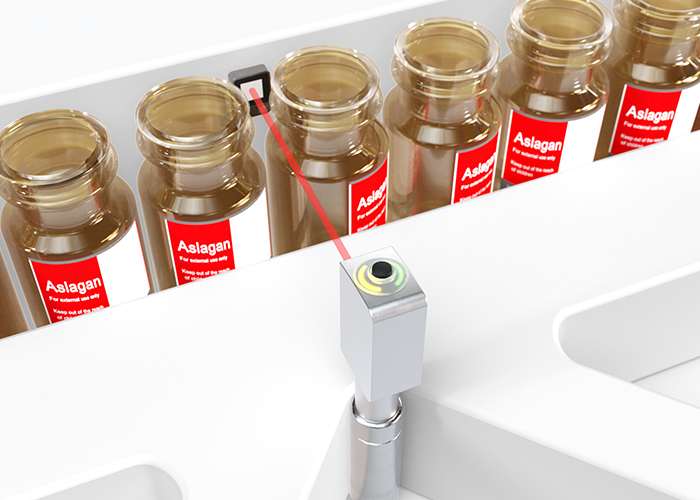
Precise positioning of vials
Requirement:
Vials made of transparent glass must be precisely detected and positioned for the filling of vaccines and other liquids.
Solution:
The retro-reflective photoelectric sensor PRK53CL1.T3 with a small laser light spot, in combination with a small stainless steel reflector, enables highly precise detection and positioning of vials. The sensor in its miniature housing can be easily integrated even in confined spaces. Both the sensor and the reflector are designed for hygienic applications.
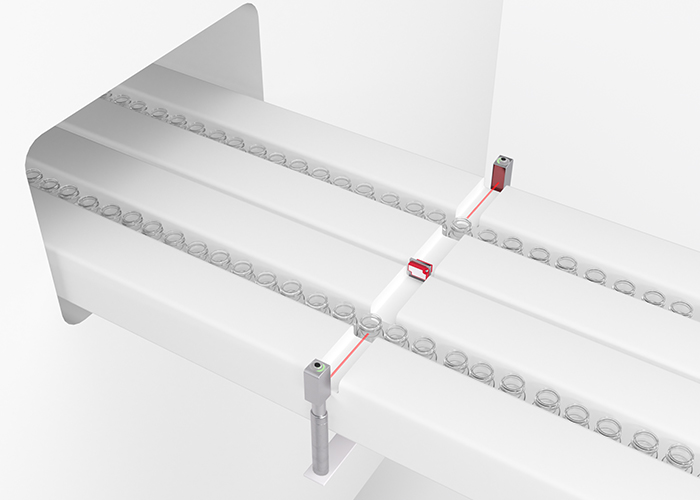
Detection and positioning of transparent vials
Requirement:
In a pharmaceutical packaging plant, vials are filled on multi-track packaging lines. The position of the transparent vials must be precisely detected before filling. One challenge is that the vials are very flat and the photoelectric sensor must aim precisely at the reflector.
Solution:
Our 53C series PRK53C.T3 retro-reflective photoelectric sensors are used in this application with MTKS 14x23.P pharmaceutical micro triple reflectors specially developed for the pharmaceutical industry. The hygienically designed stainless steel sensors precisely target the reflector and ensure reliable detection of the vials.
Overview of our stainless steel sensors
|
Parameter |
PRK53C / PRK55C |
LS/LE53C / LS/LE55C |
HT53C / HT55C |
ODT 53C /ODT 55C |
|
Operating principle |
Retro-reflective photoelectric sensor |
Throughbeam photoelectric sensor |
Diffuse sensor with background suppression |
Distance sensor with background suppression |
|
Housing design and dimensions (W x H x D) |
Series 53C: Hygienic design (14.0 x 35.4 x 20.4 mm) Series 55C: Wash-down design (14.0 x 35.4 x 25.0 mm) |
|||
|
Housing material |
Stainless steel V4A (AISI 316L) |
Stainless steel V4A (AISI 316L) |
Stainless steel V4A (AISI 316L) |
Stainless steel V4A (AISI 316L) |
|
Light sources |
Red light (645 nm) Laser red (650 nm; laser class 1) |
Red light (645 nm) Infrared (1450 nm) |
Red light (645 nm) Infrared (860 nm) Laser red (650 nm; laser class 1) |
Red light (645 nm) |
|
Switching frequency |
1,500 Hz (red light) 3,000 Hz (red laser) |
1,000 Hz (red light) 350 Hz (infrared) |
1,000 Hz (red light & infrared) 3,000 Hz (red laser) |
750 Hz (red light) |
|
Operating range |
0.1 – 5 m (two-lens) 0 – 4 m (autocollimation) 0 – 3 m (detection of transparent objects) 0 – 2 m (laser: autocollimation) 0 – 0.4 m (laser: detection of transparent objects) |
0.05 – 8.5 m (red light) 0 – 64 m (infrared) |
5 – 600 mm (infrared) 5 – 450 mm (red light) 5 – 200 mm (small light spot) 5 – 100 mm (long light spot) 15... 400 mm (laser) |
10 – 150 mm 10 – 80 mm (small light spot) |
|
IO-Link |
V1.1 (COM2) |
V1.1 (COM2) |
V1.1 (COM2) |
V1.1 (COM3) |
|
Operation |
Teach button |
- |
Multi-turn spindle |
Teach button |
|
Temperature range |
-40 to +70°C |
-40 to +70°C |
-40 to +70°C |
-40 to +70°C |
|
Protection class |
IP 67, IP 68, IP 69K |
IP 67, IP 68, IP 69K |
IP 67, IP 68, IP 69K |
IP 67, IP 68, IP 69K |
|
Certifications |
CE, UL, ECOLAB, CleanProof+, JohnsonDiversey |
CE, UL, ECOLAB, CleanProof+, JohnsonDiversey |
CE, UL, ECOLAB, CleanProof+, JohnsonDiversey |
CE, UL, ECOLAB, Clean-Proof+, JohnsonDiversey |
|
Connection |
M8, cable, cable pigtail M12 |
M8, cable, cable pigtail M12 |
M8, cable, cable pigtail M12 |
M8 |