



Sensor solutions for tire manufacturing
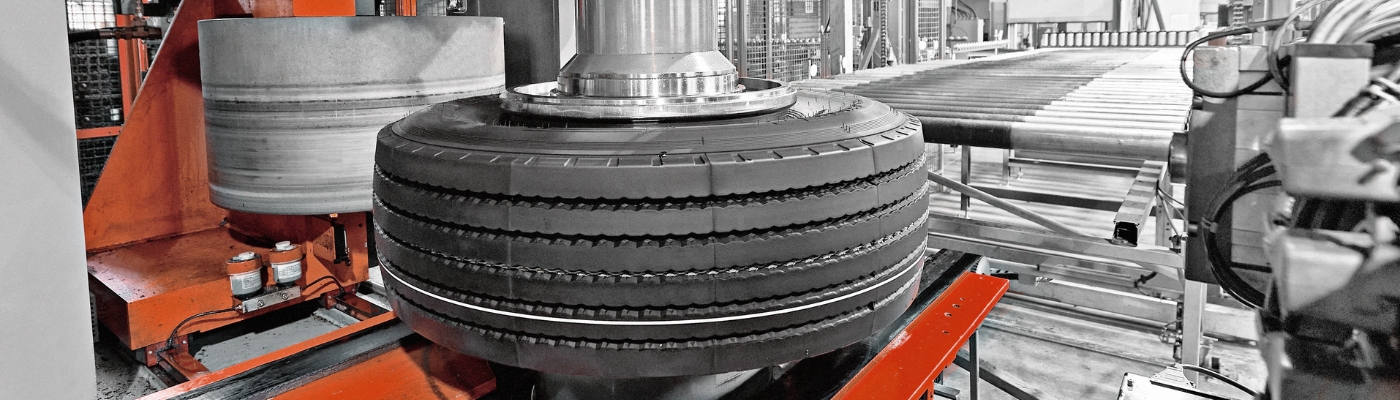
Tire manufacturing or tire production places high demands on automation systems and sensors. Particular challenges arise from the features of objects such as tire blanks or ‘green tires’, tire carcasses, tires and, later, wheels. These are usually matte black, sometimes with highly textured surfaces, e.g., due to their tread patterns. They are also processed under demanding boundary conditions, including high levels of contamination.
In the tire industry, high standards apply to safety, quality and traceability throughout all stages of the process, from tire design through the various processing and finishing stages to the subsequent fitting of the finished wheels, i.e. tires on rims, at the automotive plant.
Your benefits with our tire manufacturing solutions

Detection of black surfaces
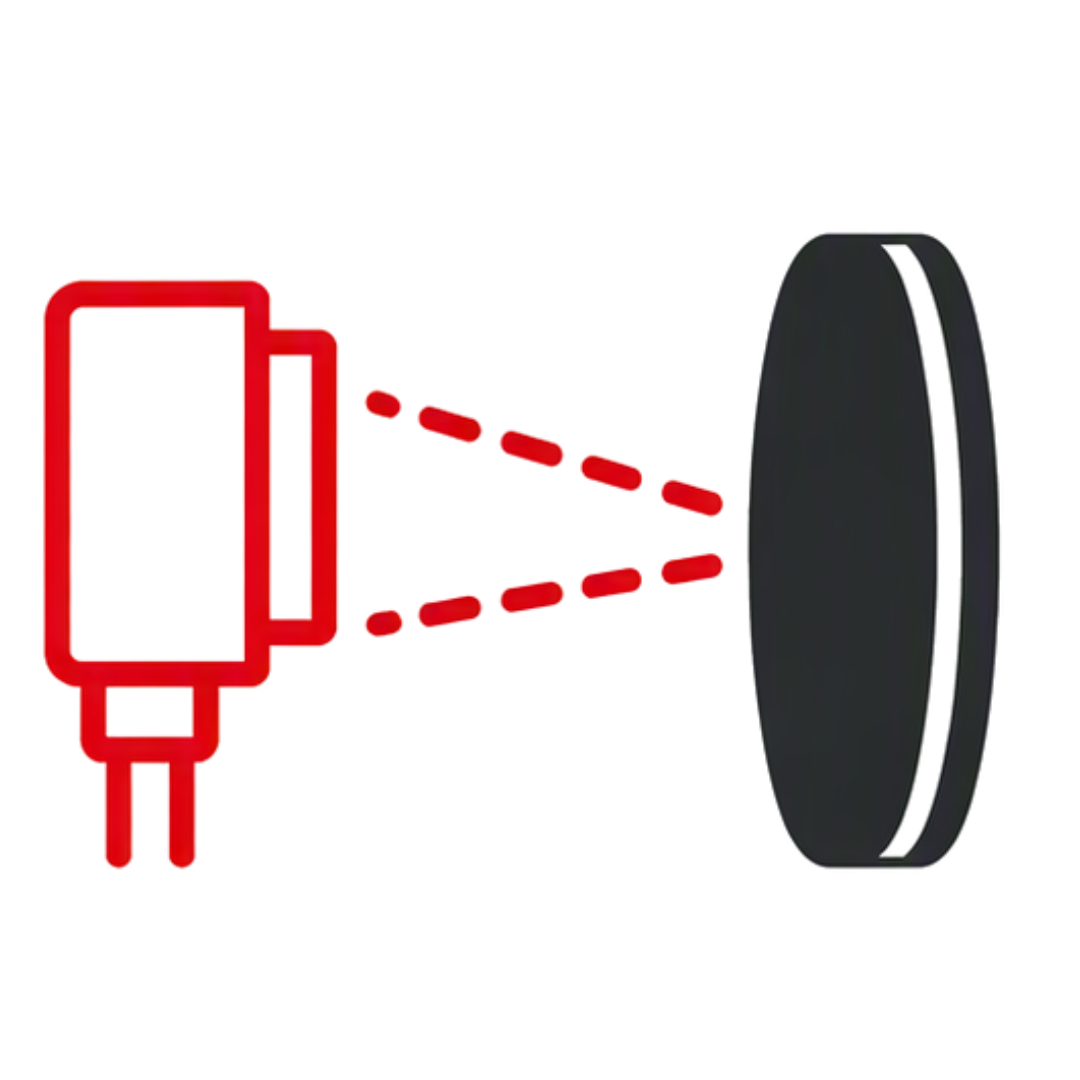
Reliable object detection even with dark, matte, and highly light-absorbent materials

Flexible protection
Flexible safety solutions for reliable automated processes

Reliable even when soiled
Stable processes even under demanding environmental conditions
Sensor technology in tire manufacturing
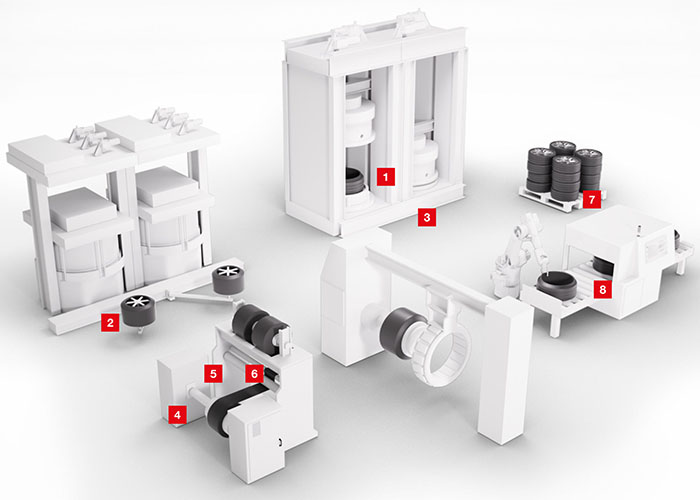
Vehicle tires are manufactured from carcasses, rubber components and process technology (e.g. hot press) through a series of processes and machines. The components are usually bonded together using heat and pressure in a process known as vulcanization. The sensor applications below are grouped by the main machines used, rather than by the individual stages of the manufacturing process.
Click on the numbered applications to learn more about the respective sensor solutions.
Sensor solutions for key tire manufacturing processes
From vulcanization to the detection of rubber materials to further processing: Discover sensor solutions for various process steps in automated tire manufacturing.
Vulcanization applications
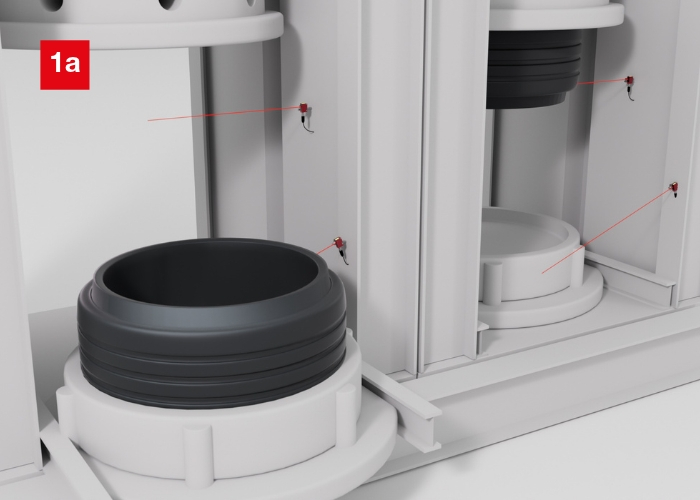
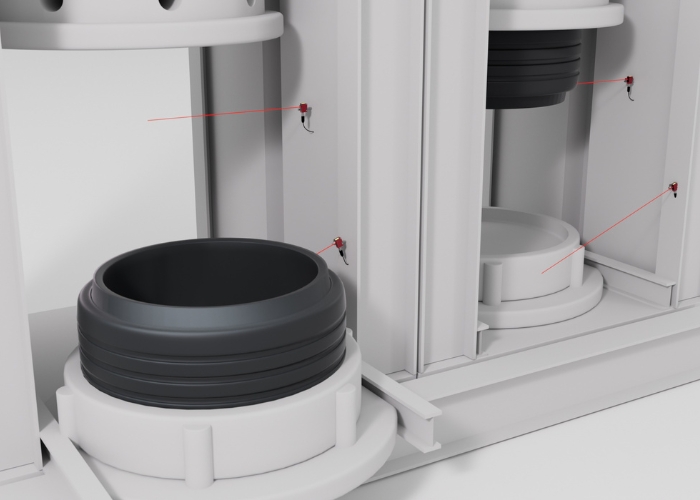
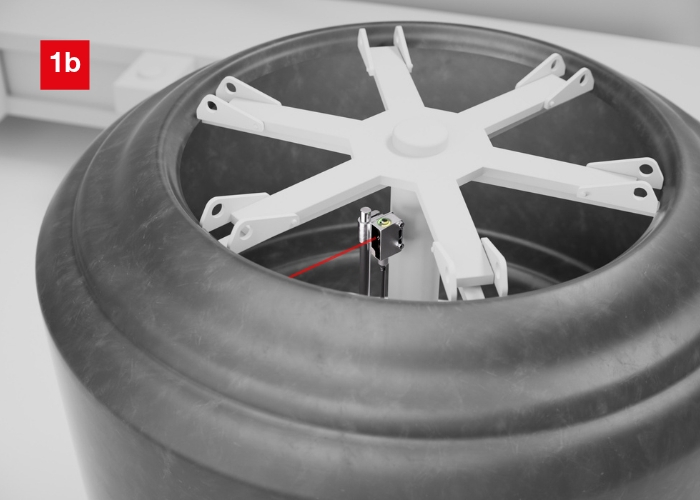
Tire detection on vulcanizing machine
Requirement:
Reliable object detection of the tires is required to precisely control the individual process steps on the machine – even with extremely low reflection due to the typically deep black surface. The system must reliably distinguish between different tire sizes.
Solution:
The ODT 25C series optical distance sensors with time-of-flight (ToF) technology and laser light source enable reliable object detection with high angle tolerance. Measurements from two independently adjustable distances allow different tire sizes to be reliably detected. Measurement distances can be conveniently configured and additional diagnostic data efficiently evaluated via the IO-Link interface.
> Learn more about diffuse sensors with background suppression
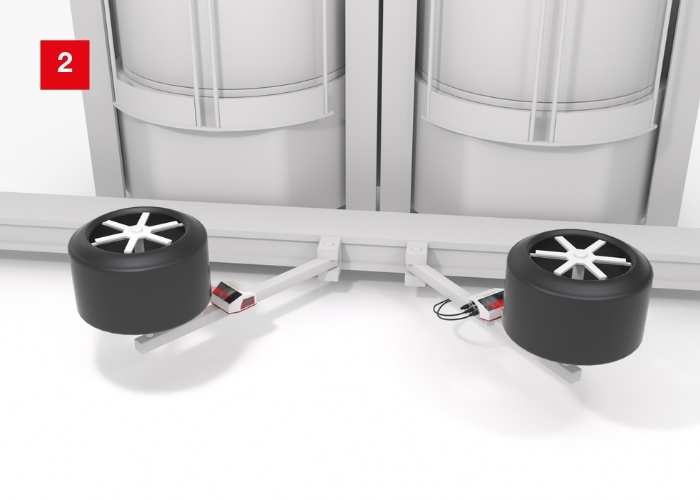
Blank detection
Requirement:
At the tread-profiling machine, the compactly integrated sensor must reliably detect the raw tire.
Solution:
Featuring a metal housing, the ODT53CL distance sensor with ToF technology is ideal for harsh environments and can reliably detect even very dark objects. In addition to the switching output, a distance value is available via IO-Link.
Tire identification on the hot press
Requirement:
For the subsequent process, the tires must be reliably identified on the hot press – both in rotation and for different diameters within a defined measurement range. Varying code quality requires special evaluation functions.
Solution:
The BCL 500i code readers reliably capture large reading fields with their oscillating mirror and code reconstruction technology. The integrated interfaces as well as the WebConfig function allow easy integration into the machine control system and efficient configuration.
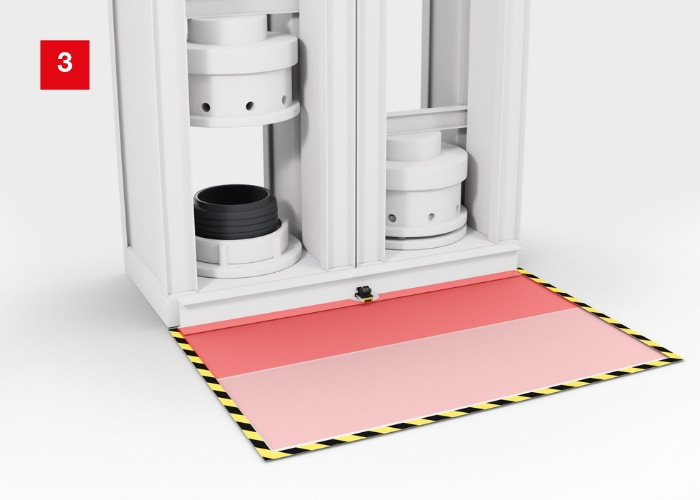
Area safeguarding in harsh environmental conditions
Requirement:
A flexibly adaptable area safeguarding system is required upstream of the vulcanizing machine, which enables rapid switching between different protection configurations.
Solution:
The RSL 200 safety laser scanner is easy to integrate into the machine due to its compact design. Its wide detection angle and up to 32 configurable protective fields that can be created via USB, Bluetooth or Ethernet mean it provides maximum flexibility. For efficient maintenance and quick diagnosis – especially in hard-to-reach installation positions – the RSL200 app conveniently supports all service and inspection tasks.
Applications for detecting rubber materials
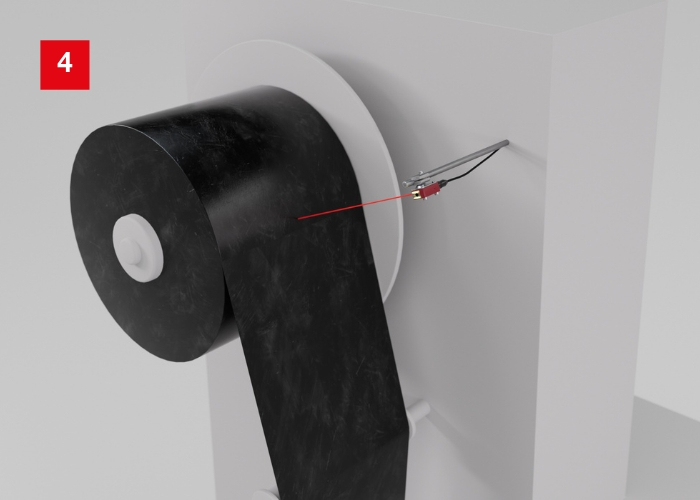
Measurement of the remaining rubber band
Requirement:
A continuous distance measurement relative to the axis is required for precise control of the rubber band’s unwinding process.
Solution:
The compact ODT 3C distance sensors are easy to integrate into the system and provide highly accurate distance values via IO-Link. This provides reliable process control and optimal regulation of the unwinding process.
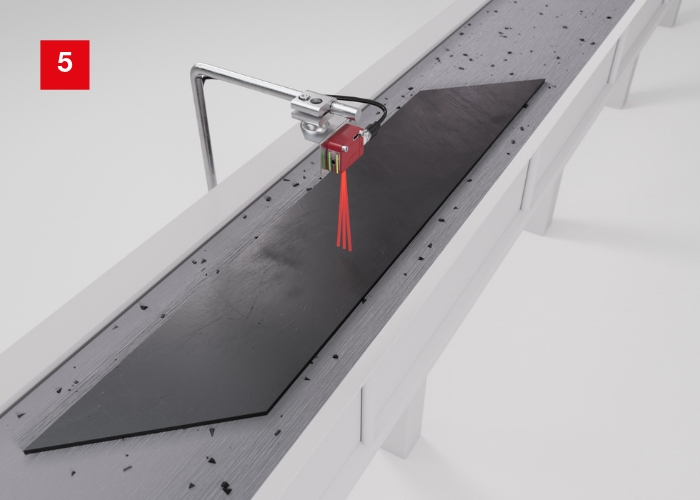
Detection of rubber parts
Requirement:
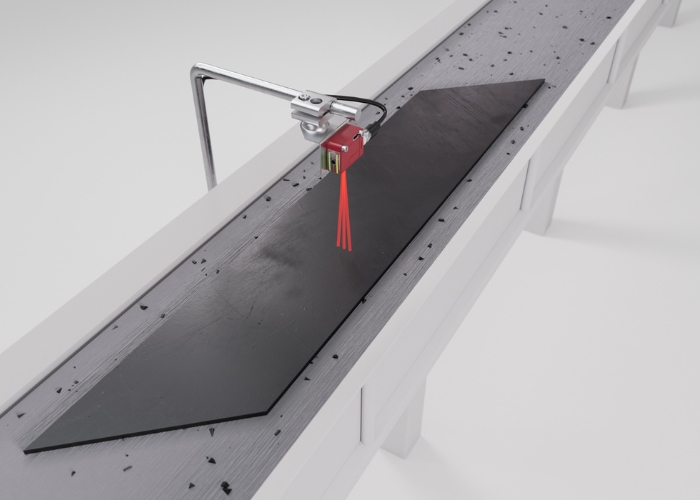
Black rubber is difficult to detect optically due to its low reflectivity. In addition, heavy contamination of the conveyors during the production process makes detection more difficult.
Solution:
The DRT 25C reference diffuse sensors use the conveyor belt as a reference, which allows even extremely dark objects to be reliably detected – even in heavily contaminated environmental conditions. The teach function with 2 or 3 adjustable sensitivity levels enables quick and convenient adaptation to different process conditions.
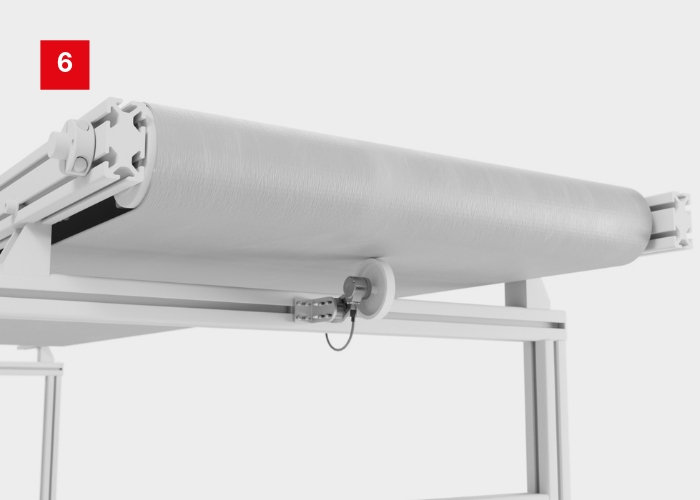
Speed control
Requirement:
In material flow for rubber parts, rotary encoders play a key role in monitoring conveyor belts and other continuously operating transport systems. By reliably measuring rotational movement and speed, they help monitor proper operation and ensure system availability.
Solution:
An EI series rotary encoder with roller wheel can be flexibly mounted directly beneath the conveyor belt to detect rotational movement and velocity. Various resolutions and interfaces are available depending on requirements.
Applications in further processing
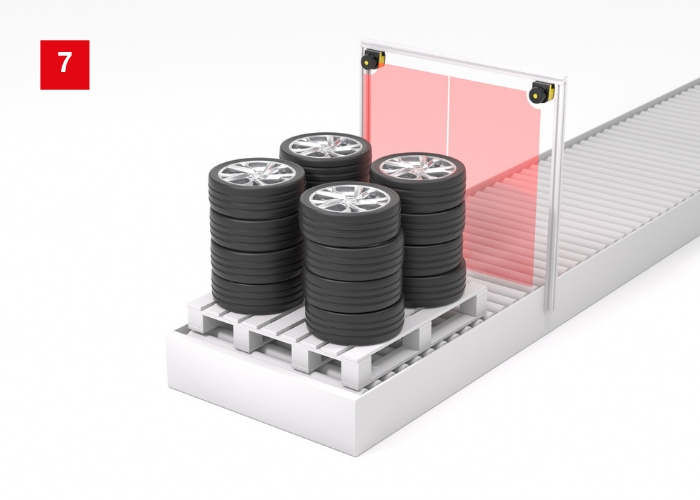
Stack alignment and safeguarding
Requirement:
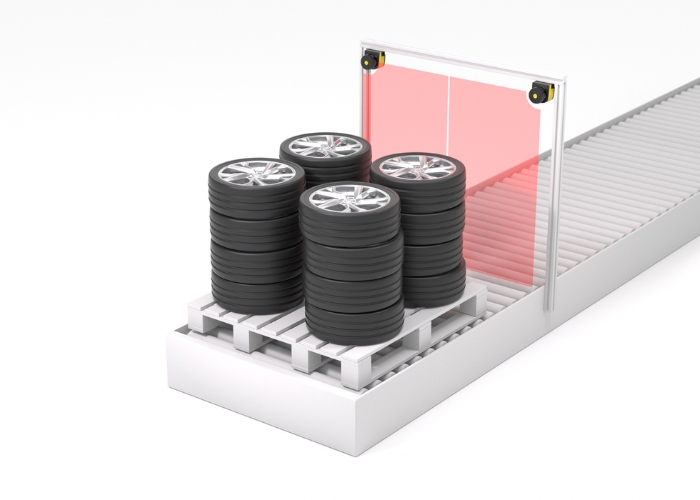
The tire or wheel stacks’ alignment must be reliably checked before they are automatically depalletized. At the same time, access to the depalletizer must be guarded to ensure the safety of the operating personnel.
Solution:
The RSL 400 safety laser scanner combines both tasks in one device: Thanks to its high angular resolution and ability to output measurement data, the stack alignment can be checked while still protecting access. The protective fields’ flexible design as well as the staggered operating ranges enable application-specific optimization and ensure maximum safety and efficiency during operation.
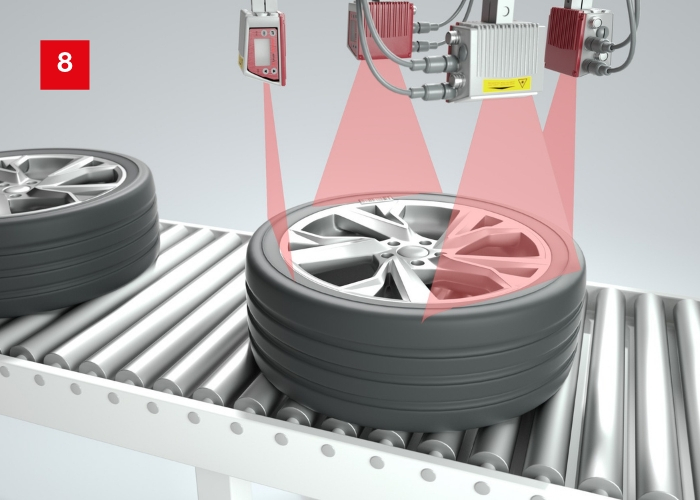
Code reading for assignment
Requirement:
The complete wheels – consisting of tires and rims – are transported to the assembly line on an order-by-order basis. To ensure that the wheels are correctly assigned to their respective vehicles, the bar code on the label must be reliably read. The label may be located anywhere on the tire circumference.
Solution:
Several BCL 500i or BCL 600i series bar code readers are used to cover the tire’s entire circumference. These devices offer a wide reading range and depth of field, so bar codes are reliably captured regardless of their position. The code reconstruction technology allows individual partial readings to be combined into a complete result, ensuring fast and reliable identification.