



Sensor solutions for meat, sausage and cheese packaging
During the processing and packaging of sausages, cheese, and meat, not only the system itself but also the sensors used must reliably withstand regular and intensive cleaning cycles involving high pressures, elevated temperatures, and aggressive cleaning agents.
This particularly sensitive environment, where direct contact with food is possible, is referred to as the white or hygiene zone. Processing often takes place in refrigerated conditions to ensure the freshness and quality of the products. At the same time, contamination during the production process and the potential transfer of contaminants must be prevented. These cleaning processes pose the greatest challenge for the sensors used.
The high exposure to aggressive chemicals requires robust sensor designs in food-grade stainless steel housings, specially resistant plastic components, and constructive measures for temperature compensation.
Sensor solutions throughout the processing chain
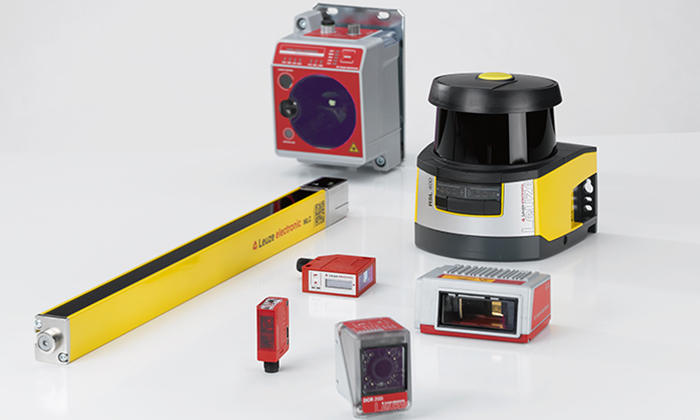
Our sensor solutions feature a specialized hygienic design to help ensure consistently high product quality in production areas with direct food contact. They ensure reliable detection even under demanding environmental conditions and contribute to stable and efficient production processes.
Thanks to their high-quality stainless steel housings, exceptionally smooth surfaces, and food-grade materials, the sensors meet the stringent requirements of hygiene-critical applications. At the same time, they facilitate easy cleaning and help prevent contamination within production systems.
Click on the numbered applications to learn more about the respective sensor solutions.
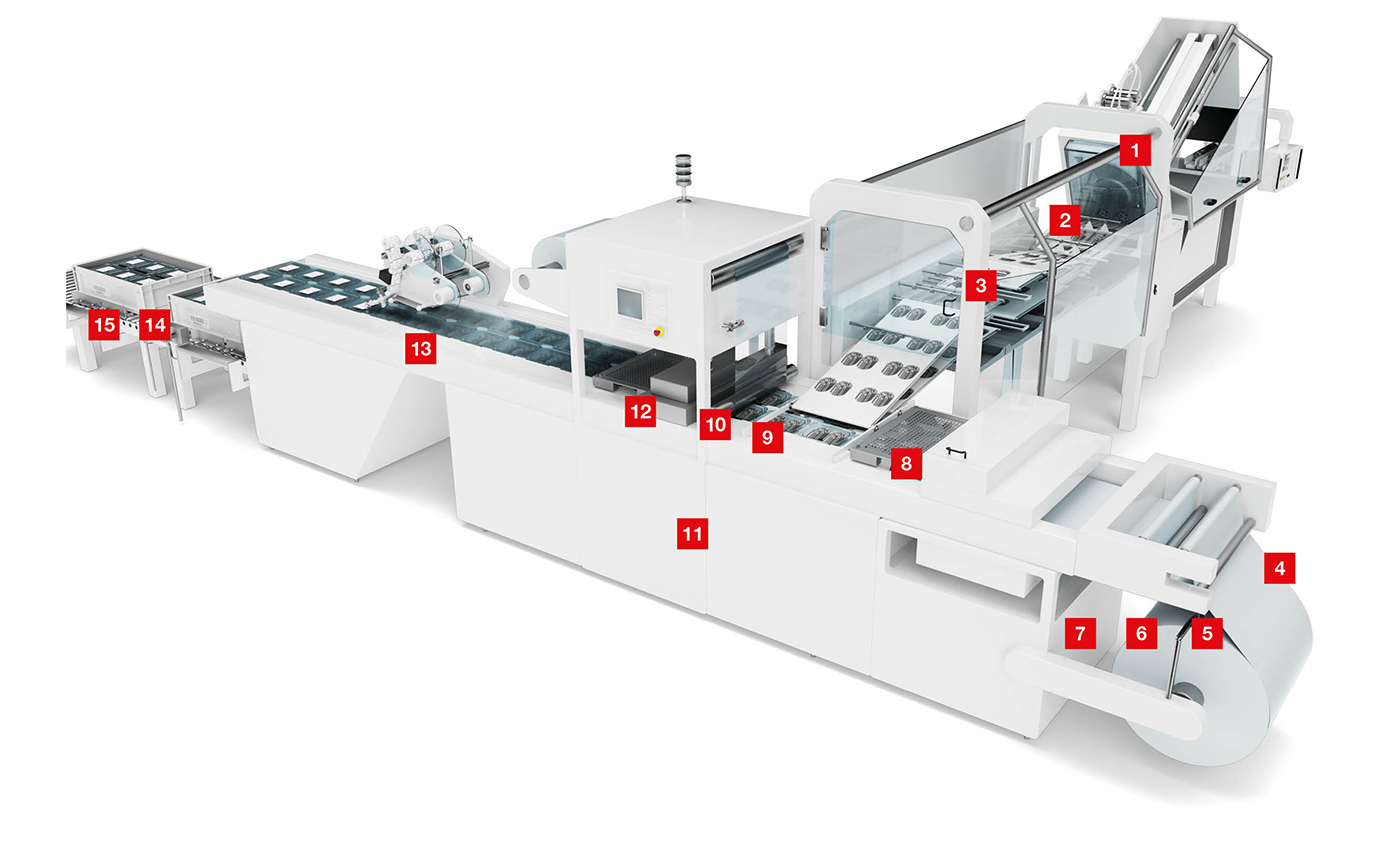
Applications in meat, sausage, and cheese processing
For a clearer overview, the applications can be divided into several groups by topic and, at the same time, categorized based on their requirements. A key distinguishing feature in meat, sausage, and cheese processing is the potential for the sensors to come into contact with the food. This has a significant impact on the required housing characteristics, the hygienic design, and the frequency and intensity of the necessary cleaning cycles.

Applications in the white zone
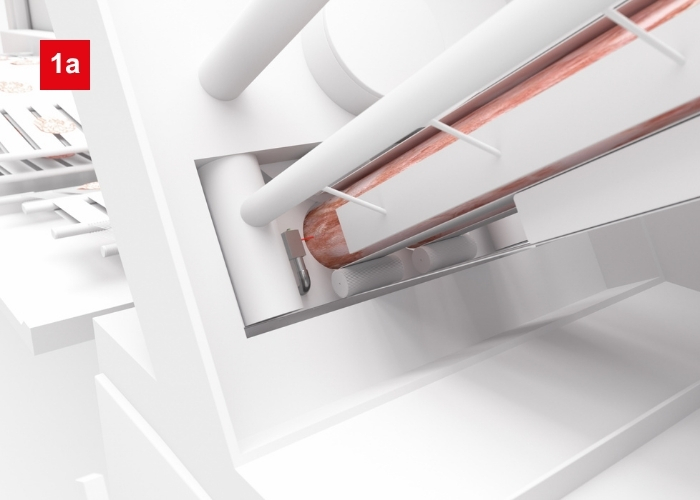
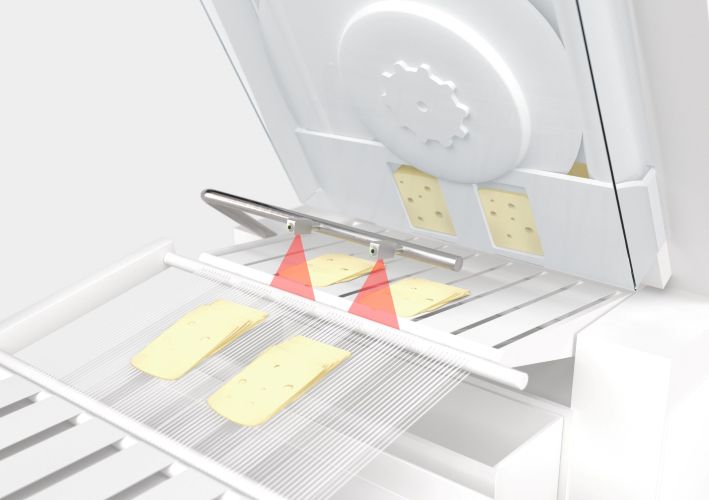
Monitoring of the product infeed
Requirement:
In the food industry, meat or cheese is delivered in large portions and cut into thin slices in a cutting machine. The product at the machine’s feed must be reliably detected so that the gripper can push the material evenly toward the blade and ensure that all slices have the required thickness.
Solution:
The 53C.S diffuse sensor in hygienic design monitors the product infeed at the cutting machine. A particularly small spot of light ensures excellent performance, especially with color-structured objects. The sensor's background suppression feature enables reliable, color-independent product detection.
> Learn more about diffuse sensors with background suppression
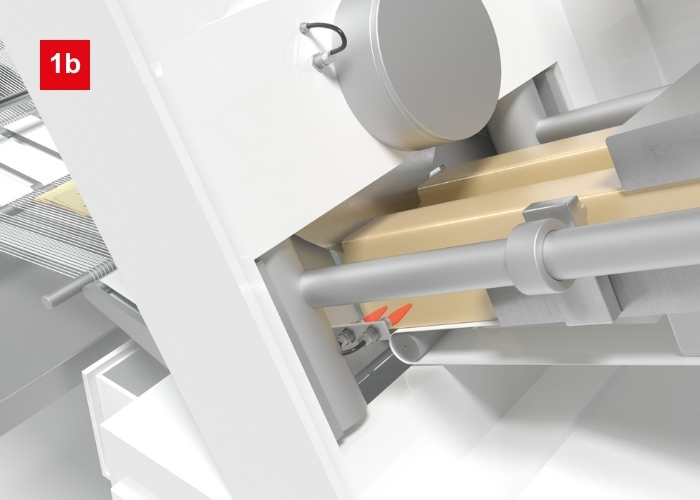
Signal to change stock
Requirement:
To ensure a smooth cutting process, the “end” of the block must be detected, thereby triggering a signal to change stock.
Solution:
The IS 200 series stainless steel inductive sensors can reliably detect the mounting bracket and generate a signal to change the product for cutting. Its all-stainless-steel design meets the cleaning requirements in this environment.

Detection of cut goods
Requirement:
In an industrial cutting machine, products are cut into small stacks and pre-portioned into trays for later packaging. The challenge for the sensor system is that the front edge of the cut goods must be reliably detected at the same switching point. The sensors are mounted directly above the conveyor belt.
Solution:
The 53CL1.X diffuse sensor with background suppression is optimized for the detection of the front edge of products thanks to a long laser light spot. The sensor in hygienic design ensures that cut goods are positioned precisely when loaded into the thermoformed packaging.
> Learn more about diffuse sensors with background suppression
Applications primarily packaged in the gray zone
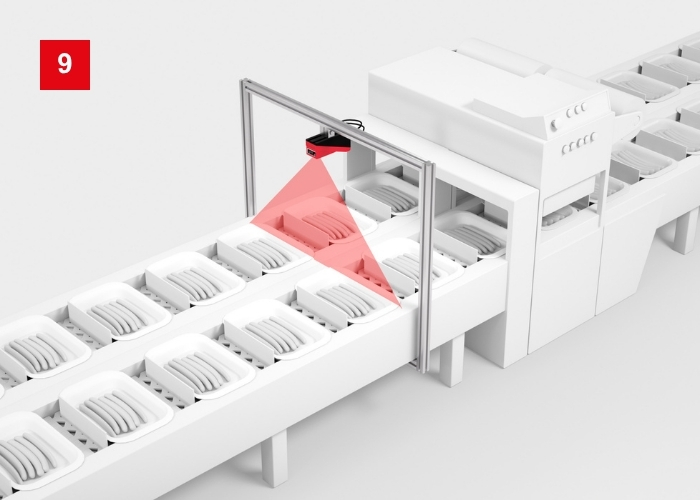
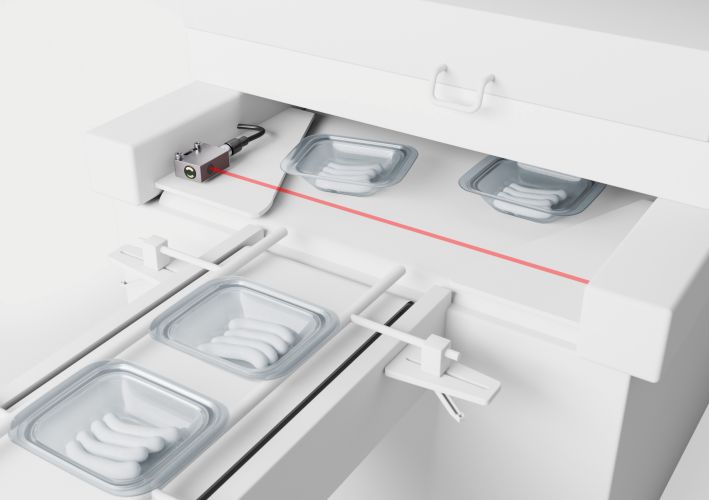
Filling-level inspection
Requirement:
Before the trays are sealed in the sealing machine, they must be checked to ensure they are all filled. Unfilled and overfilled containers must be rejected. The control is carried out by sensors mounted above the conveyor.
Solution:
The LRS 36 light section sensor uses a projected laser line to detect the filling status of the individual trays. The sensor provides several switching outputs and process data for the control.
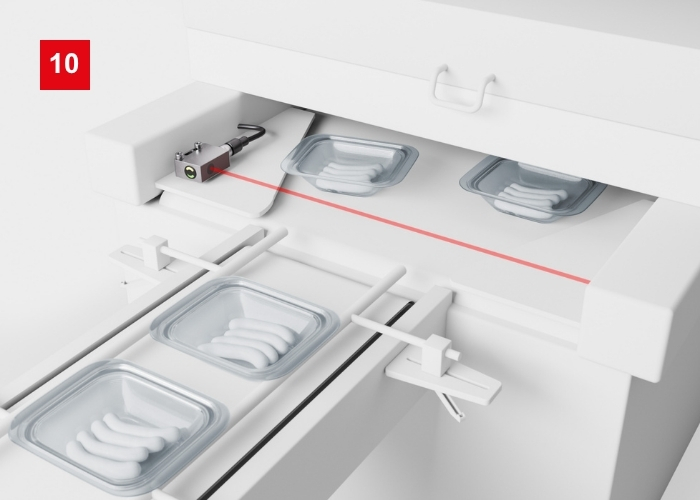
Detection of products on conveyor belt
Requirement:
To control the transport segments between process steps, objects must be detected on the conveyor line. The challenge is that the objects have different shapes and colors or are transparent. Due to their proximity to the food, sensors must meet high hygiene requirements.
Solution:
Retro-reflective photoelectric sensors of the 55C series in stainless steel housings with suitable MTKS.5 stainless steel reflectors as well as diffuse sensors with different light-spot shapes are optimized for detection tasks in the food industry. The housing design of the 53C series in hygienic design is suitable for direct food contact.
Detection of thermoformed trays
Requirement:
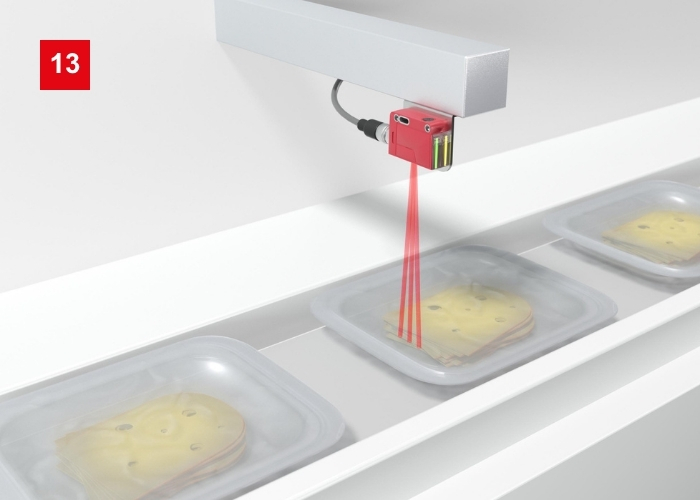
After products have been packaged in thermoformed trays, for example, the front edge must be reliably detected from above, even in single- or multi-track systems. Different heights of the trays can pose a challenge for the sensor system used.
Solution:
The DRT 25C or DRT 35C dynamic reference diffuse sensor in stainless steel sets the conveyor belt as a reference and thus allows for reliable detection of the front leading edges of the object on the belt – independent of the colors or heights of the products. Light spots arranged horizontal to the transport direction also detect products with gaps.
Detection of containers
Requirement:
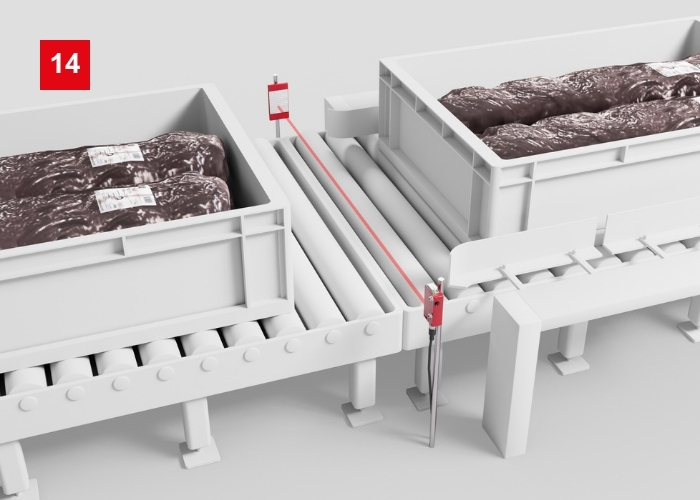
Standardized containers are used in the process steps between meat cutting and further processing. Sensors for detecting these containers must be designed for high hygienic requirements.
Solution:
Retro-reflective photoelectric sensors of the 46C or 25C series can be used for container detection in transport technology. HT 46C and HT 25C diffuse sensors are often also used here. The series have protection class IP 69K and are ECOLAB-certified. If required, the 55 and 35C series in stainless steel housings are used.
Identification of containers
Requirement:
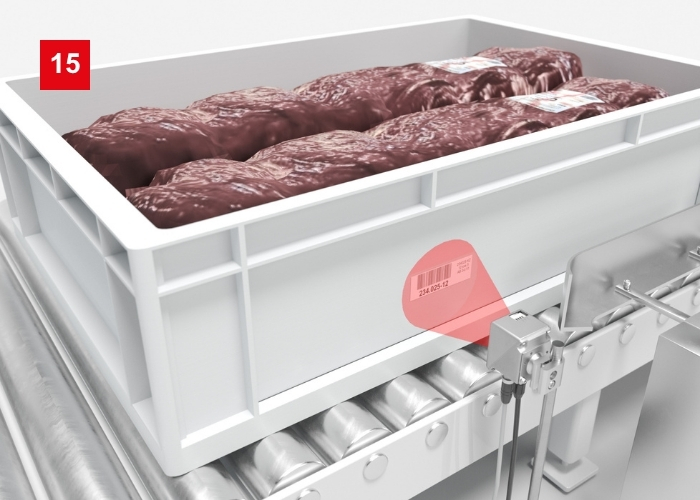
To control the path of the standard containers, the codes attached to the containers must be reliably read. Due to the demanding requirements of the cleaning agents used and the ambient temperatures, the sensors used must be able to withstand this environment.
Solution:
The bar codes or Data Matrix codes present on the containers can be read and identified very reliably with the compact, image-based code reader DCR 200i in a stainless steel housing (washdown design) with protection class IP 69K. The most important Ethernet-based interfaces are available for selection.
Applications for packaging materials
Detection of film
Requirement:
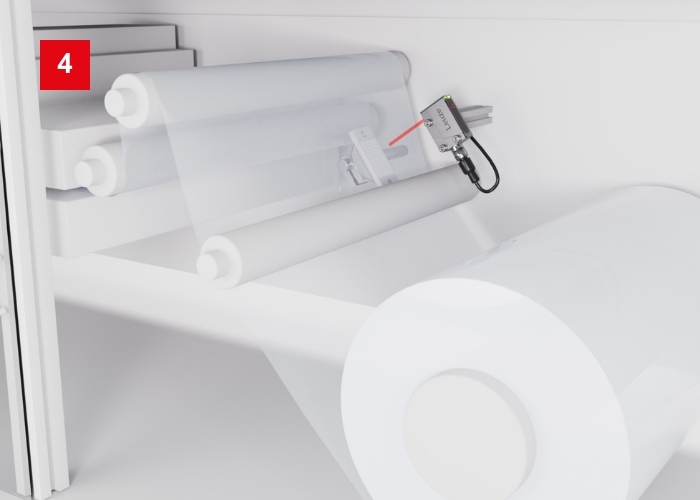
The film infeed must be ensured throughout the complete packaging process. Sensors are used at suitable points to detect the presence of the transparent film as well as film tears or film ends.
Solution:
The 18B series retro-reflective photoelectric sensors are suitable for detecting highly transparent films, ideally with an MTKS reflector. Models for the detection of transparent objects include the PRK25C.A and PRK3C.A retro-reflective photoelectric sensors.
Detecting splices
Requirement:
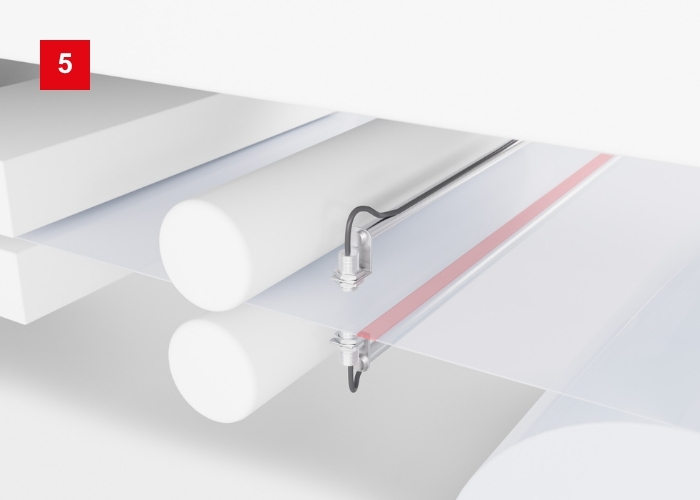
Hard-wearing thermoforming sheets are bonded together when changing film rolls. To ensure a fault-free process, this splice must be reliably detected and discharged.
Solution:
Ultrasonic sensors enable material-independent splice detection. The VSU 12 ultrasonic system developed for this application consists of a pair of ultrasonic sensors and an analysis amplifier. An alternative is the IGSU14E SD ultrasonic fork sensor for film.
Web edge control
Requirement:
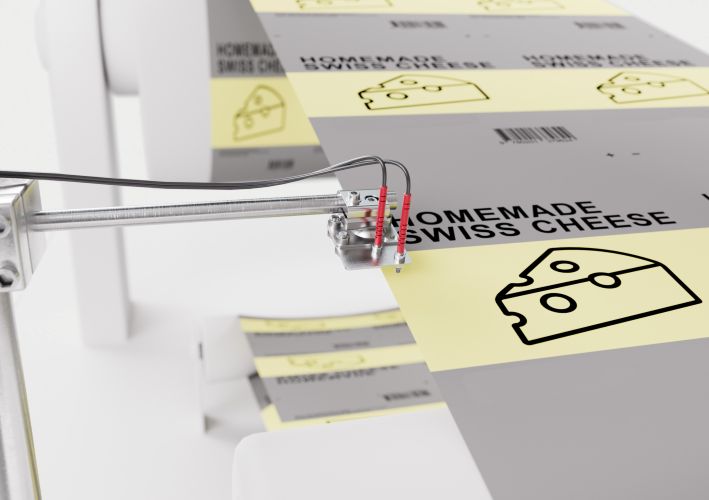
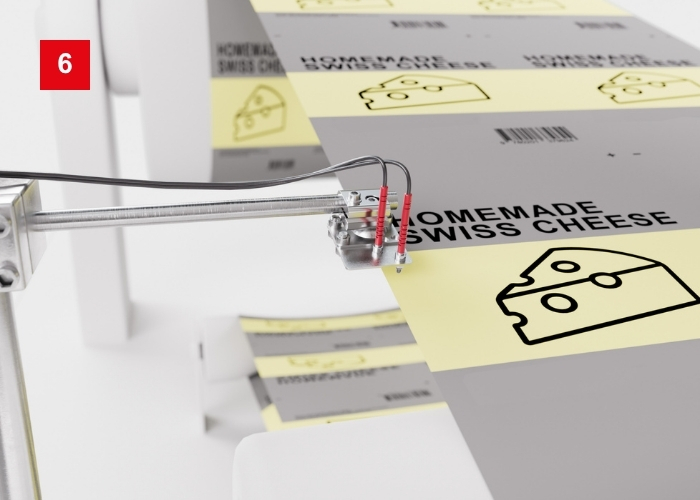
Film webs must be precisely aligned laterally before further processing. Sensors ensure a precise web guide for both the bottom and top films. Transparent or printed film webs each require suitable sensor solutions.
Solution:
Various solutions are available for web edge control: Using KF series plastic fiber optics and LV amplifiers or switching retro-reflective photoelectric sensors such as the 18B series, a two-point control system can be implemented. With a GS 754 measuring fork sensor, a high-precision analog web guide is possible.
Measurement of roll diameter
Requirement:
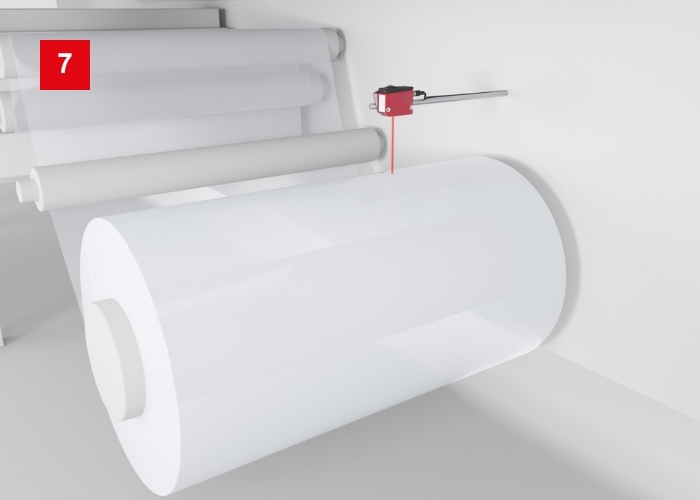
Thermoforming film for trays is provided in large rolls. To ensure uniform unrolling of the film, the axis is motor-driven. A sensor must permanently detect the diameter of the roll.
Solution:
The measuring sensors of the ODS9 or ODS96 series send an analog signal in relation to the roll diameter to the control. The DMU 318 and DMU 418 ultrasonic distance sensors, which are available with various measurement ranges, offer an alternative for diameter measurement.
Detection of empty trays
Requirement:
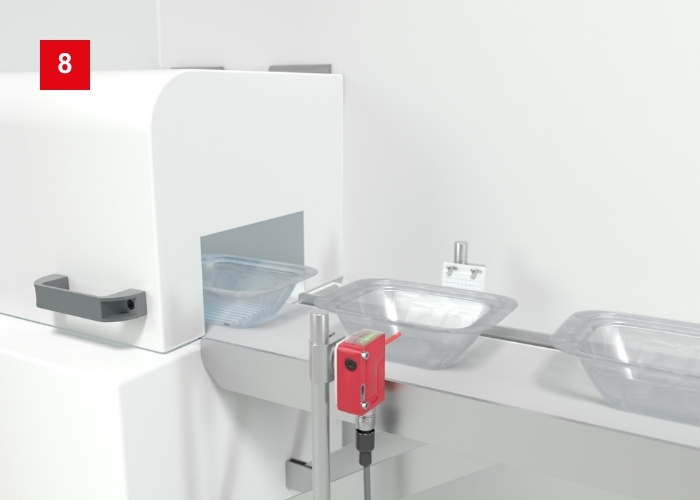
In the feed of a tray sealer, empty, and often transparent, plastic trays must be reliably detected. Ideally, retro-reflective photoelectric sensors are used to detect transparent objects.
Solution:
The compact retro-reflective photoelectric sensors of the 3C or 25C series in plastic housings and the 55C series in stainless steel housings are designed as autocollimation models for this application. Suitable reflectors with microtriples of type MTKS are available in various dimensions and materials.
Applications in occupational safety
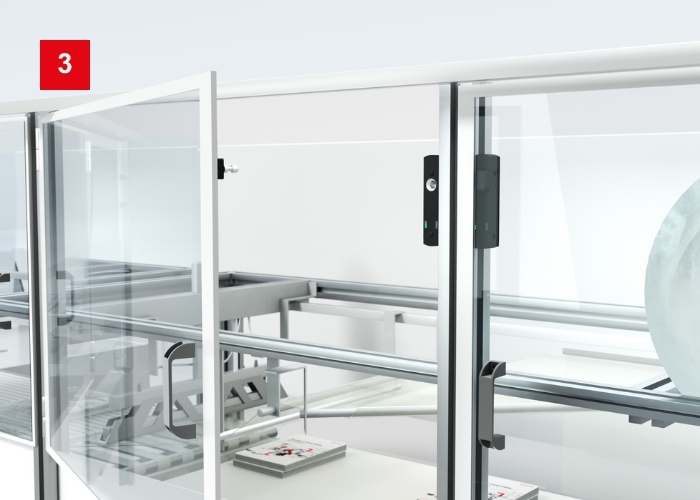
Monitoring of doors and flaps with guard interlocking
Requirement:
Moving protective devices such as doors and flaps protect the operator from hazards. In the so-called white zones, safety switches with guard interlocking in a hygienic design are required.
Solution:
The L100, L250 and L300 safety switches with guard interlocking keep protective doors locked until access is released by an electric signal. The series includes standard designs, devices with integrated operational controls as well as with RFID‑coded actuators. The technopolymer housings (L250) with smooth surfaces are suitable for hygiene-sensitive areas.
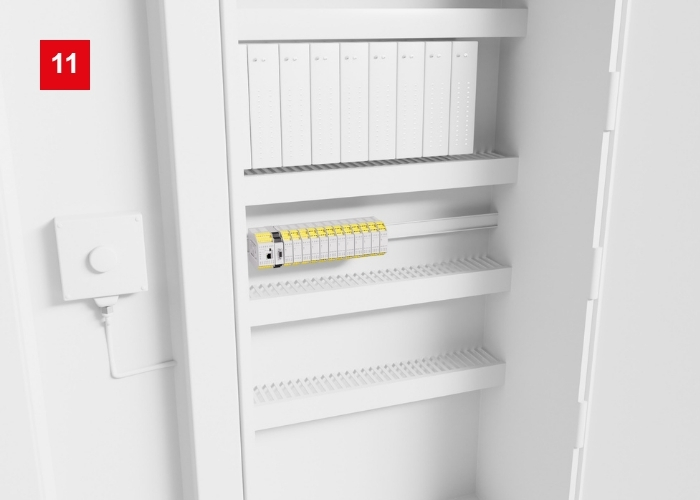
Integration of safety sensors
Requirement:
Safe evaluation units are required to integrate safety sensors and safety command devices into the machine control’s safety circuit. These can be either safety relays with fixed functions for individual safety sensors or programmable safety controls with flexible functions for multiple safety sensors.
Solution:
The MSI SR safety relays offer simple and cost-effective solutions for the integration of individual safety sensors. For more complex safety functions and multiple sensors, the configurable MSI 400 safety controls are used. They are modularly expandable and can be easily adapted to the application.
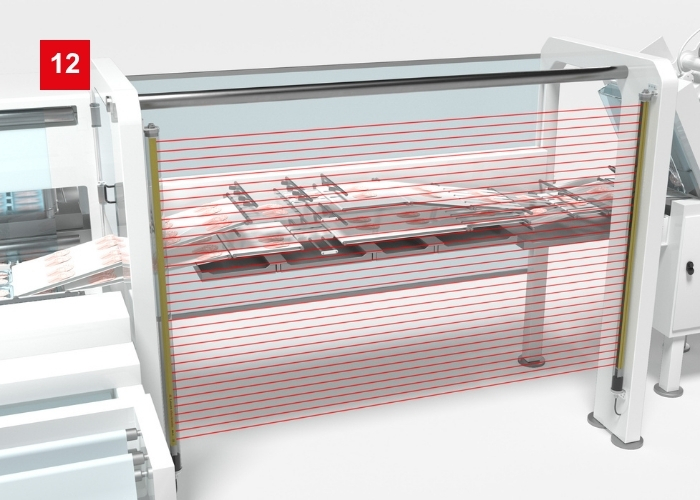
Safeguarding of points of operation at access points
Requirement:
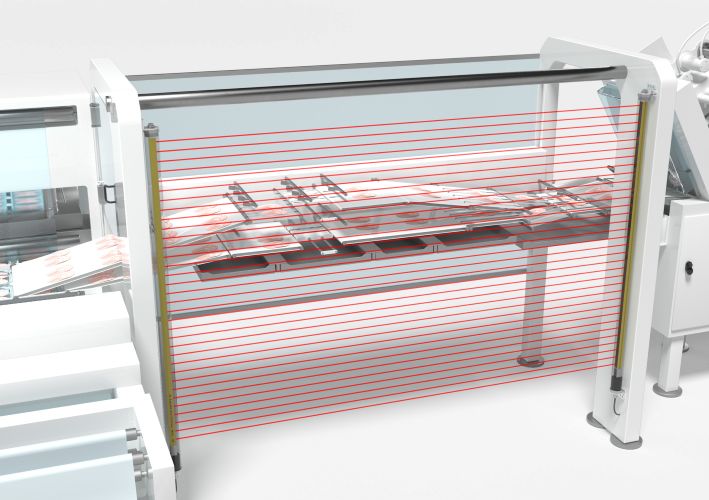
Large machine openings that provide access to danger zones must be secured during operation. Safety sensors with a high IP protection class are required for use in hygiene-sensitive environments.
Solution:
The MLC 500-IP safety light curtains safeguard points of operation in hygiene-sensitive areas of food processing and have the highest protection class IP 69K. For this purpose, the light curtains are mounted in a transparent and encapsulated tube. Different resolutions and protective field lengths offer optimal adaptation to the application.
Special challenges in meat, sausage, and cheese processing
Processing often takes place in refrigerated conditions to ensure the freshness and quality of the products. At the same time, contamination during the production process and the potential transfer of contaminants must be prevented. For this reason, machines and systems are thoroughly cleaned multiple times a day at high pressure using special cleaning and disinfecting agents.
In addition, a gap-free and hygienic mechanical design is crucial for preventing deposits and consistently meeting the high requirements for sensor technology in white zone and hygienic applications.
With high protection classes and special hygiene and cleaning resistance certifications, modern sensor solutions are optimally designed for demanding environments. They ensure reliable performance both in wet areas with regular cleaning cycles and in sensitive hygiene areas with direct food contact.
As a result, they support stable processes, minimize downtime risk, and contribute to consistently high system availability. The materials used and the constructive measures also ensure that the set switching points remain stable even when temperatures fluctuate, thereby guaranteeing reliable detection in the long term.