


Sensor solutions for detection and positioning in robotic cells
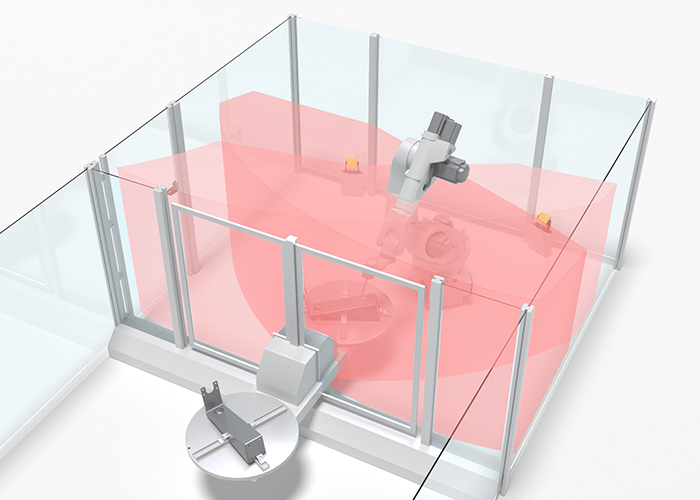
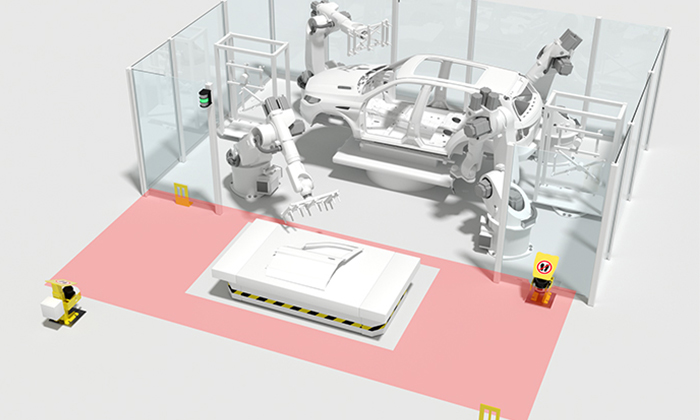
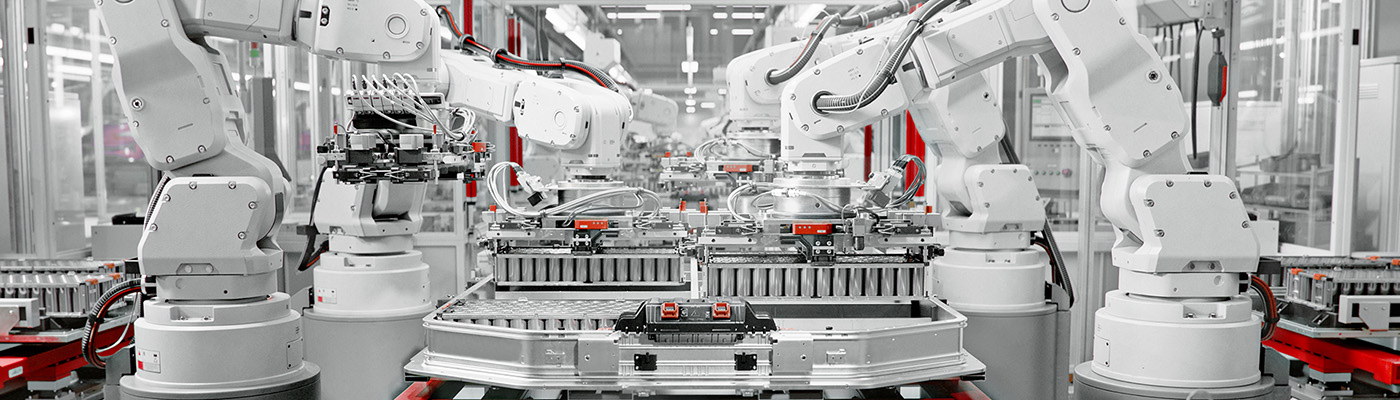
Sensor applications in stationary robot-assisted production and handling cells — also known as robot cells — are found in numerous highly-automated industrial sectors. These systems often perform tasks in demanding environments or when handling large, heavy and unwieldy workpieces.
Typical areas of application include machining centers, interlinked systems in the machine tool sector, automotive and battery manufacturing, the wood processing and furniture industries, as well as palletizing and depalletizing processes in distribution logistics and packaging technology.
Sensor applications in the robot cell
Sensors form the information basis of the automation system and provide the data necessary for controlling robot cells and automated processes. Similar to traditional machines, they perform a wide range of tasks, such as presence and object detection, the detection and identification of workpieces, and precise position detection.
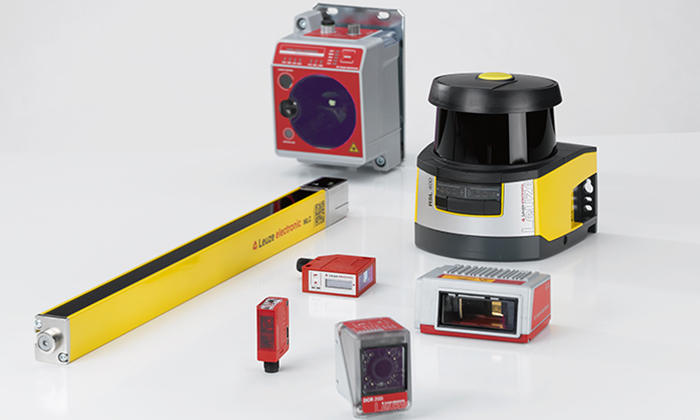
Various types of sensor technology and technical solutions are available to meet these different requirements; the appropriate choice depends on the application, environmental conditions and required accuracy.
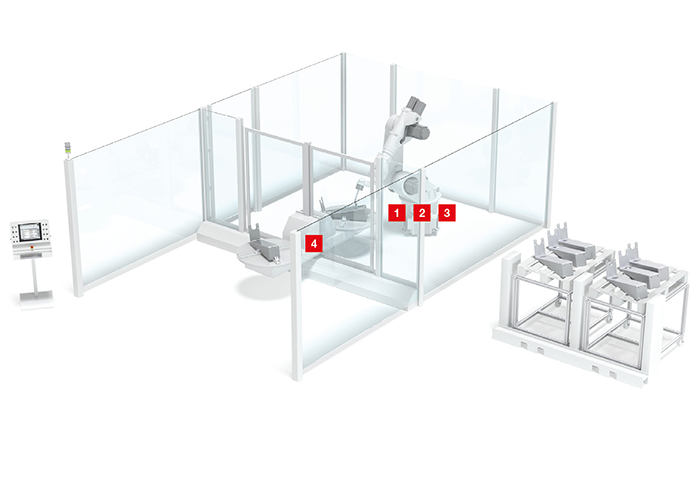
Sensor applications in detail
1. Error-free acceptance of blanks
Requirement:
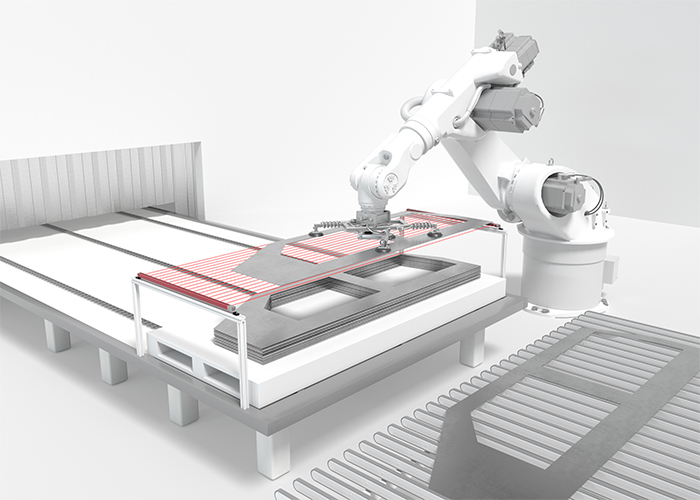
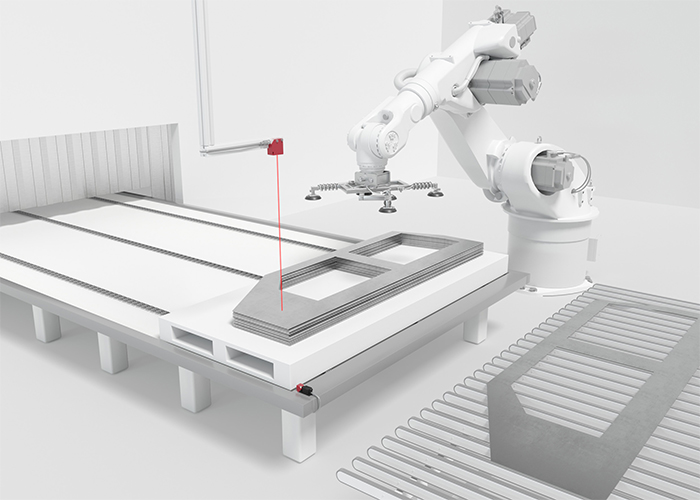
A gripper on the robot arm automatically removes the top part from the stack of material (blank) and places it on the infeed to the press. To ensure separation, the entire length must be detected.
Solution:
With CSL 700 switching light barriers, the required length of up to 3 m can be achieved. Different resolutions and freely programmable switching outputs with an IO-Link interface enable flexible adaptation and integration into the system.
2. Monitoring of the stack height
Requirement:
To monitor the continuous material feed, the stack height must be detected.
Solution:
The ODS distance sensors and the ODT distance diffuse sensors with time-of-flight (ToF) measurement enable reliable detection of greater distances and offer flexible application options in automated systems.
Depending on the requirements, the sensors can either perform continuous distance measurement (e.g. ODS 10, ODS 110) with analog output or monitor a defined height or position via a parameterized switching point (such as HT 10).
3. Presence check at the gripper
Requirement:
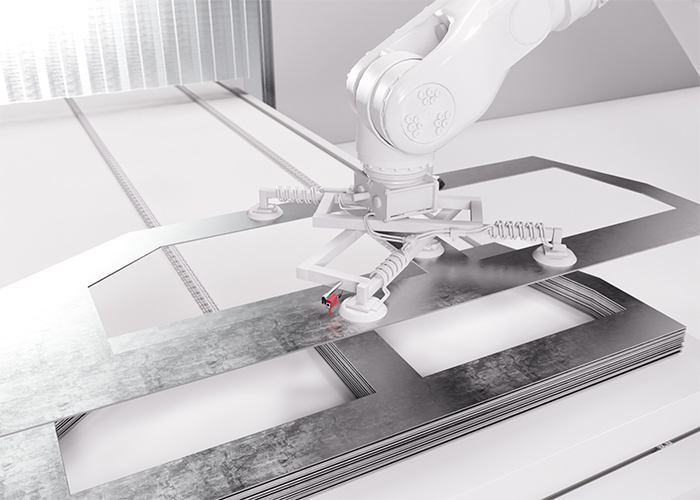
Using suitable sensors mounted directly on the gripper of the stationary robot, it is possible to verify whether the gripper is correctly positioned relative to the workpiece or material. For a precise, optimized approach, measuring a distance value is particularly advantageous, as this allows the gripper’s position to be precisely controlled and the gripping process to be reliably executed.
Solution:
The miniature optical ODT 3C distance sensors offer a large working range of up to 2.5 m despite their compact size. They enable precise localization and positioning by outputting measurement values via IO-Link. Thanks to their easy integration and flexible communication options, the sensors help make processes more reliable and significantly increase process reliability.
4. Presence / position control of the pallet
Requirement:
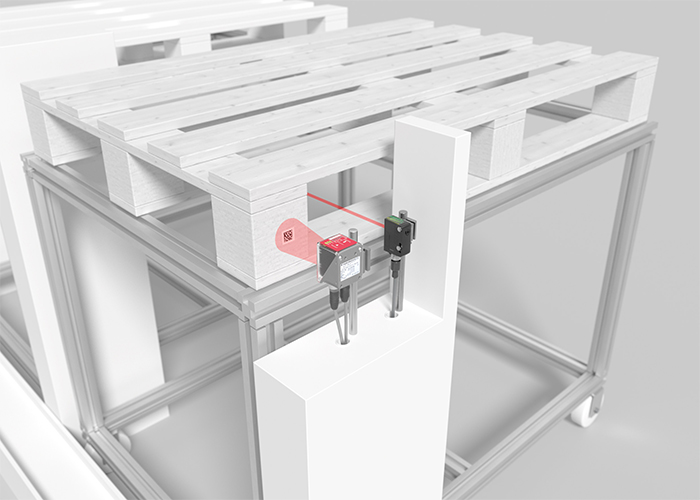
Before starting an automated operation, a check must be done to see whether the pallet or load carrier is present at the designated position and correctly aligned. Detection can take place at one or more defined check positions.
Depending on the system used and the process control requirements, a “Track & Trace” concept must also be considered, enabling unambiguous identification and complete traceability of the pallet or load carrier.
Solution:
The compact HT 15 diffuse sensors, with their active background suppression and high ambient light sensitivity, enable typical load carriers to be reliably detected. At the same time, they can be used for process control by, for example, triggering the activation of downstream optical DCR 200i code readers to capture and decode the codes on the pallet.
> Learn more about diffuse sensors with background suppression