





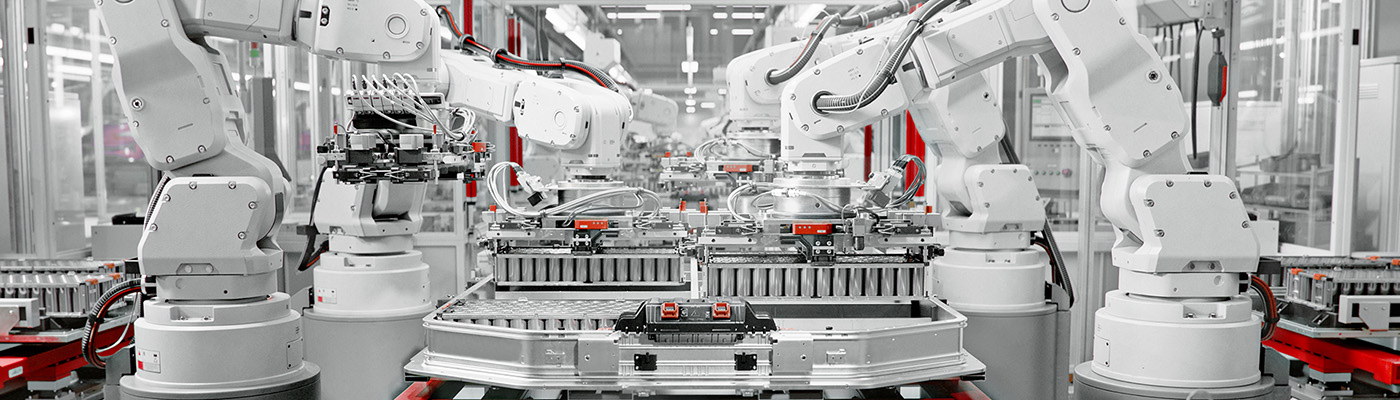
Industrial robots and stationary robotics for industrial applications
Factories of the future will be characterized by flexible production cells, often equipped with stationary robots, ranging from individual manufacturing cells to the networked production system of a smart factory. Automated, interlinked processes improve productivity, material utilization and product quality.
Robots reliably and continuously perform precise, repetitive and sometimes safety-critical tasks; collaborative robot systems (cobots) also open up new possibilities for direct collaboration between humans and machines. Leuze’s sensor solutions support two key areas: safety at work in and around robot cells, as well as the reliable detection and positioning of workpieces and components.
Sensor applications for industrial robots
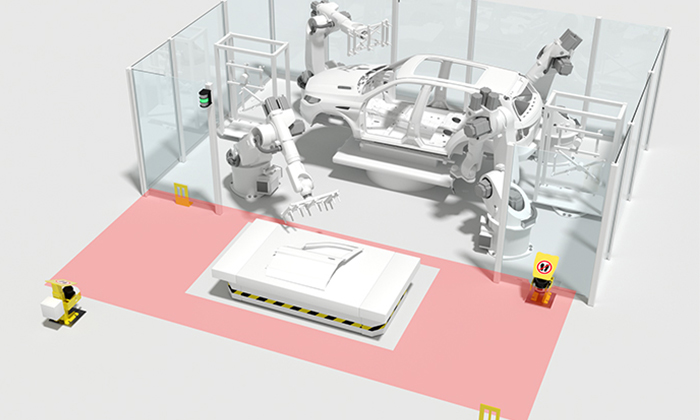
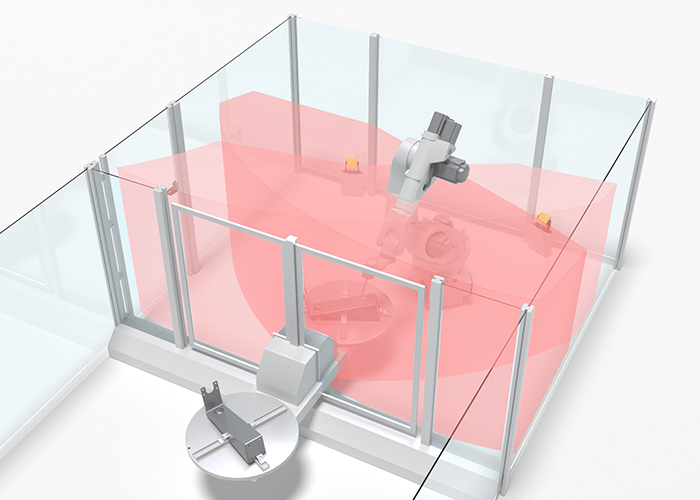
From the perspective of sensor technology, there are two key application areas when it comes to stationary robotics and robot-assisted production cells. On the one hand, the focus is on safety at work: sensor solutions monitor access points and hazardous areas and protect both people and machines through reliable safety functions.
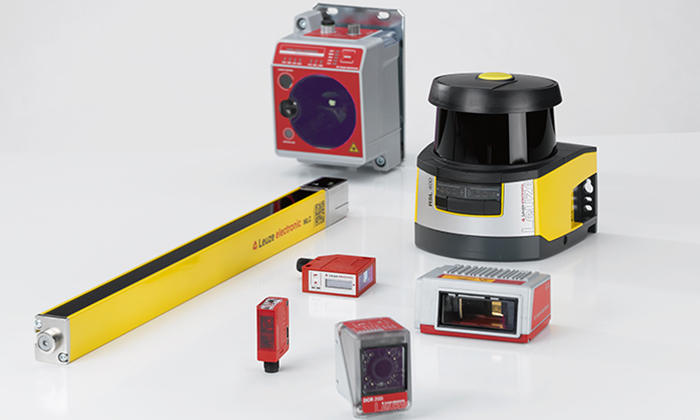
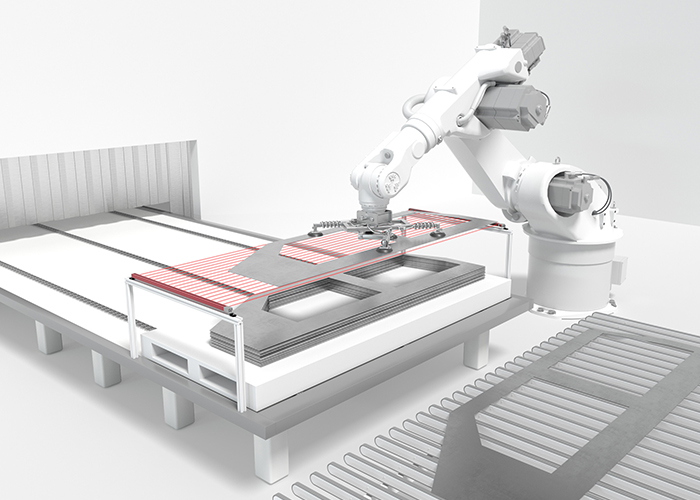
On the other hand, sensors perform a wide range of tasks within automated processes. These include, among other things, detecting presence and objects, precisely tracking positions, identifying components and triggering subsequent process steps. Depending on the specific requirements, different types of sensor technology are used for these purposes.
Your benefits with our solutions for industrial robots
Precise automation
Precise movements and repeatable processes for maximum product quality.
Intelligent sensor solutions
Optical and inductive sensors monitor workpieces and material flows.
Safe human-robot collaboration
Safety solutions protect employees and ensure reliable processes.

Robotics across the entire value chain
Stationary robotics automates production, assembly and logistics processes using permanently installed robotic systems, intelligent sensors and high-performance control technology. Whether it’s a single manufacturing cell, interlinked production line or fully integrated smart factory, stationary robotic systems enable precise, repeatable processes, consistently high process quality and efficient use of resources.
Particularly in the automotive industry, electronics manufacturing, intralogistics, and mechanical and plant engineering, stationary robotic systems make a decisive contribution to stable processes, high process quality and optimized production.
Leuze’s sensor solutions support efficient, transparent processes along the entire value chain — from material flow to the detection and positioning of workpieces and components through to the flow of information within networked production facilities. Depending on the requirements, various types of sensor technology are used: from presence and object detection to precise position measurement, component identification, and the safeguarding of access points and hazardous areas.
The combination of robotics, sensor technology and modern communication technology results in intelligent, networked production systems that are flexibly scalable and can be seamlessly integrated into existing ERP and MES structures.
Frequently asked questions about industrial robots and stationary robotics
Stationary robotics refers to permanently installed robotic systems that perform automated tasks in areas such as manufacturing, logistics or laboratory applications. As they are integrated into defined work areas, these systems are often referred to as manufacturing or production cells.
Typical applications for stationary robotic systems include repetitive, precise process steps such as welding, gluing, assembling, painting, inspecting, sorting, order picking and palletizing. Thanks to their high repeat accuracy and process reliability, robotic systems are particularly well-suited for standardized and automated production processes.
Various types of sensor technology are used, including optical and inductive sensors for reliable detection and position tracking, camera systems for intelligent image processing, safety solutions to protect both people and machines, as well as rotary encoders and force/torque sensors for precise motion and process monitoring.
Stationary robotics contributes significantly to increasing productivity, process quality and safety at work. Through automated, precise and repeatable processes, it enables efficient, flexible and scalable production processes.
Yes, retrofit solutions allow existing production facilities to be specifically upgraded with modern robotics, sensor technology and control systems. This allows systems to be efficiently modernized, prepared for future requirements in the long term and their performance enhanced.
Integration typically takes place via standardized communication protocols and open interfaces. This enables efficient integration with higher-level systems such as ERP and MES systems and supports end-to-end networking of production processes.