






Inductive sensors with long operating range
For switching distances up to 40 millimeters
Inductive sensors are used in all industries for the contactless detection of metals. The position detection of moving machine components is important for controlling the mechanics. Inductive sensors are the first choice, even if tools, input materials or end products made of steel, aluminum, copper alloys or stainless steel need to be detected.
Inductive sensors, also called proximity sensors, are known for reliably detecting metallic objects over short distances. Models with increased switching distances enable operating ranges up to three times longer than standard inductive sensors. The sensors are therefore also suitable for applications with small installation spaces and/or large distances or tolerances – for example with inaccurate alignment, mechanical play or vibrations.
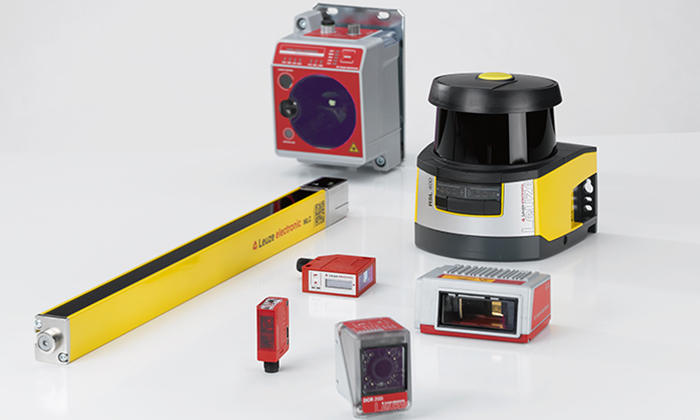
The robust sensors with the designation IS 200MM.2 are made of nickel-plated brass and are available in cylindrical M12, M18 and M30 housings. They can even be used under high mechanical stress and provide highly accurate measurements and repeatability at a good price-performance ratio. The sensors with switching distances of up to 40 millimeters can be installed quasi-flush or non-flush, depending on the respective application. The sensors expand the existing inductive product portfolio.
Highlights

Long switching distance for reliable processes

Lower storage costs through standardization
The long switching distance of the new IS 200 series’ sensors means one sensor model can be used for several operating ranges. Standardizing designs can reduce stocking costs.
Application

Frontal detection in the gantry crane
Requirement:
Solution:

Skid conveyor system position control
Requirement:
Solution:
