


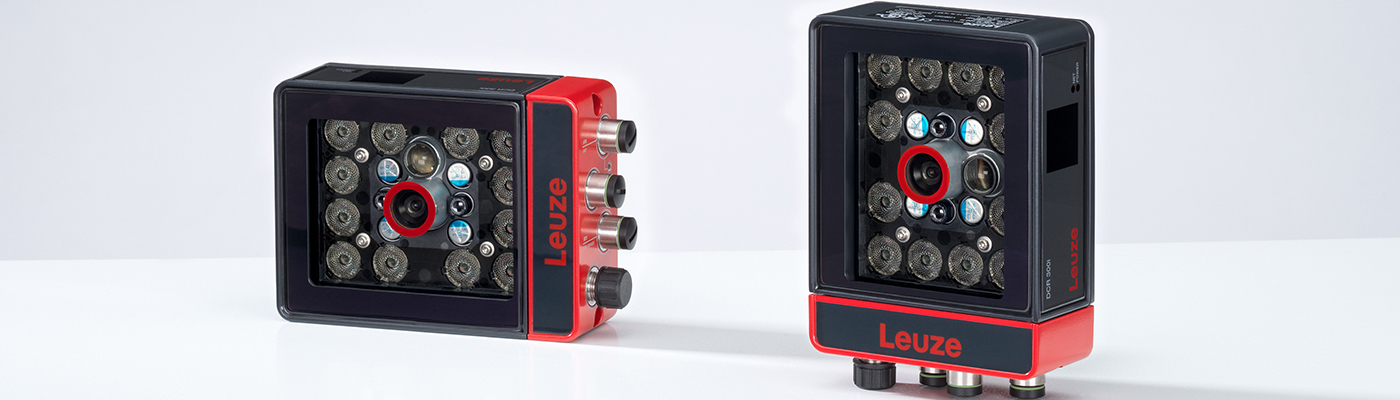
Camera-based code reader for maximum efficiency in intralogistics and automation
DCR 300i: Quickly integrated – easily configured – seamlessly networked
The DCR 300i is a camera-based code reader designed for modern intralogistics and automation applications. It reliably and quickly reads 1D- and 2D-codes on containers, trays, cardboard boxes and pallets – even at high conveyor speeds and under demanding environmental conditions.
Defined reading field curves enable easy mounting and precise alignment without a live image. Thanks to its slim design, zero-distance technology, and integrated polarization filter, the DCR 300i can be easily integrated even in spaces with limited installation space.
Intelligent functions such as automatic exposure control, dual-core decoding, and optimized reading gate control ensure high reading rates, maximum system availability, and high process reliability.
The browser-based, multilingual webConfig tool and color touch display are available for convenient commissioning, configuration, and diagnostics.
The integrated Industrial Ethernet connectivity supports the PROFINET, EtherNet/IP, EtherCAT, and TCP/IP protocols. Parameterization and monitoring are carried out directly via the control system using the module structures stored in the device file. The integrated Ethernet switch supports modern network topologies and simplifies integration.
The modular connection concept offers maximum flexibility in the choice of connection technology and enables fast, cost-effective integration into existing networks – without time-consuming connector assembly.
The DCR 300’s powerful technology, flexible integration options and user-friendly operation provide the basis for efficient and reliable identification processes in industrial and logistics applications.
Highlights
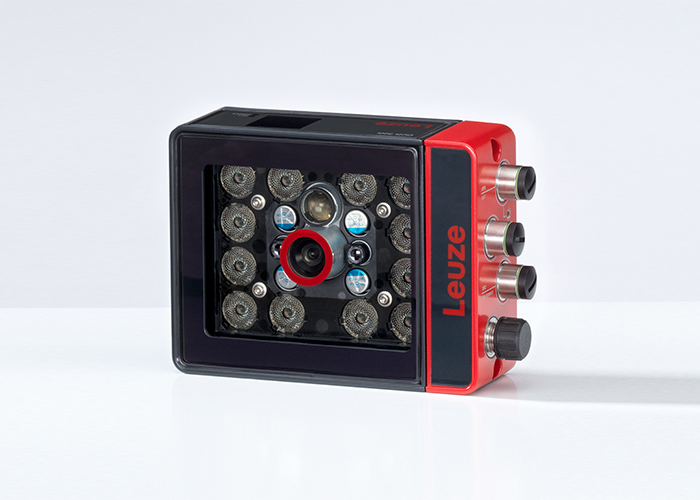
The DCR 300i offers maximum speed and efficiency throughout the entire integration and operation process. From rapid commissioning to easy integration into existing system designs and reliable identification during operation, all relevant factors for a quick and stable start to production are taken into account. The compact system architecture, powerful image processing, and optimized decoding technology enable fast code recognition with high reading rates – even in demanding applications with high throughput speeds. As a result, the DCR 300i reduces project expenses and integration efforts, shortens startup times, and supports consistently high system availability with fast and safe identification processes.
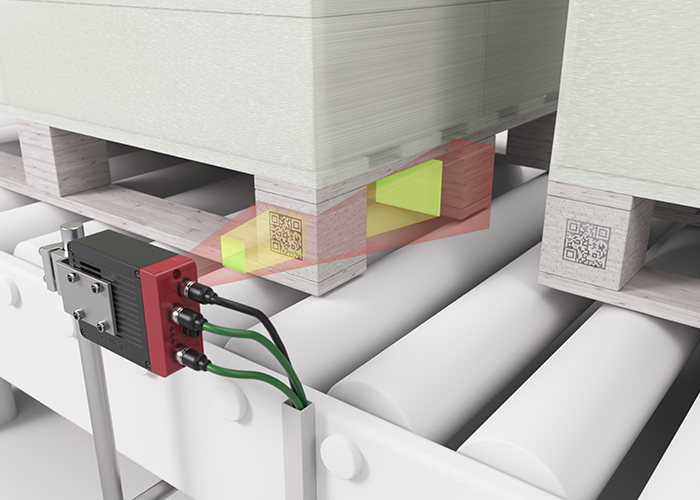
Thanks to defined and guaranteed reading field curves, the DCR 300i can be configured as early as the planning phase without reference or live images. This makes it possible to determine the device’s optimal positioning and integration at an early stage. This reduces project expenses, simplifies installation, and shortens commissioning times.
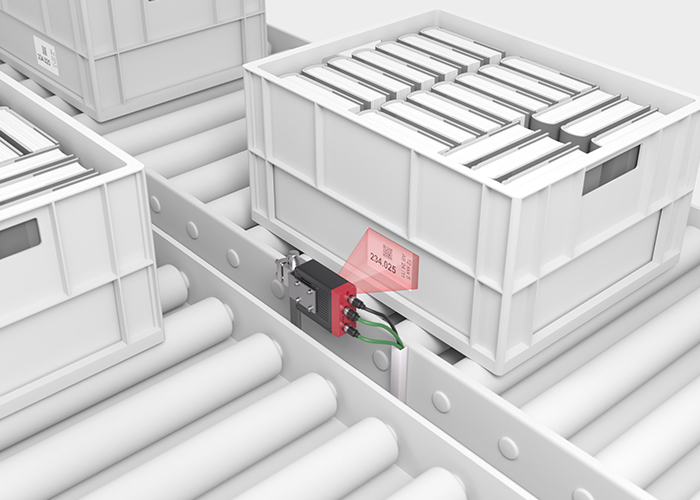
Zero-distance technology enables reliable code capture directly at the DCR 300i’s front screen, thereby ensuring optimal use of the available installation space. Combined with its exceptionally compact design and integrated polarization filter, the device can be easily integrated between adjacent conveyor lines, even in very tight installation spaces. This technology provides maximum flexibility in system design, reduces space requirements, and enables more compact conveyor systems without compromising identification performance.
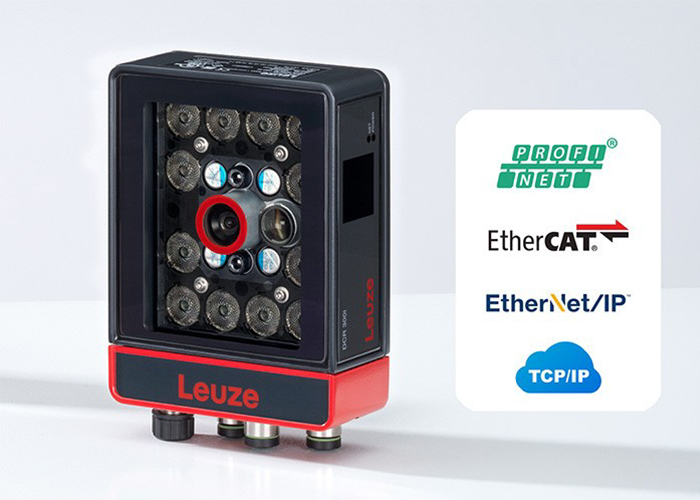
Integrated Connectivity allows the DCR 300i to be directly integrated into modern automation architectures and simplifies its integration into existing system concepts. Thanks to support for established communication standards such as PROFINET, EtherNet/IP, EtherCAT, and TCP/IP, the device can be quickly and efficiently integrated into the respective control environment. Parameterization, diagnostics, and monitoring are performed directly via the PLC and the familiar engineering environment – without the need for additional software or special training. This reduces engineering and commissioning times and significantly simplifies system integration. The central storage of the device configuration within the control project also ensures high serviceability: When a device is replaced, the stored settings are automatically applied, thereby minimizing downtime and sustainably increasing system availability.
Application
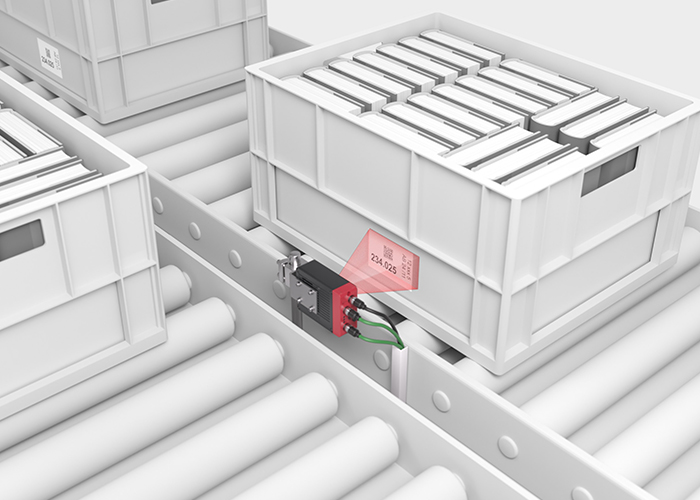
Container identification with lateral code reading
Requirement:
Solution:
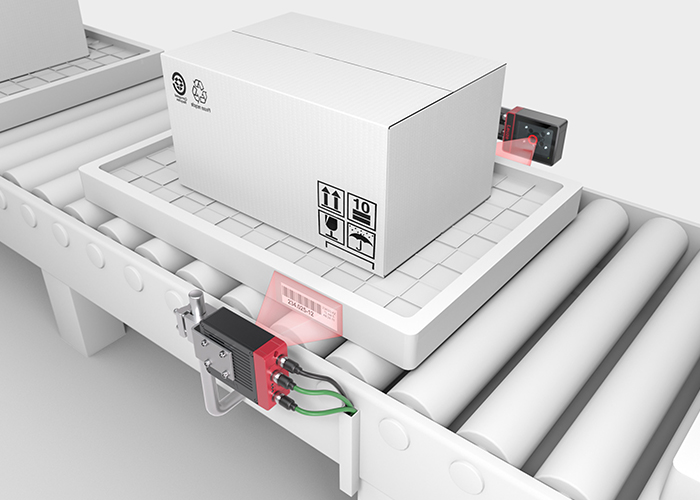
Reliable identification in tray conveyor systems
Requirement:
Tray conveyor technology is an essential component of modern intralogistics systems. A wide variety of products, such as envelopes, packages, cans or cartons, are transported on the trays. However, the trays’ low height leaves only limited space for labeling. For this reason, barcodes are often applied to the sides in a so-called “picket fence” arrangement or, increasingly, as compact 2D-codes. To ensure a smooth material flow, these codes must be reliably detected despite the small labeling areas and varying product sizes. A high-performance identification solution is therefore crucial to ensure safe object tracking, high process speeds, and maximum transparency along the entire conveyor line.
Solution:
The DCR 300i was specifically developed to meet the requirements of modern tray conveyor systems and reliably detects both 1D- and 2D-codes. Thanks to its compact design and integrated polarization filter, the camera-based code reader can be easily integrated onto or between closely spaced conveyor lines, even in constrained spaces. The powerful image processing, combined with optimized reading gate control, ensures fast and reliable decoding even at high conveyor speeds. As a result, the DCR 300i ensures safe identification of trays and their transported goods, supporting a smooth material flow in modern intralogistics systems.
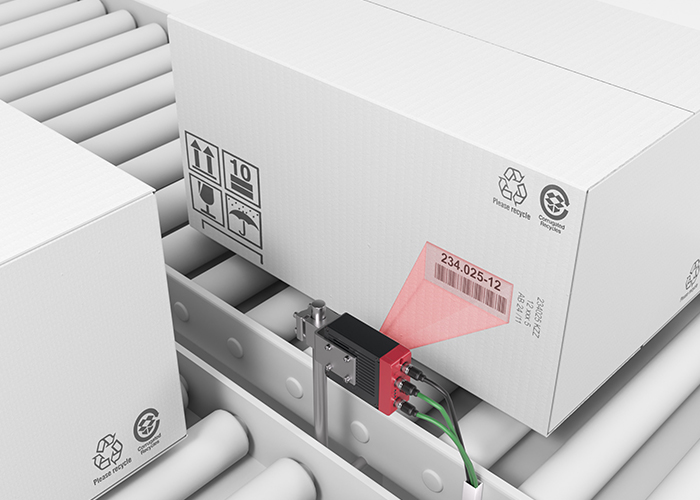
Reading inkjet barcodes printed directly on cardboard boxes
Requirement:
In many intralogistics applications, cardboard boxes are transported directly on the conveyor system without additional transport aids. To reduce costs and simplify the labeling process, they are often identified by inkjet codes printed directly onto the cardboard box instead of separate barcode labels. However, the widely varying print and material properties pose particular challenges for code detection. Differences in the cardboard surface, varying card colors, as well as differing degrees of ink bleed can significantly affect code quality and contrast. However, for reliable material flow control, the applied 1D- and 2D-codes must be read reliably and consistently to ensure a high level of process reliability and system availability.
Solution:
The DCR 300i was developed specifically for demanding identification tasks in intralogistics and is also capable of reliably reading inkjet codes printed directly on cardboard boxes. Even with fluctuating contrasts, smudged ink, or varying cardboard surfaces, the patented exposure control within the reading gate ensures optimal image quality. In combination with decoding algorithms specifically optimized for directly printed barcodes, the DCR 300i delivers outstanding reading performance and ensures reliable identification even under difficult conditions. This stabilizes processes, reduces no-reads, and ensures high system availability.
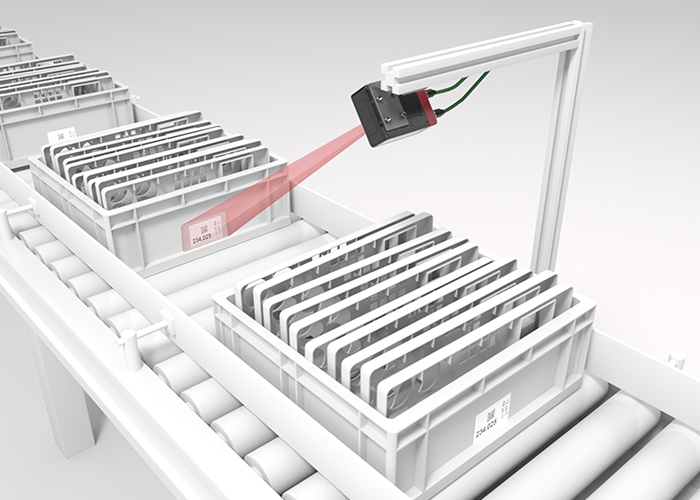
Barcode reading at a downwards angle in carton and container conveyor systems
Requirement:
On conveyor systems, container orientation often changes, so side-on code reading is not always possible. In these cases, identification must be performed from the front or back at a steep downward reading angle. The resulting unfavorable reading conditions place high demands on the reading technology, as 1D- and 2D-codes must be reliably detected even from difficult angles.
Solution:
The DCR 300i handles this challenge with ease. Regardless of whether the barcode is arranged in a picket-fence or ladder pattern on the container’s front or rear side, the camera-based technology enables reliable detection even at very steep reading angles. The optimally designed reading field, intelligent exposure control, and powerful decoding algorithms ensure high reading performance even under demanding conditions. As a result, the DCR 300i can be flexibly integrated into a wide variety of system configurations and ensures reliable identification without manual reworking – for maximum process safety and a smooth material flow.
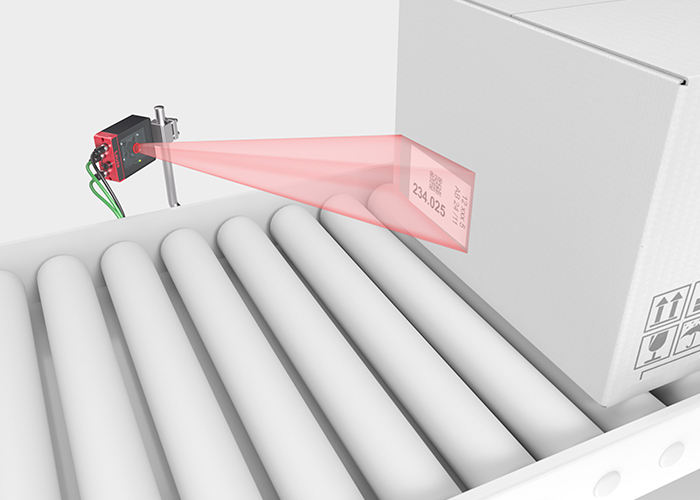
Angled barcode reading from the side in carton and container conveyor systems
Requirement:
In many intralogistics applications, barcodes are arranged in a ladder or picket fence pattern on the front or rear side of cardboard boxes and containers. To ensure reliable identification, these codes must be captured accurately while the objects pass through the reading station, sometimes at high speed. Often, only a side view of the conveyor line is available.
Solution:
The DCR 300i enables reliable code capture even from oblique side angles. Thanks to its camera-based technology, barcodes are reliably identified regardless of their orientation – whether in ladder or picket fence arrangements. Combined with long-range optics, the DCR 300i offers highly flexible reader positioning and enables reliable detection even at greater working distances. This simplifies integration into existing conveyor systems and ensures a high reading rate across a wide variety of applications.
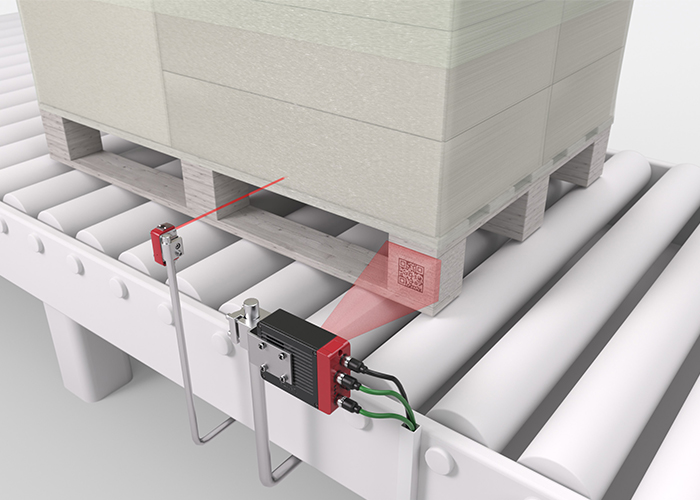
Reading codes on pallet feet in pallet conveyor systems
Requirement:
In pallet conveyor systems, pallets are often identified using a barcode label attached to a pallet foot. As supply chains become increasingly digitalized, QR codes printed directly onto EPAL pallets are also expected to become more common. The label is located on the right front pallet foot as standard, and must be reliably detected even under challenging environmental conditions.
Solution:
The DCR 300i offers a high-performance solution for the reliable identification of pallets and detects both traditional 1D barcodes and modern 2D-codes reliably and quickly. Optimized reading field curves, combined with patented exposure control, ensure consistently optimal image quality and stable decoding across the entire detection range. As a result, the DCR 300i ensures a high reading rate, maximum process reliability, and a smooth material flow in modern pallet conveyor systems.
Overview of technical data
| Feature | DCR 300i |
| Functions | Reading of 1D, 2D, and stacked barcodes |
| Chip | CMOS monochrome |
| Resolution Pixel size | 1920 (H) x 1080 (V) pixels -> 2MP 2.5 x 2.5 um2 |
| Image capture | Max. 60 fps |
| Illumination | Red LED Risk Group 0 (Exempt, no risk) |
| Reading distances | 30 mm – 670 mm |
| Module size | 0.2 mm – 1.0 mm |
| Aimer | 2 green LEDs for alignment |
| Display | Color touch display |
| Interfaces | Profinet, Ethernet/IP, EtherCat, Ethernet TCP/IP |
| Switching inputs/outputs | 1 input / 1 input/output (configurable) |
| Operating temperature | 0–45°C without heating / -30–45°C with heating |
| Housing / protection class | Die-cast aluminum / IP 65 |
| Supply voltage | 18 – 30 V DC / 24 V +/- 20% with heating |
| Power consumption | Typ. 13 W without heating / typ. 15 W with heating |