





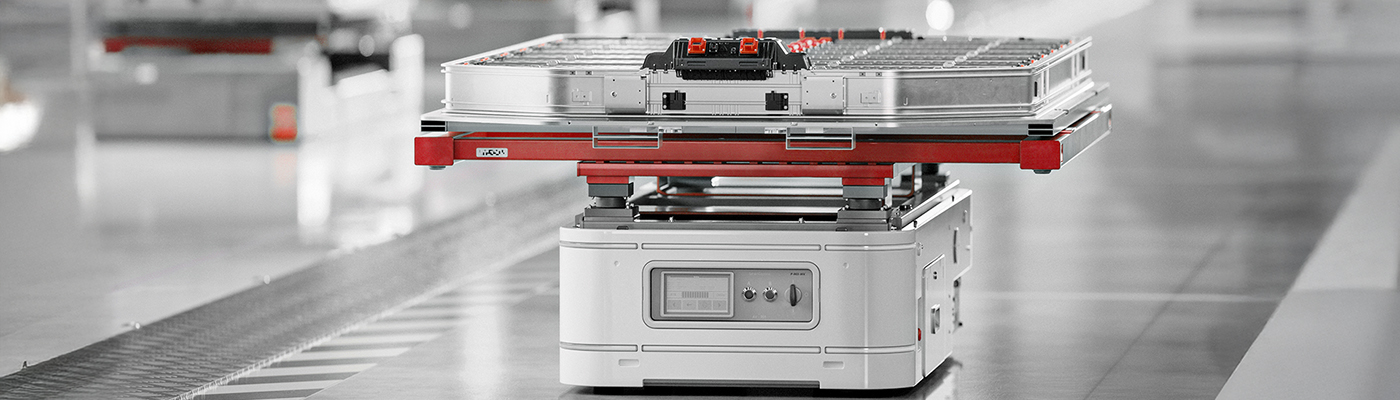
Mobile robots for flexible production and logistics processes
Nowadays, mobile robots do much more than just transport tasks. They navigate autonomously through production halls, warehouses or outdoor areas and react in real time to changes in their environment.
Sensor applications in mobile robotics
The requirements for sensor technology in mobile robots are diverse and are largely determined by the respective area of application and specific operating conditions. Since mobile robots and AGVs perform different tasks, sensor and detection concepts need to be appropriately adapted.
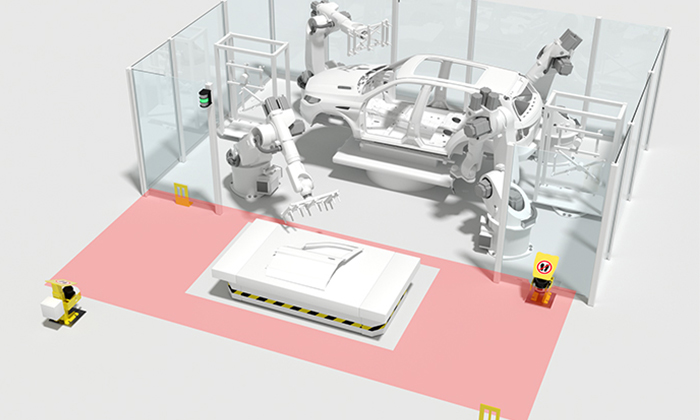
Key areas of application include safety at work to ensure safe operation in dynamic environments with people and equipment, navigation for reliable orientation, obstacle detection and autonomous path planning, as well as detection and positioning for the precise detection of objects and exact determination of the robot’s own position in the space.
Your benefits with our solutions for mobile robots
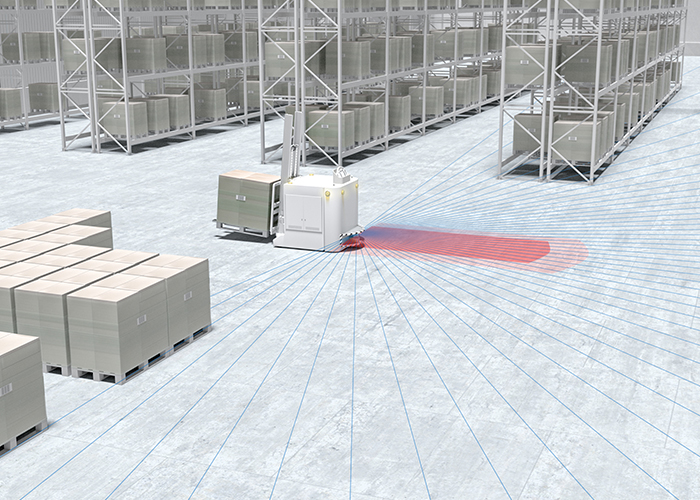
Autonomous navigation
Precise navigation and intelligent path planning with modern sensor technology
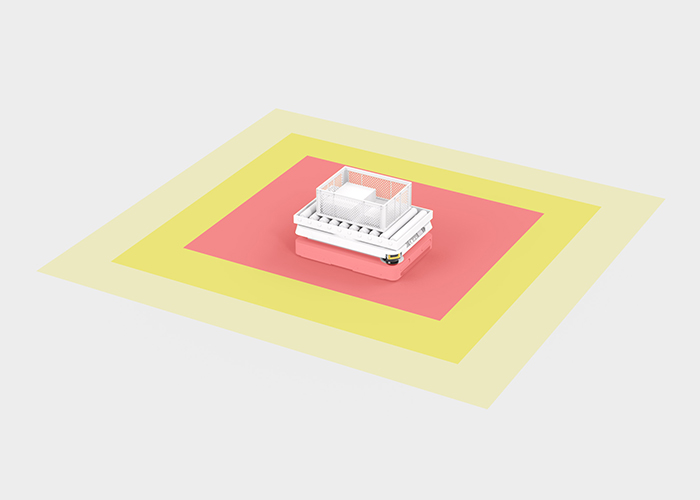
Maximum safety
Safety laser scanners reliably protect people, vehicles and goods.
Flexible processes
Transport routes and workflows can be quickly adapted to new production requirements.
Applications and added value of mobile robotics
The requirements for sensor technology are diverse and largely determined by the respective area of application and specific operating conditions. Since mobile robots and AGVs perform different tasks, sensor and detection concepts tailored to these tasks are required.
intelligent mobile robots that independently map their environment, autonomously detect and navigate around obstacles, and dynamically optimize their paths based on the situation.
- Autonomous Mobile Robots (AMRs): intelligent mobile robots that independently map their environment, autonomously detect and navigate around obstacles, and dynamically optimize their paths based on the situation.
- Automated Guided Vehicles (AGVs): track-guided mobile robots that navigate along predefined paths or guide lines and are particularly well-suited for standardized, repetitive transport tasks.
- Industrial utility and transport vehicles: robotic carts, transfer trolleys or industrial trucks for efficiently transporting materials and goods inside the plant.
The advantages of mobile robotics especially lie in increased productivity, high flexibility in the face of changing requirements, and improved safety at work by taking over tasks in potentially hazardous or physically demanding work areas. In addition, mobile robots enable human resources to be employed more efficiently and, by providing real-time information on the location and status of goods, contribute to increased transparency and material flow optimization.

Frequently asked questions about mobile robots
Mobile robotics encompasses autonomous or semi-autonomous robotic systems that move through their environment, either along a guided path or by freely navigating, and perform tasks such as material transport, inspections, and other recurring or logistical processes.
Autonomous Mobile Robots (AMRs) navigate their environment autonomously and adaptively by continuously mapping it and dynamically adjusting their paths. Automated Guided Vehicles (AGVs), on the other hand, primarily move along predefined paths or markings and are particularly well-suited for standardized and recurring transport processes.
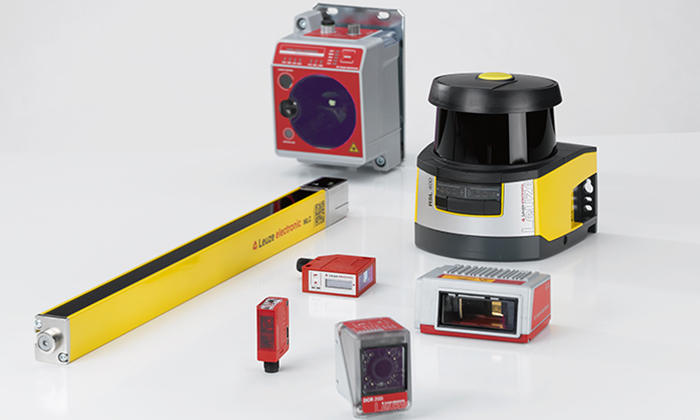
Safety laser scanners, lidar sensors, camera systems, ultrasonic sensors, and optical and inductive sensors are among the kinds of technology used in AGVs.
Autonomous guided vehicles increase efficiency, reduce manual transport tasks, improve safety, and create transparent material flows in production and warehousing.
Yes, modern mobile robotics solutions can be easily integrated into ERP, MES or WMS systems via standardized interfaces. It does not matter whether the system is an AGV or AMR.
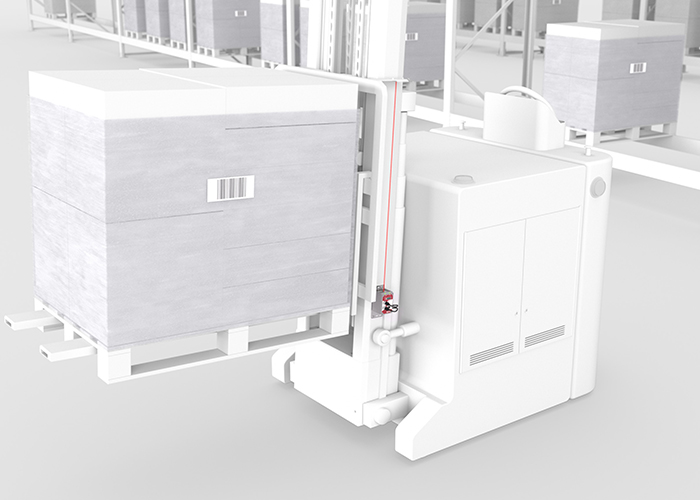
Typically, a measuring distance sensor (e.g. AMS 100i) is used, which measures, for example, the Y-position of the fork with millimeter precision. This task is also referred to as lift positioning.
For fixed positions at close range, diffuse sensors with background suppression detect objects or edges very reliably and precisely. For longer distances, ToF (time-of-flight) sensors are suitable, and for variable distances, measuring sensors or distance sensors are used.
Mobile robots are often integrated via standardized interfaces and edge computing solutions, allowing them to be seamlessly integrated into ERP, MES or WMS systems. Manufacturers also support safety and data protection requirements to ensure safe collaboration with humans.