






Sensor solutions for packaging processes in the dairy industry
When filling and packaging milk and dairy products, the hygiene requirements for automation systems are particularly high. Furthermore, there are also large temperature differences between the operating periods and the regularly performed cleaning cycles. During the cleaning process, all components of the packaging machines must withstand high pressures and temperatures as well as aggressive cleaning agents.
In production areas with direct food contact, sensors with stainless steel housings and plastic fronts are used to meet the high hygiene requirements. Various sensors are used throughout the entire production process: during transport on conveyor systems, for the supply of materials such as containers and packaging films, and to ensure traceability.
Sensor solutions along the packaging line
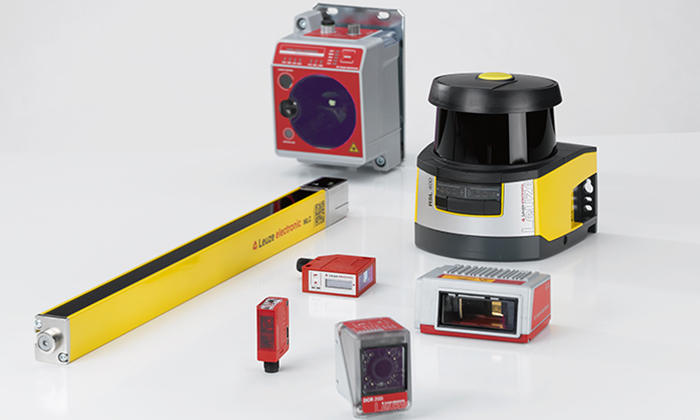
For hygiene-sensitive applications in food packaging, we offer a comprehensive portfolio of sensor and safety technology. These sensor solutions, developed specifically for demanding production environments, meet high standards for hygiene, cleaning resistance, and detection reliability, and ensure reliable object detection even under demanding conditions.
In addition, safety solutions are available for the reliable safeguarding of machines, doors, and flaps. Thanks to their hygienic version and high protection class, they are ideally suited for use in demanding environments in the dairy and food industries.
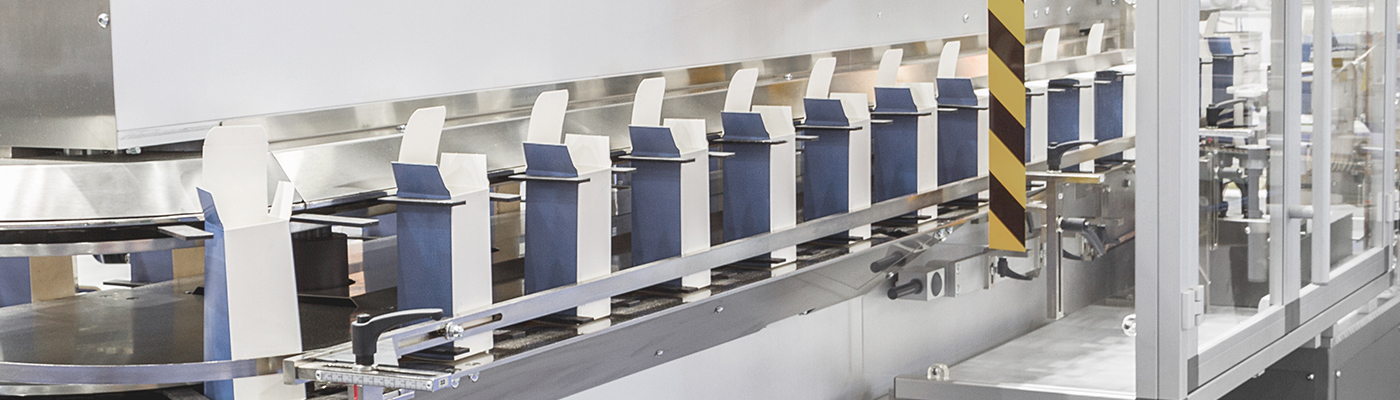
Click on the numbered applications to learn more about the respective sensor solutions.
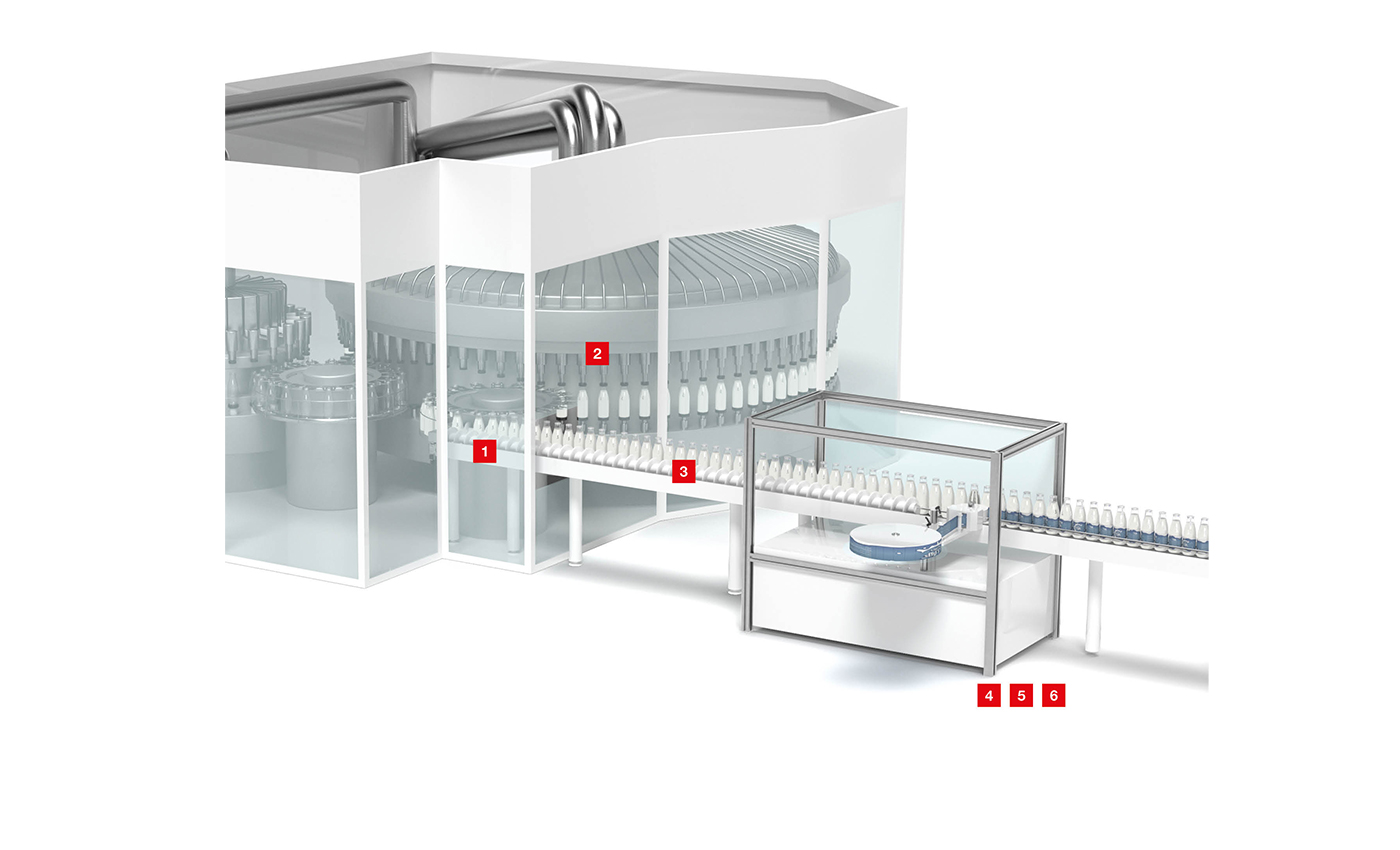
Applications in the dairy industry’s packaging process
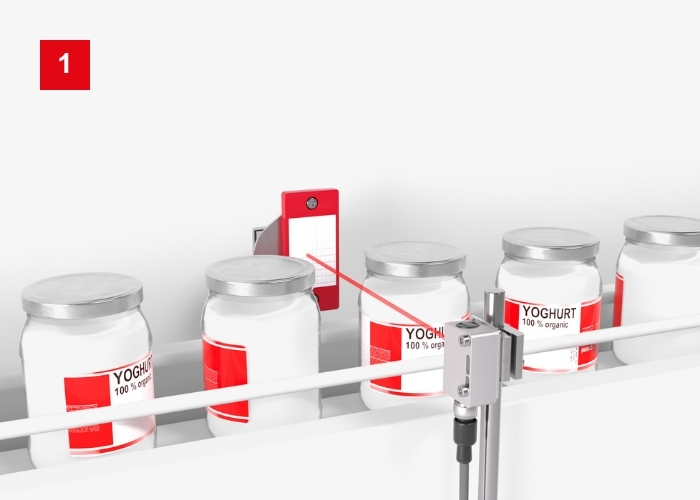
Container detection during transport
Requirement:
In a filling system for yogurt jars or milk bottles, their position on the conveyor belt must be reliably detected. Sensors for this application must withstand the demanding environmental conditions in the white zone.
Solution:
The PRK 55C retro-reflective photoelectric sensor reliably detects transparent containers. The sensitivity can be set via a teach button. An optional tracking function automatically compensates for soiling on the reflector or sensor. The robust stainless steel housing in wash-down design has protection class IP 69K.
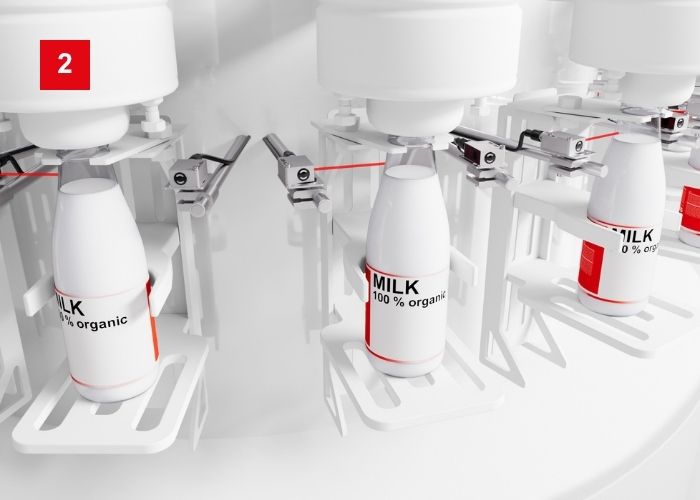
Filling level measurement
Requirement:
The fill level should be exactly the same in all bottles – underfilling of bottles must be prevented. Optical sensors can be used for reliable detection of the fill level of aqueous liquids in any container type in demanding environmental conditions.
Solution:
The LS 55CI.H2O and LE 55CI.H2O throughbeam photoelectric sensors are suitable for the detection of aqueous liquids due to the wavelength of the LEDs. The transmitter and receiver system of the 55C stainless-steel series in wash-down design has a high radiation capacity and also detects liquids in colored containers and containers with plastic labels.
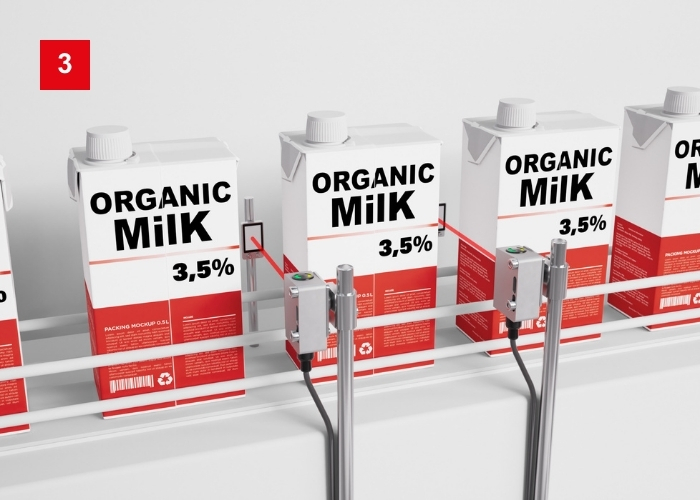
Detection of soft packaging
Requirement:
The flow of goods is to be detected for transport control of a single-lane transport line of soft packaging. Optical sensors can detect even the smallest gaps between soft packages.
Solution:
The PRK 55CL retro-reflective photoelectric sensor with a small laser light spot is suitable for detecting small gaps. A matching reflector in the MTKS.5 stainless steel housing is available in several sizes. The sensor and reflector are ECOLAB-certified.
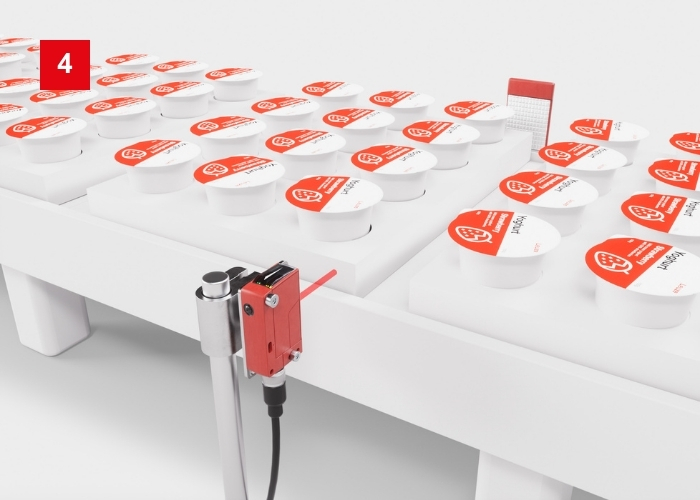
Detection of outer packaging
Requirement:
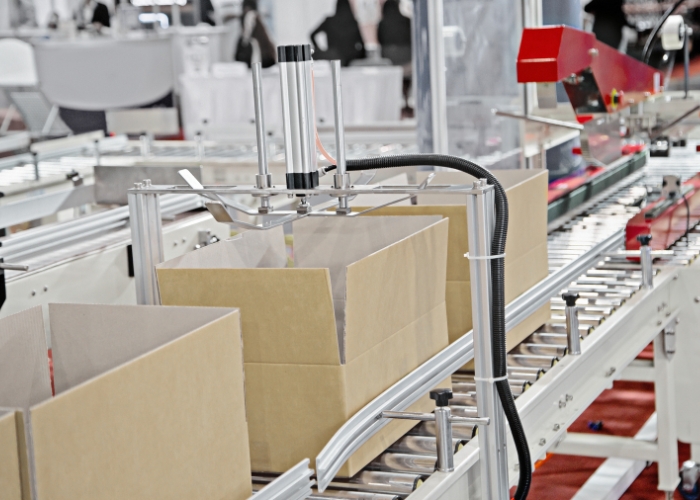
If identical products are combined into larger packages, they must be reliably detected regardless of their shape, color or surface. High-performance sensors are an important prerequisite for a high degree of automation.
Solution:
The PRK 46C retro-reflective photoelectric sensors are suitable for detecting outer packaging thanks to their high function reserve and good optical properties. The sensors have protection class IP 69K and ECOLAB certification. Other models with different light spot shapes are available.
Code reading for process control
Requirement:
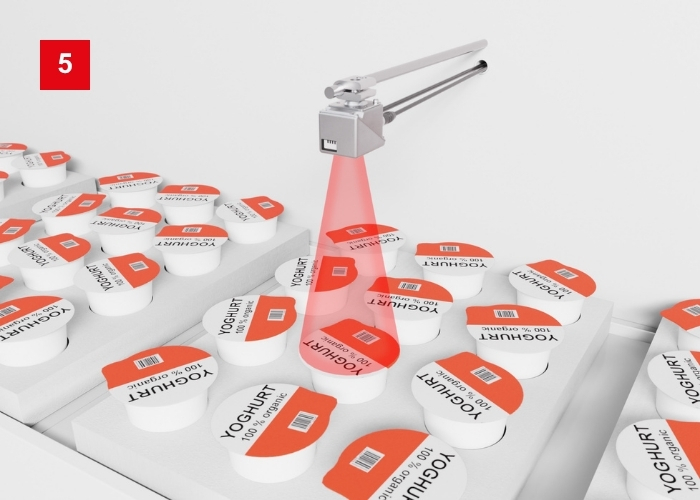
For process monitoring and traceability, the printed code on a bucket lid can be read with a code reader. As the orientation of the code often cannot be guaranteed, image-based code readers should be used.
Solution:
The DCR 200i code reader in a stainless steel housing is suitable for these environments thanks to various optics covers, for example made of glass or plastic. The integrated web browser and various Industrial Ethernet interfaces make the code reader flexible to use.
Detection of splices
Requirement:
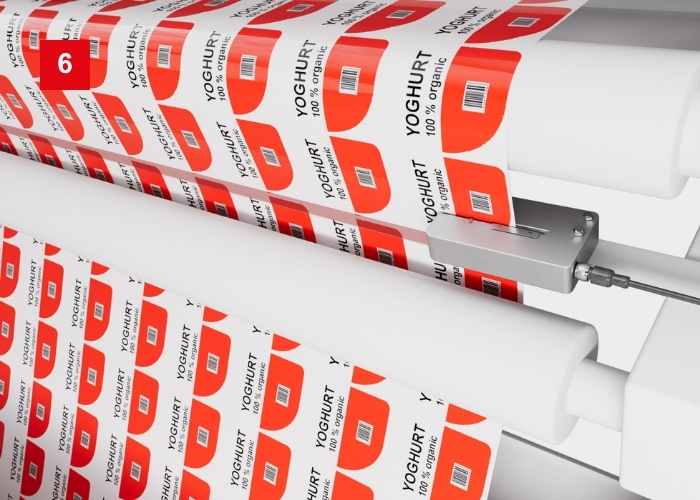
For a safe production process, splices in the sealing film must be detected and subsequently discharged. Detection should be as independent of colors or surfaces as possible.
Solution:
The IGSU 14E SD ultrasonic fork sensor is optimized for splice detection. The ultrasonic technology used can be applied with transparent and non-transparent material, as well as with any adhesive tapes. Adjustment to the base material is possible using a simple teach event.
Special challenges in dairy processing and packaging
In dairy processing, the pasteurization step must also be taken into account. During this process, milk, dairy products, and related mixtures are heated to ensure their shelf life – in some cases, this is done in a continuous process.
The regular cleaning cycles place special demands on the sensors used. High temperatures, pressure loads, and aggressive cleaning agents must not impair the sensors’ function and reliability. At the same time, all components must be designed to meet hygiene standards in order to consistently comply with the strict requirements of the food industry.
Furthermore, there are numerous parallels to traditional filling processes and film packaging, so comparable sensor solutions can be used. In addition to reliable object detection, material supply, conveyor technology, and seamless product traceability throughout the entire packaging process play a key role.

Other topics in the packaging industry
Frequently asked questions about dairy packaging
As with most food processing applications, there are strict requirements for hygiene and cleaning. For this reason, stainless steel housings are used. The additional pasteurization process often takes place in-line, and the necessary sensors are placed either before or after it.
Because the stainless steel surface is very smooth and therefore very easy to clean, sensors with stainless steel housings – ideally those with FDA approval – are well-suited for this application. At Leuze, these are the 33C/53C series of optical sensors, where applicable with the MTKS .5 reflector, the DCR200i code reader in a stainless steel housing, or the IS200 .5 inductive sensors
Common materials include plastics such as PET/HDPE, HDPE, cardboard/Tetra Pak, glass, and metal cans. The choice depends on the product, shelf life, and recyclability.