








Sensor solutions for pharmaceutical packaging
In the pharmaceutical industry, packaging processes primarily take place under cleanroom conditions. This applies, for example, to the filling of vaccines into glass vials or the packaging of tablets in blister packs. These processes are subject to the highest standards of hygiene, process environment cleanliness, product safety, and process reliability.
Generally, pharmaceutical packaging processes can be divided into two categories: On the one hand, this involves processing solid dosage forms such as tablets, capsules, or powders into thermoformed and sealed blister packs; on the other hand, it involves filling and sealing liquid pharmaceuticals. For decades, we have been supporting packaging machine manufacturers as well as pharmaceutical companies with sensor solutions for pharmaceutical packaging that are specifically tailored to these requirements.
Our sensors and our proprietary pharmaceutical reflectors are made of high-quality stainless steel and are designed to withstand intensive cleaning and disinfection processes.
Sensor solutions along the packaging line
Specially developed sensor solutions with a hygienic design are available for applications in pharmaceutical packaging. With smooth housing contours, high-quality materials, and a hygienic design, they help minimize the risk of deposits and meet the stringent requirements of pharmaceutical production environments.
In addition, modern identification solutions enable the reliable capture of pharmaceutical, bar code, and DataMatrix codes, thereby supporting the seamless traceability of production batches. Sensors with integrated communication interfaces also offer convenient parameterization and diagnostics and help reduce the need for intervention in sensitive production areas.
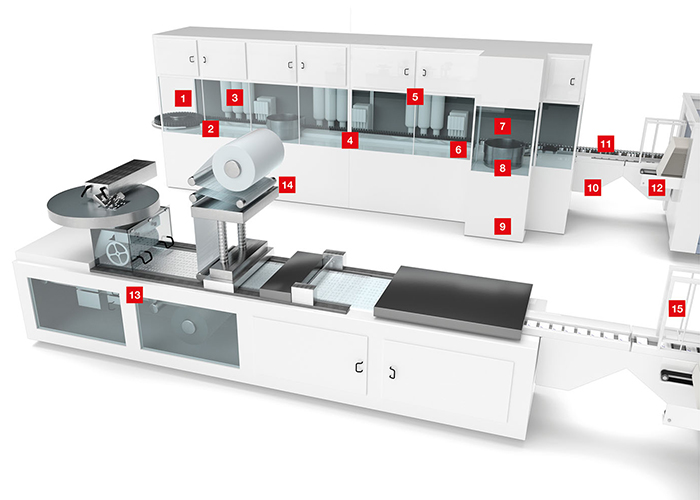
Click on the numbered applications to learn more about the respective sensor solutions.
Applications in the pharmaceutical packaging process
The range of sensor applications in highly automated packaging processes is diverse. Key application areas include material handling, the feeding of packaging materials, quality control, and safety applications designed to ensure safe machine operation.
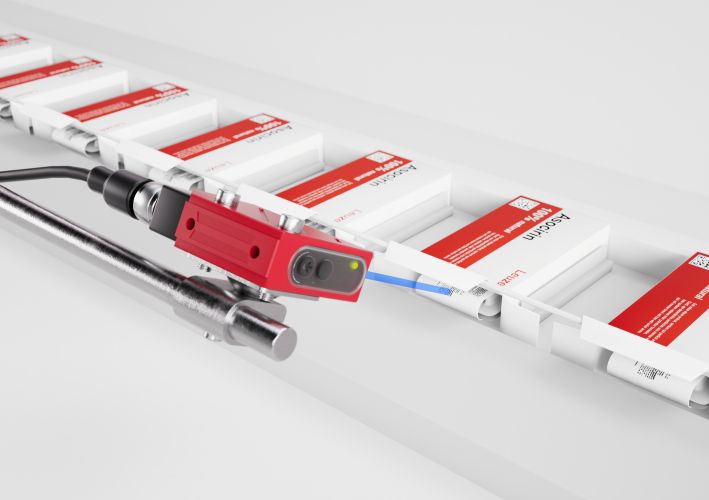
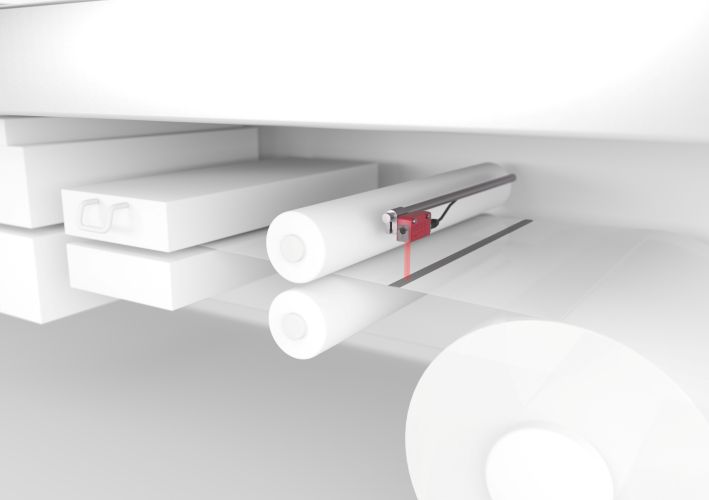
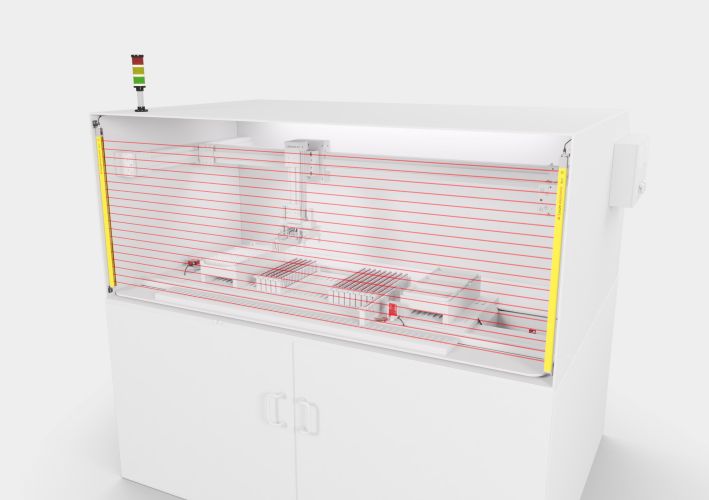

GMP Annex 1-compliant automation in cleanrooms: Sensor solutions for safe processes
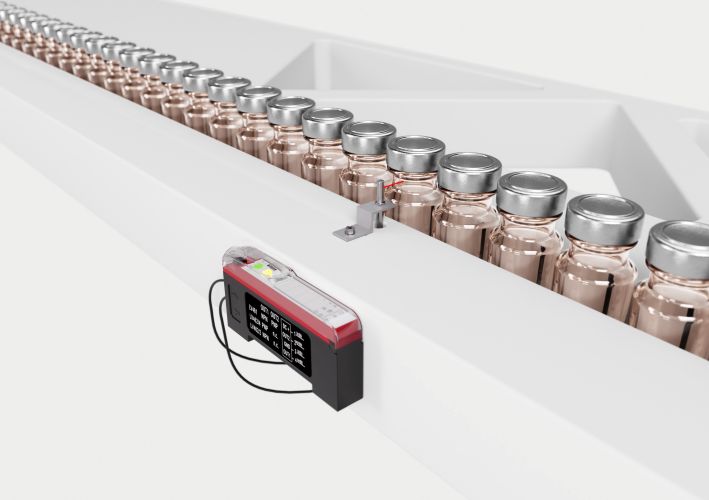
This white paper summarizes the requirements for the installation and sterilization of sensors in accordance with GMP Annex 1. Using time-of-flight technology, our ODT 53 series sensors meet the guidelines for applications in hygienically demanding areas.
Applications for object transport
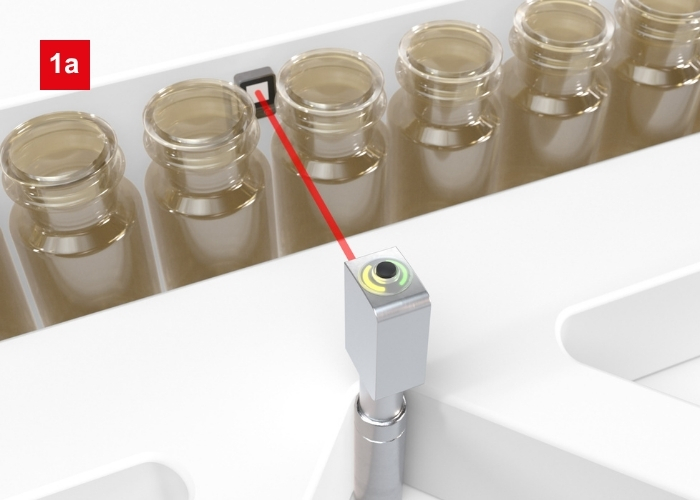
Precise positioning of vials
Requirement:
For optimal speed control during transport, vials made of transparent or non-transparent glass must be reliably detected on the conveyor line. Even the smallest gaps must be used. Hygiene requirements are particularly high in aseptic systems.
Solution:
The PRK 53CL1.T3 retro-reflective photoelectric sensors with a small laser light spot, in combination with an MTKS stainless steel reflector, enables high-precision detection and positioning of vials. The compact sensor can be easily integrated even in confined spaces. The sensor and reflector have a hygienic design.
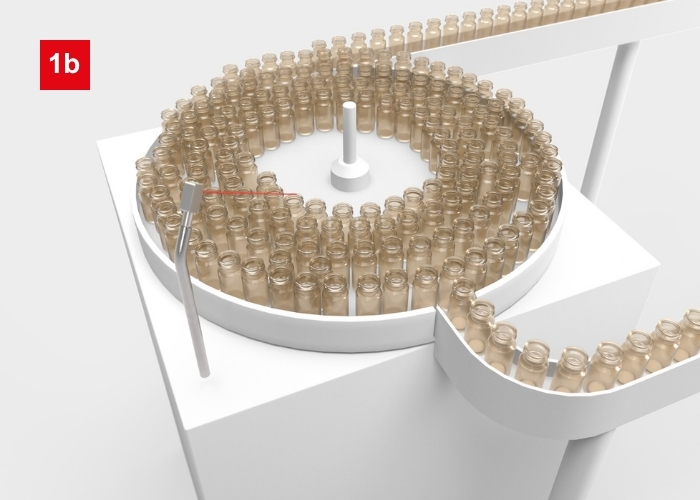
Seamless vial feeding
Requirement:
According to the current EU GMP Guidelines, Volume 4, Annex 1, for pharmaceutical production facilities, sensors should, if possible, no longer be installed above the feed line – e.g., for vials – due to sterilization. Transparency must also be detected reliably.
Solution:
For lateral alignment, the operating range of standard triangulation-based laser sensors in a similar design is insufficient. The ODT 53CL ToF laser scanners with an operating range of up to 2 m and reliable detection of all colors even at unfavorable angles, replace previous solutions without reflectors or other top-down technologies.
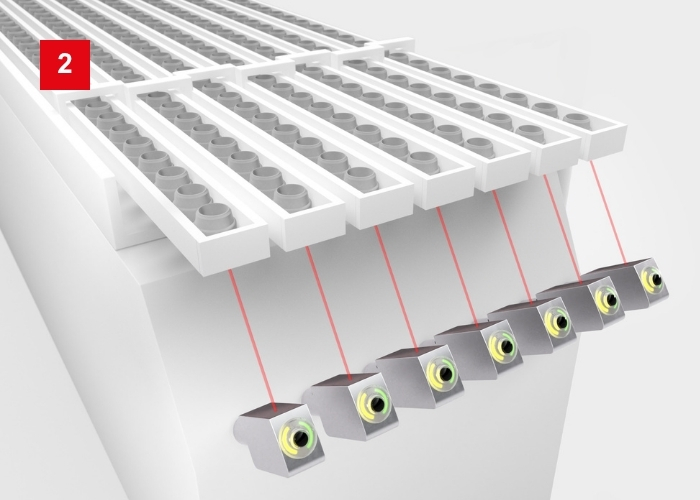
Detecting covers without interrupting the first-air
Requirement:
According to current GMP guidelines, in sensitive filling or packaging processes for pharmaceutical preparations, either all components must be capable of being sterilized or must be installed without – or outside of – a first-air interruption.
Solution:
The ODT 53CL1 / 55CL1 distance sensors in stainless steel housings with time-of-flight (ToF) technology offer long operating ranges and highly precise switching behavior – even at wide angles and with dark objects. In addition, they provide a distance value via IO-Link. This allows the requirements of the guideline to be met in many cases.
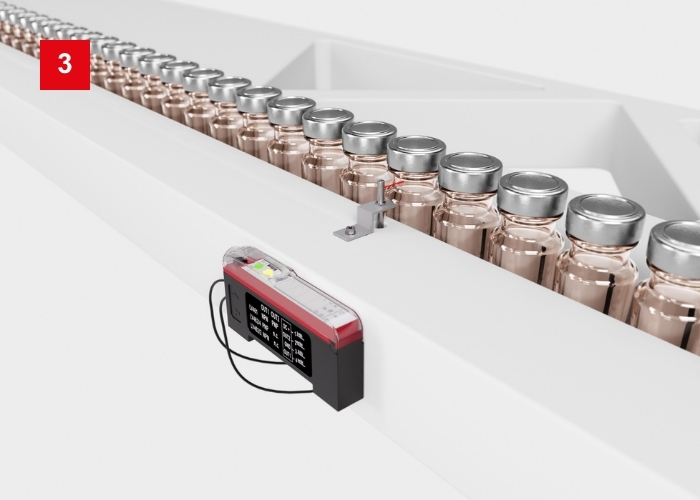
Detection of vials
Requirement:
After filling the vials in a packaging machine, the containers are often transported in confined spaces at high speeds and with minimal spacing. Due to the limited space available, the sensors used have to be particularly small and easy to integrate into the machine.
Solution:
KF plastic fiber optics or GF glass fiber optics with different beam exits and LV 463 amplifiers are a variable solution for the detection of vials. Glass fiber optics are particularly well suited for high ambient temperatures. The amplifiers, which can be conveniently set via the menu, are available with analog output as well as IO-Link interface.
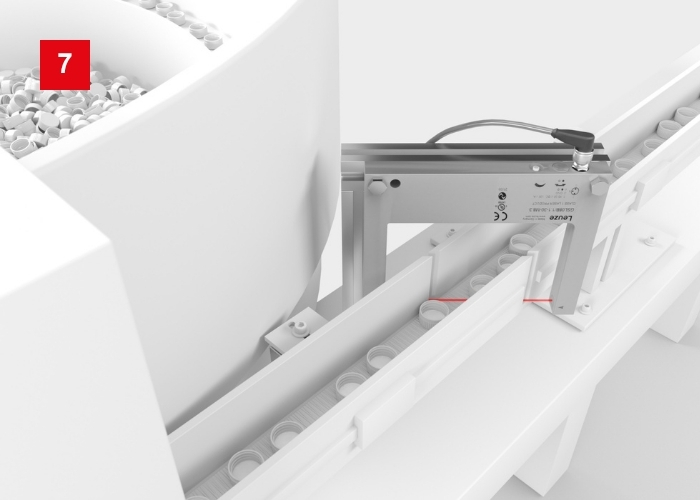
Detection of small parts
Requirement:
After filling the vials or bottles, other small parts such as caps, locking rings or dosing aids are required, which are often fed to the machine via vibratory conveyors. For the detection of small parts, specially optimized sensors should be used.
Solution:
GS / GSL 08B fork sensors in stainless steel housings with laser light are easy to integrate and reliably detect small objects and even the smallest gaps. Alternatively, KF plastic fiber optics with a suitable LV amplifier can be used to detect small parts.
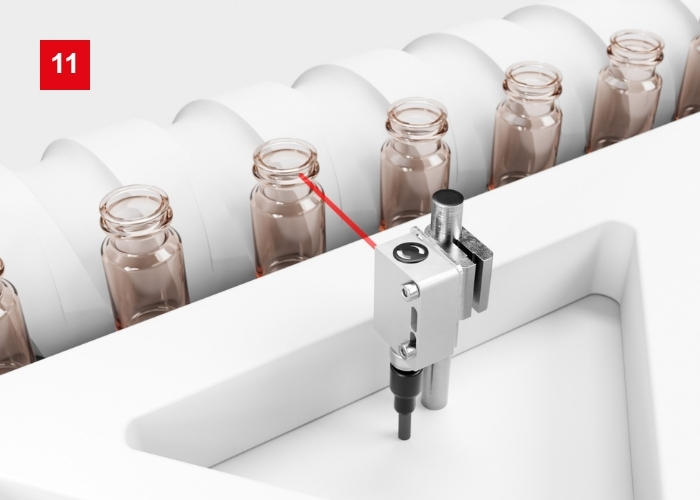
Detection of vials in screw conveyor
Requirement:
A screw conveyor adapted to the vials is used for collision-free infeed of the vials into the downstream machine. The rotation of the screw in the background requires very precise background suppression from the sensor when detecting the vials.
Solution:
The special V-optics integrated in the HT 55C.V or HT 53C.V diffuse sensor enable very precise background suppression. At the same time, partially transparent objects can be reliably detected. The compact sensor in the stainless steel housing meets the high protection class IP 69K.
> Learn more about diffuse sensors with background suppression
Quality assurance applications
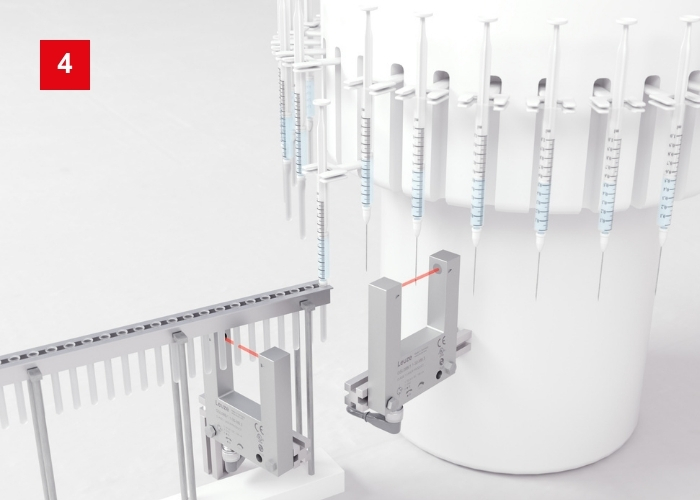
Monitoring disposable syringes
Requirement:
A feeder unit transports suspended disposable syringes at high speeds to the assembly station. Plastic caps must be attached to the disposable syringes to this station. To do this, the syringes’ very thin needles must be reliably detected.
Solution:
The GSL 08B laser fork photoelectric sensor detects even thin syringe needles. The V4A stainless steel housing, which is suitable for cleanroom use, is ECOLAB-certified and ideal for areas with high standards for hygiene and resistance to cleaning agents. The sensors operate reliably in a temperature range between –25°C and 60°C.
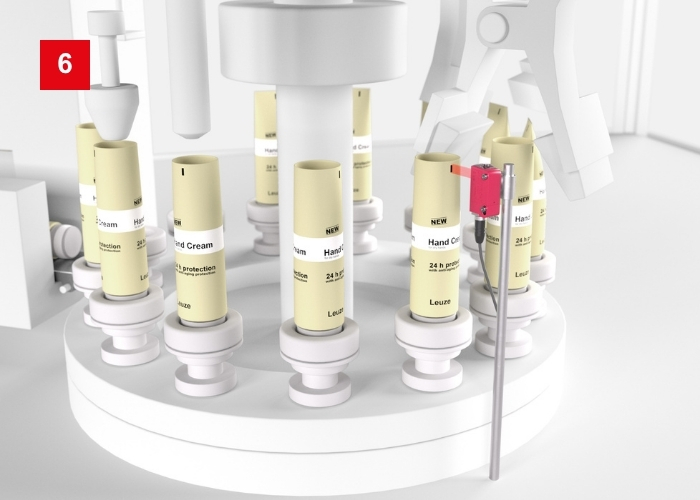
Tube alignment by print mark detection
Requirement:
In a tube filling and sealing machine, a paste-like product is filled into tubes. During the process, it is important that the plastic tubes are aligned precisely after filling so that the tube fold is pressed in exactly the right place. Space is usually constrained in these machines.
Solution:
The compact KRT 3C contrast sensor saves a lot of space during mounting. It highly precisely detects contrast markers of different colors even on round objects with a response time of just 50 µs. A time-saving format change can be implemented via the IO-Link interface. For higher requirements, the KRT 55 in stainless steel housing is available.
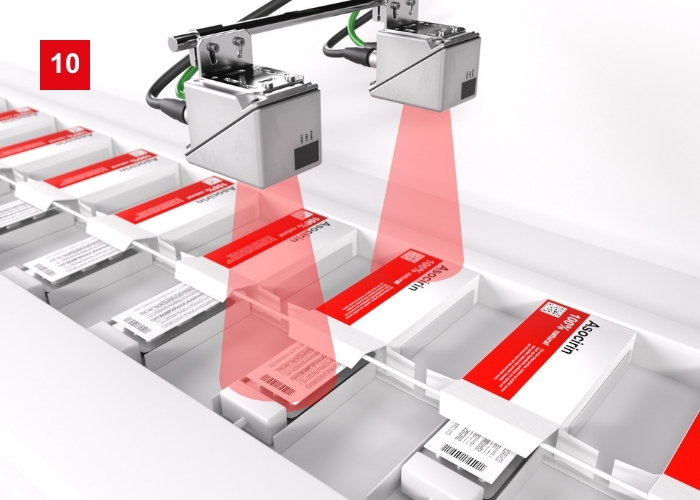
Verification of code information
Requirement:
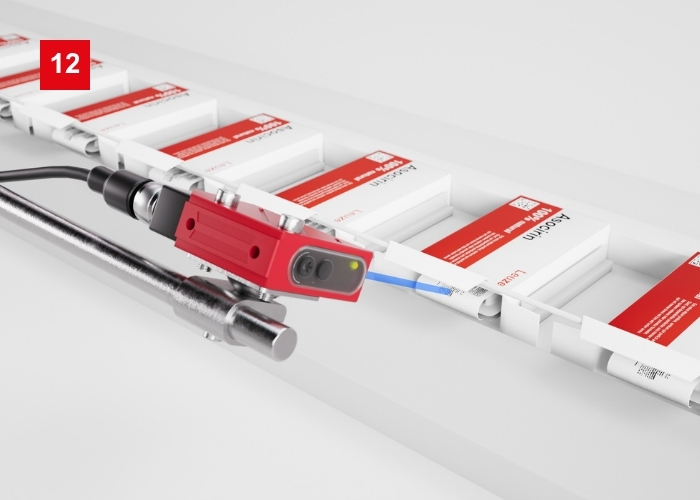
When packaging blisters in folding boxes, it must be ensured that the correct package insert is in the box. For this purpose, both codes on the folding box and the package insert must be read and compared with each other in the process.
Solution:
Two camera-based DCR 200i code readers are used to ensure that the package insert is assigned to the folding box. The sensors can reliably decode Data Matrix codes or Pharmacodes. The code content is output via an Industrial Ethernet interface.
Package insert presence control
Requirement:
When packaging tablet blisters in folding boxes, it must be ensured that the package insert is also packed. Since the package insert is made of paper, it can be reliably detected with the aid of a luminescence sensor.
Solution:
The LRT 8 luminescence sensor detects luminescent materials by means of UV illumination. Thanks to its small design, it is easy to integrate. Different operating ranges, light spot sizes, and filters make these sensors flexible in use.
Packaging material supply applications

Detection of splices
Requirement:
Splices on forming films must be reliably detected for a safe process and must be discharged in the subsequent process. The detection of the splices should be independent of color and surface as much as possible.
Solution:
The KRT 3C, KRT 18B or KRT 55C contrast sensors are optimized for detecting splices. The color of the adhesive tape and the background is adapted using the teach button. The IGSU14E SD ultrasonic fork sensor detects splices independently of color on sealing films with different printing.

Measurement of roll diameter
Requirement:
Plastic film for forming blisters is provided in large rolls. To ensure uniform and even unrolling, the roll is often motor-driven. This requires a continuous distance signal from a sensor to determine the diameter.
Solution:
DMU 318 or DMU 418 ultrasonic distance sensors have been developed for precise distance measurement. They provide an analog signal as information on the roll diameter. Alternatively, measuring sensors of the ODS 9 series with different measurement ranges can be used. The integrated IO-Link interface offers further possibilities.
Measurement of stack heights
Requirement:
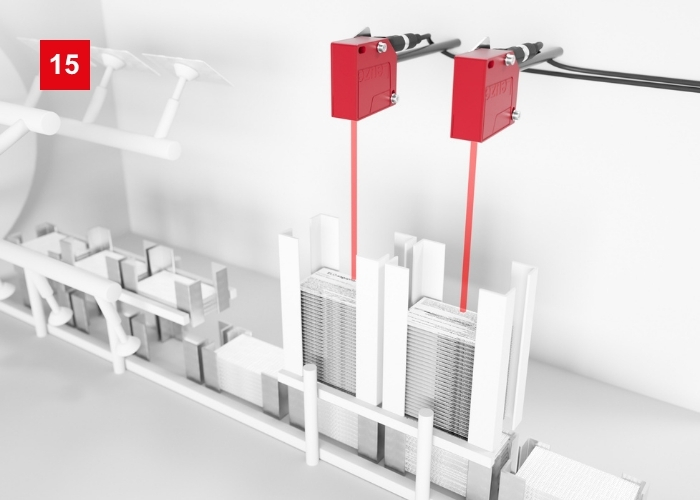
Primary packaging is stacked in the magazine of a packaging machine. To ensure that the stack contains the correct quantity, its height must be monitored. This requires sensors with high resolution and accuracy as well as a precise and easy-to-position light spot.
Solution:
The ODS 9 measuring sensors with staggered operating ranges and laser class 1 can be used easily and flexibly for measuring stack heights. The distance value is output as an analog current or voltage signal. The IO-Link interface ensures fast integration as well as additional parameterization options.
Applications in occupational safety
Monitoring of protective doors with guard interlocking
Requirement:
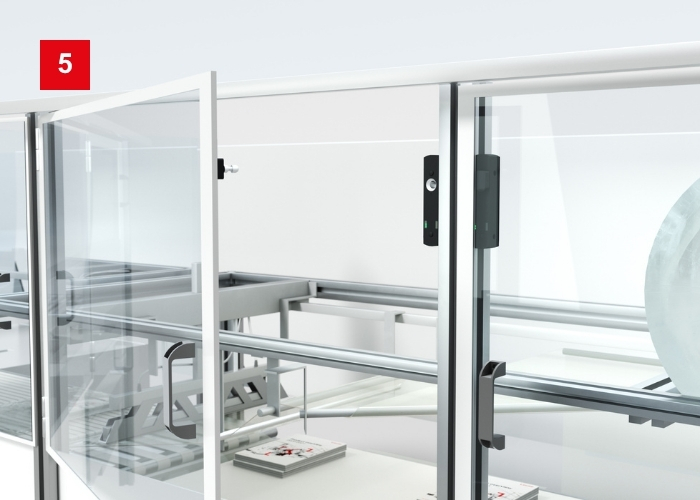
Protective doors on fast-running machines in pharmaceutical packaging must be monitored by safety switches with guard interlocking to prevent unintentional access and to stop the process only at defined points. Access to the machine should not be impaired in the process.
Solution:
The L250 and L300 safety locking devices keep protective doors locked until the control sends an electrical release signal. Thanks to their RFID-coded actuators, they offer optimum manipulation protection. The optional E-stop and command buttons make it easier to set up the complete safety function.

Protection hood status monitoring
Requirement:
During operation of an automatic dosing station for pharmaceutical preparations, it must be ensured that the protection hood remains closed.
Solution:
The status of the hood can be detected using MC 300 safety proximity switches or the RFID-encoded RD 800. Thanks to their compact size, both can usually be easily integrated. The RD 800, in particular, ensures a very high level of tamper resistance thanks to its uniquely coded actuators.
Point of operation guarding on automatic machines
Requirement:
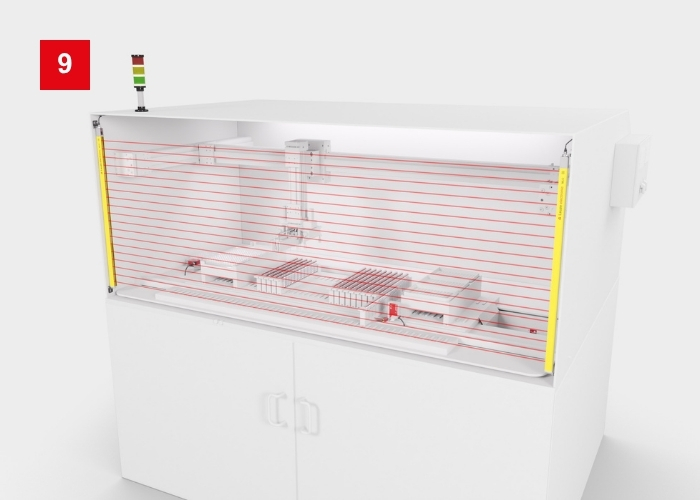
Various automatic machines with openings – such as test equipment – must be easily accessible to qualified personnel while also ensuring workplace safety.
Solution:
With their high resolution of 14 mm, MLC 500 safety light curtains are ideal for staggered lengths up to 3,000 mm. For demanding pharmaceutical environments requiring intensive cleaning, choose the MLC 500 – IP version with a plastic tube.
Special challenges in pharmaceutical packaging
The packaging of liquid medicinal products shares many similarities with traditional filling processes, while blister packaging resembles film processing in many respects – including, in some cases, the food industry.
Regardless of the packaging method, however, strict hygiene requirements and comprehensive cleaning and assembly guidelines must be followed. These include, among other things, preventing first-air interruptions and ensuring that all components used are designed in accordance with hygiene standards.
For this reason, stainless steel housings with minimal surface roughness, a gap-free design, and no unnecessary mounting holes are predominantly used – for machines as well as for sensors and other components.
Sensors with integrated communication interfaces also enable convenient parameterization and diagnostics without having to open the cleanroom. This minimizes interventions on the machine, increases process reliability, and preserves the integrity of the cleanroom environment. Sensor solutions for pharmaceutical packaging thus meet the high requirements of hygienic production environments and contribute to reliable and safe process monitoring.
Other topics in the packaging industry


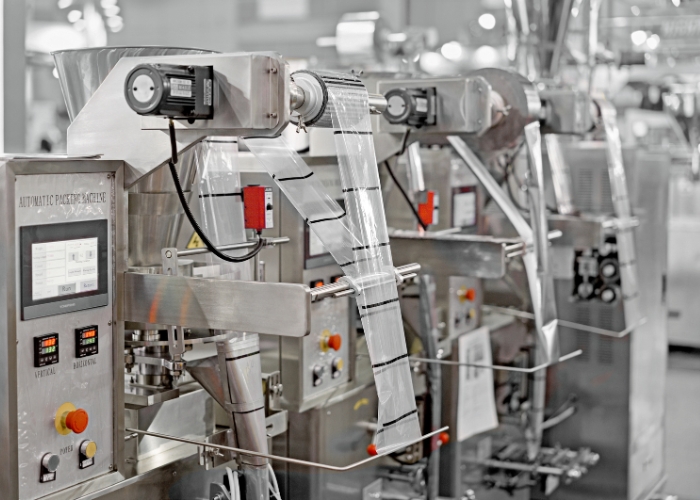
Frequently asked questions about pharmaceutical packaging
Strictly speaking, pharmaceutical packaging is a combination of primary packaging and folding carton packaging. The primary packaging is often a stamping foil / blister pack or a glass or plastic container.
Similar to food packaging, preventing contamination is very important. To this end, smooth housings and frequent cleaning are required – a process that the machines and components must be able to withstand.
Current GMP requirements for machine design stipulate that all components installed above the product or in areas that interrupt first air must be sterilizable. To ensure that sensors are not continuously exposed to this process, particular focus is on mounting the sensors outside these areas.
Current GMP requirements for machine design stipulate that all components installed above the product or in areas that interrupt first air must be sterilizable. To ensure that sensors are not continuously exposed to this process, particular focus is therefore on mounting the sensors outside these areas.