






Packaging industry – Smart sensor and safety solutions for efficient production processes
The demands placed on the packaging industry are diverse and constantly changing. Consumers expect sustainable, attractive, and safe packaging solutions, while manufacturers of packaging machines and consumer goods must simultaneously meet increasing demands for efficiency, flexibility, and quality.
Due to increasing product diversity, shorter innovation cycles, and new requirements stemming from e-commerce, product protection, and traceability, automated packaging processes are becoming increasingly important. This allows production processes to be flexibly adapted, systems to be operated efficiently, and a wide variety of packaging formats to be reliably processed.
At the same time, requirements for process reliability, hygiene, and transparency are increasing along the entire value chain. In primary packaging, sensor solutions ensure reliable product detection and compliance with high quality and hygiene standards. Secondary packaging requires flexible automation concepts to efficiently consolidate, group, and prepare different packaging units.
As a key end-of-line process, palletizing places high demands on the secure capture, handling, and tracking of packages for storage and transport. In labeling, precise sensor solutions ensure the correct positioning, inspection, and traceability of products and packaging.
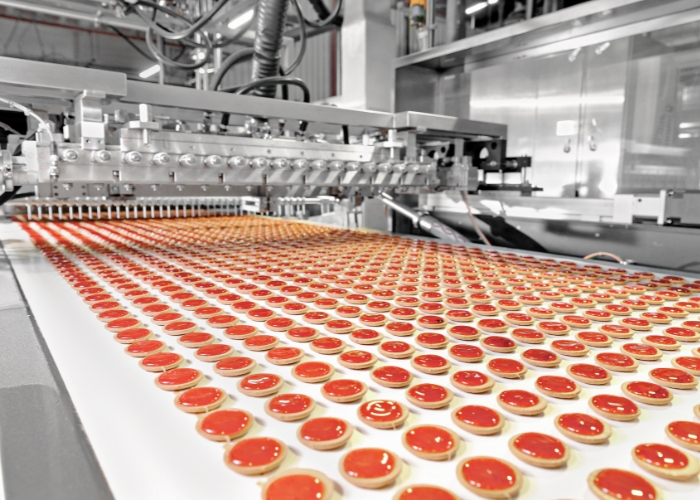
Sensor solutions for primary packaging
Primary packaging involves the direct packaging or filling of products and places particularly high demands on hygiene, process reliability, and product quality. Modern sensor solutions support the reliable detection, positioning, and inspection of products, packaging, and containers throughout the entire packaging process.
Whether it’s for dairy plants, beverage bottling, meat, sausage, and cheese processing, the pharmaceutical industry, or the confectionery and bakery industry – the diverse requirements of these sectors call for customized sensor solutions to ensure safe and efficient production processes.
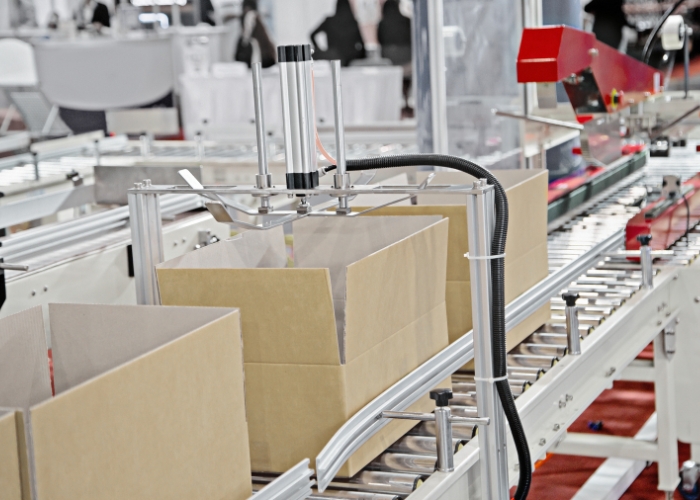
Sensor solutions for secondary packaging
Secondary packaging enables the automated consolidation of individual products into packaging units suitable for transport and storage. Modern sensor technology supports reliable object detection, precise positioning, and continuous monitoring of packaging processes.
From package consolidation to carton packaging – high-performance sensor and safety solutions ensure stable processes, high system availability, and efficient processing of a wide variety of packaging sizes and materials.
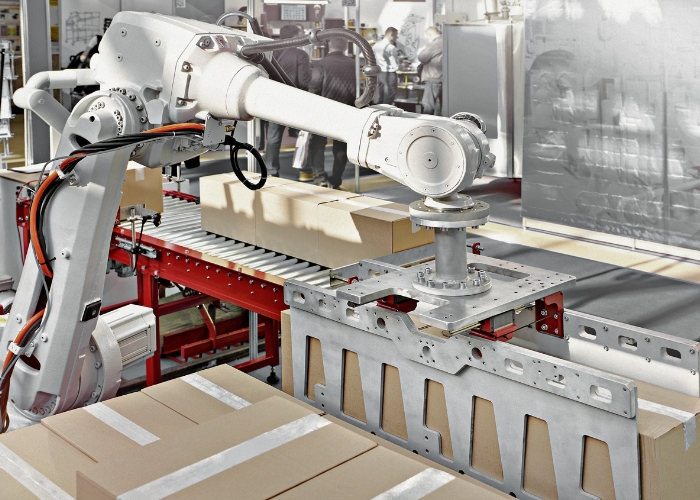
Sensor solutions for palletizing
Palletizing marks the final stage of many packaging processes and enables the automated preparation of finished products for storage and transport. In this process, products, cartons, and packages must be reliably detected, aligned, and assembled into stable loading units.
Modern sensor technology supports safe and efficient end-of-line automation and ensures high process reliability, optimal system utilization, and consistently high quality in the palletizing processes.
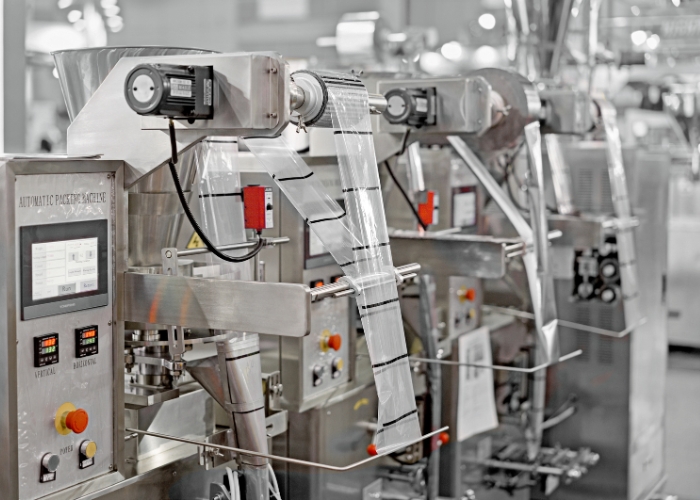
Sensor solutions for labeling
Labeling is a central component of modern packaging processes and ensures that products can be uniquely identified throughout the entire supply chain. This requires precise positioning, reliable detection, and seamless process control.
From product identification and batch tracking to quality control, intelligent sensor solutions support safe, efficient, and standards-compliant labeling in a wide variety of packaging applications.
Do you have questions about sensor solutions for the packaging industry? We’d be happy to help you.

Frequently asked questions about sensors in the packaging industry
Hardly any other industrial sector is characterized by such a wide variety of products, packaging materials, and packaging formats. Different surfaces, material properties, and package sizes place high demands on automation. At the same time, packaging systems must respond flexibly to product and format changes while ensuring high speeds and consistent process quality.
The packaging industry encompasses a multitude of coordinated process steps along the entire packaging line. This includes the product's primary packaging, the formation of packages and cardboard boxes, labeling, and palletizing for storage and transport. Each individual process step places specific demands on the handling, inspection, and traceability of products and packaging.
Modern sensor technology must be capable of reliably detecting a wide variety of products, packaging materials, and surfaces. High cycle rates, changing formats, limited installation spaces, and demanding environmental conditions must all be taken into account. At the same time, high availability, easy integration, and stable function throughout the entire production process are expected.
Sensors support numerous tasks within modern packaging systems. They detect products and packaging, monitor positions and movements, identify objects, and control process steps. In addition, they enable presence and completeness checks as well as the reliable control of automated processes along the entire packaging line.
Reliable sensor technology lays the foundation for stable and safe packaging processes. By continuously collecting relevant process data, deviations can be detected early on and errors prevented even during the production process. This helps reduce scrap, meet quality requirements, and sustainably increase the availability of machines and systems.