







Sensor solutions for labeling
Labeling is a key, cross-industry field that makes products identifiable throughout their entire lifecycle, provides information, and contributes to product safety.
From primary packaging to secondary packaging through to transport packaging, labels enable unique identification and transparency for consumers, retailers and authorities. In addition to traditional labeling processes, labeling also encompasses printing and finishing technologies, various materials such as paper, plastic, and films, different identification technologies (e.g., bar codes, QR codes, and RFID), as well as integrated security features such as verification marks and tamper-evident features.
The goal of labeling is to provide a permanent, clearly legible, and durable marking that functions reliably even under demanding environmental conditions. Modern labeling systems combine high resistance with an attractive design and enable the compact presentation of relevant product information as well as the reliable identification and traceability of products.
Labeling sensor applications
Various methods are used in industrial labeling. Depending on the application, self-adhesive, wrap-around, or wet-glue labeling is used, each of which requires specific technologies and sensor solutions. Modern sensor technology supports the reliable monitoring of labeling processes and contributes to high process reliability and consistent labeling quality.
In addition, sensor and identification solutions enable precise control of labels, print images, and codes, as well as the reliable capture of product-related information. Even demanding inspection tasks, such as checking multiple labels or monitoring their positioning and alignment, can be reliably performed using these solutions.
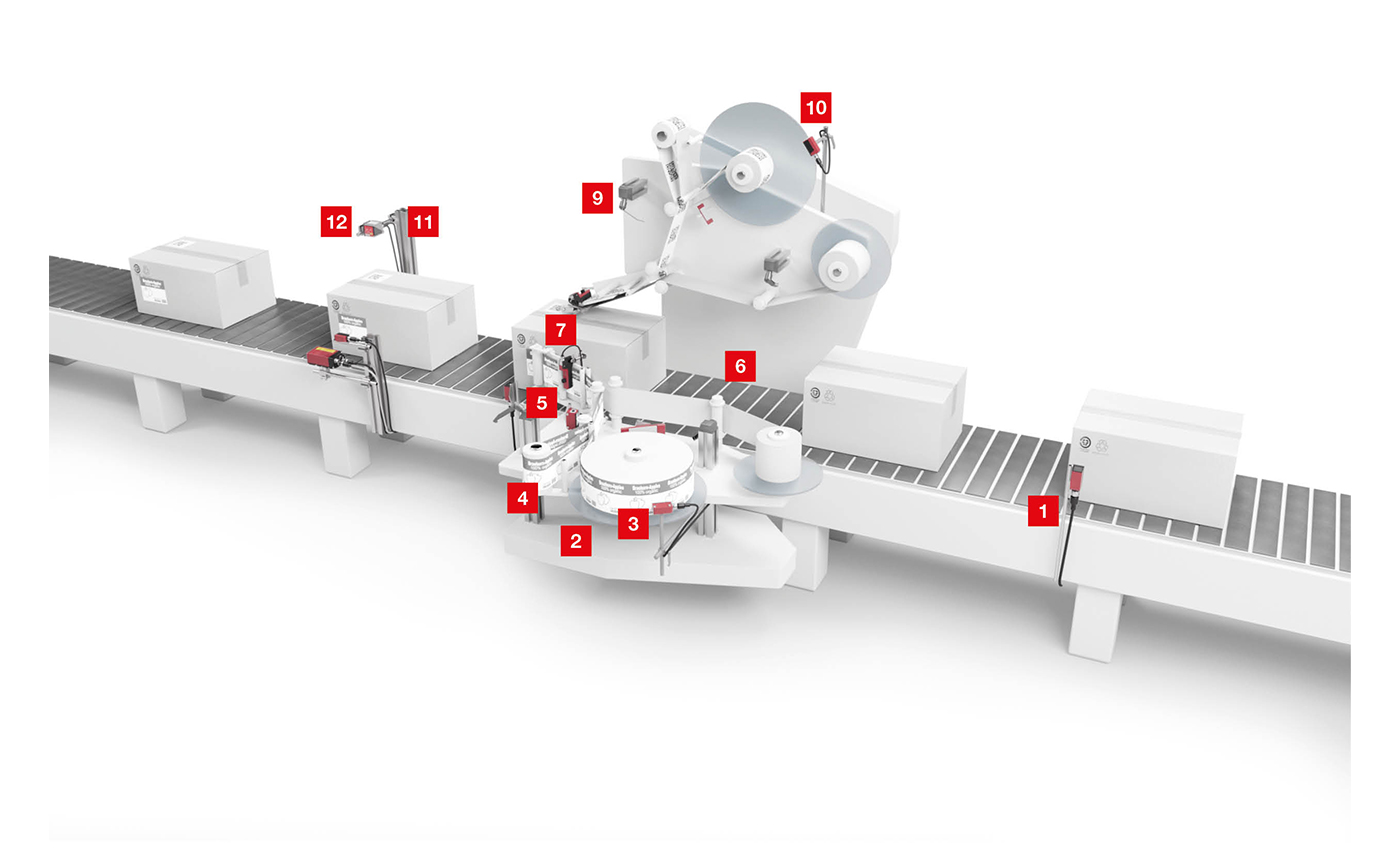
Click on the numbered applications to learn more about the respective sensor solutions.
Applications of labeling
The tasks in labeling systems range from feeding different types of labels to controlling the applicators and detecting cut marks, all the way to integrated quality assurance. These tasks include, among other things, checking the position and alignment of the labels, as well as verifying the readability of bar codes, Data Matrix codes, and other markings.
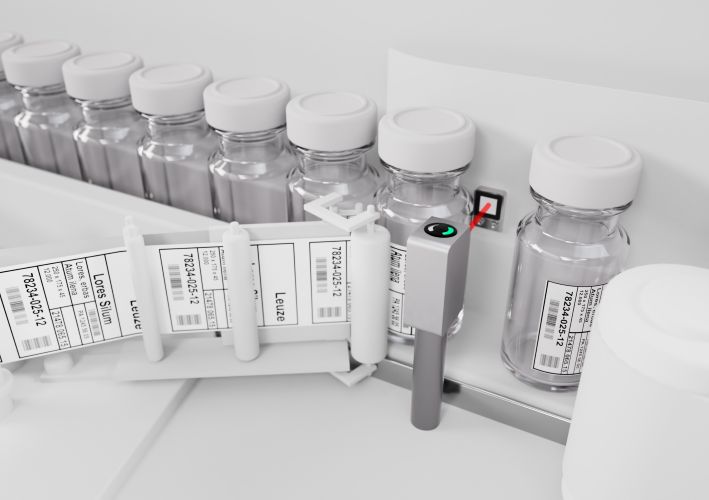
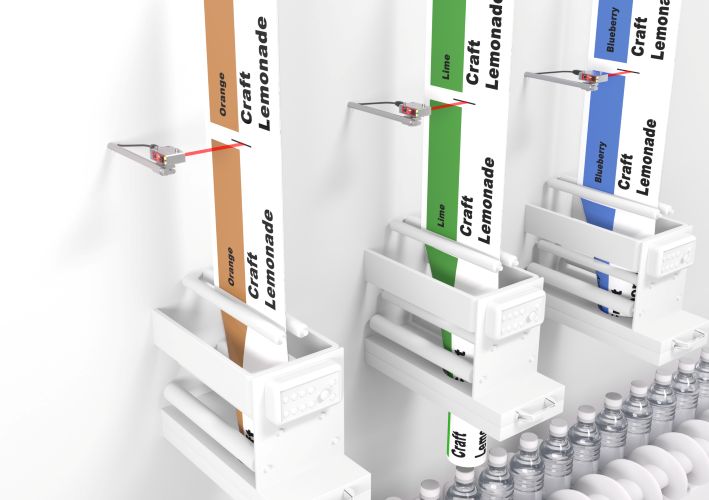
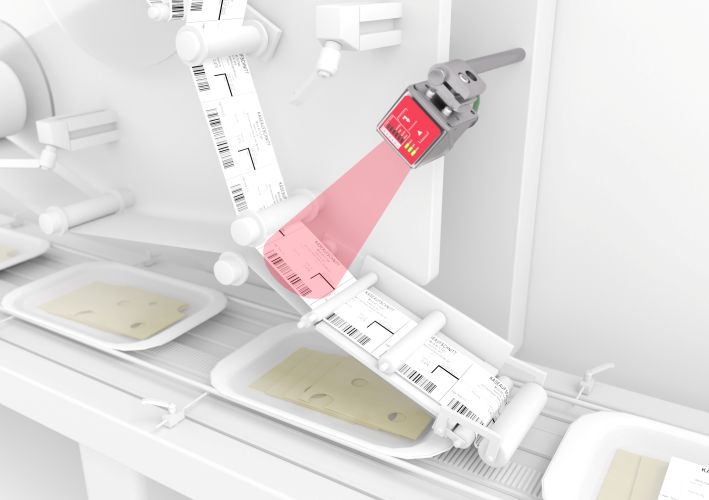

Label feeding applications
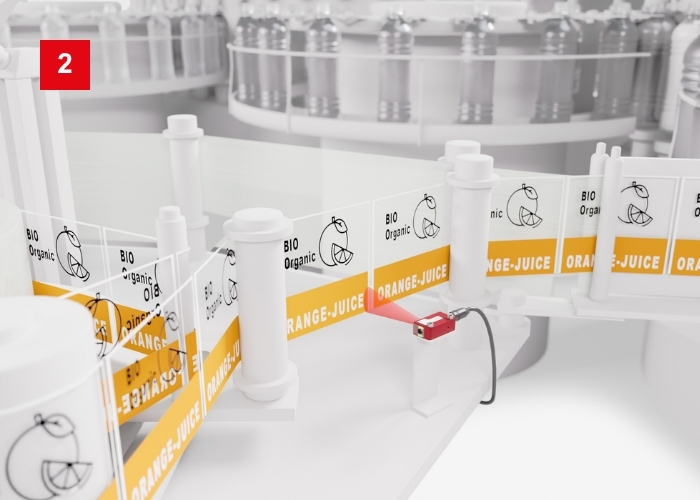
Monitoring of label tape
Requirement:
In labelers with a longer tape path, e.g. as a buffer between the roll and the dispenser, it is necessary to detect any tape tears.
Solution:
The HT 3C.XL diffuse sensors with particularly long light-spot shape are suitable for monitoring the label tape. The sensors tolerate fluctuations and reliably detect only the actual tape tear. The compact design makes it easy to integrate the sensor.
> Learn more about diffuse sensors with background suppression
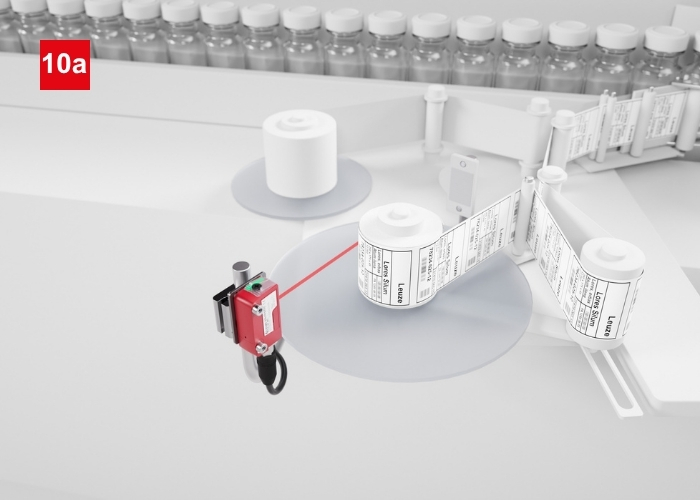
Measurement of roll diameter
Requirement:
In high-performance labelers, the label roll is motor-driven. The diameter of the label roll should be continuously detected so that, e.g. the rotational speed can be adjusted as the roll diameter decreases.
Solution:
The ODS 9 measuring sensor provides an analog distance signal for optimal adaptation of the drive. The distance sensors are available with different measurement ranges, parameterization options as well as an integrated display. Thanks to the integrated IO-Link interface, the sensors can be used universally. In some cases, an ODT 3C distance diffuse sensor that transmits distance values via IO-Link may be a viable alternative.
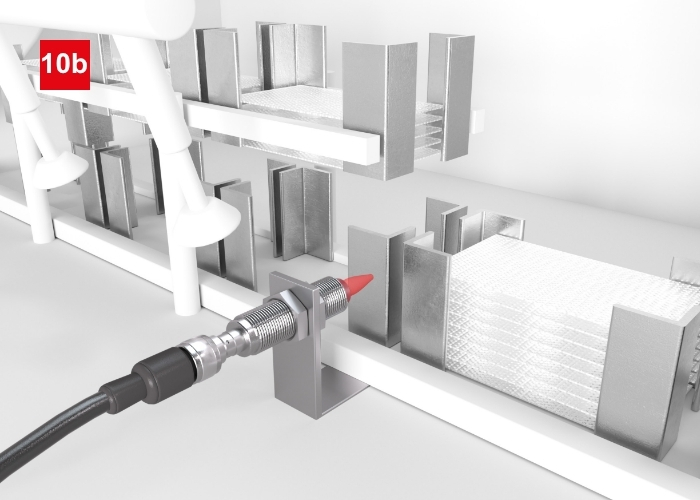
Detection of the tension roll end position
Requirement:
To regulate the carrier tape tension for self-adhesive labels evenly, deflection rollers pre-tensioned with springs are typically used. Ideally, this so-called tension roll should always be positioned between the two end positions.
Solution:
The inductive sensors detect the predominantly metallic roll mount and thus the two end positions of the tension roll. The IS 288, IS 212 or IS 218 inductive sensorsoffer the appropriate switching distances for embedded or non-embedded installation.
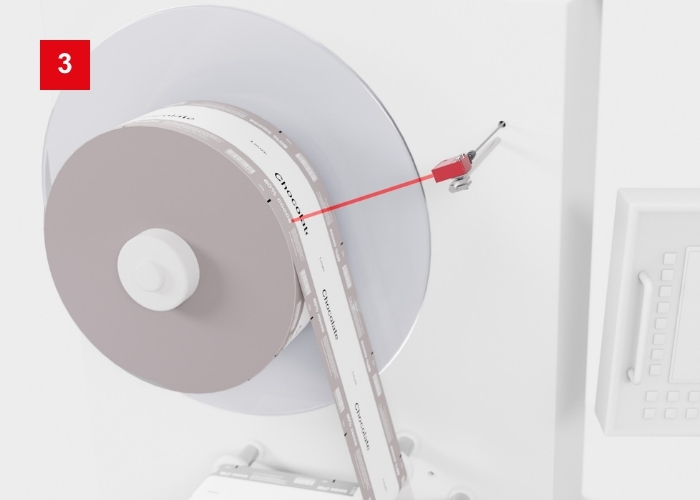
Monitoring of tape end
Requirement:
The roll diameter of self-adhesive labels is to be monitored with a sensor in order to warn the operator of the labeling system in good time before a roll end. It must be possible to adjust the sensor depending on the roller diameter.
Solution:
Sensors of the 3C series, such as the HT 3C diffuse sensor or the PRK 3C retro-reflective photoelectric sensor with a precise switching point are very well suited for checking the roll diameter in compact labeling machines.
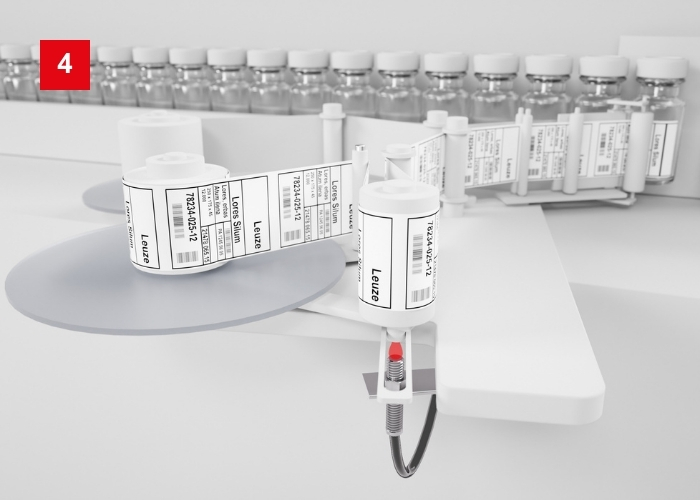
Monitoring magazine presence
Requirement:
Magazine presence and the empty signal for the label stack for wet-glue labels must be monitored to ensure that magazines are changed in a timely manner and to prevent unplanned system downtime.
Solution:
The IS D08 inductive sensors are ideal for reliably detecting the metal structure of the magazine. This allows the necessary signals for monitoring magazine presence and early detection of an empty status to be reliably generated.
Applicator control applications
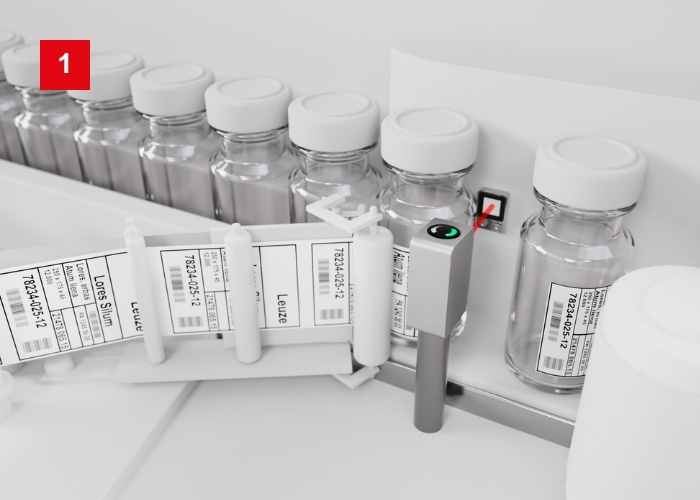
Detection of transparent objects
Requirement:
For precise labeling, the objects must be detected with as much precision as possible to activate the dispensing process. The sensor must reliably detect all types and shapes of objects, including transparent ones. A change of products should have no effect on the labeling process.
Solution:
The PRK 53C.T retro-reflective photoelectric sensor is developed for the detection of transparent objects. The sensor in a stainless steel housing for hygiene-sensitive production processes has a short response time and an integrated IO-Link interface.
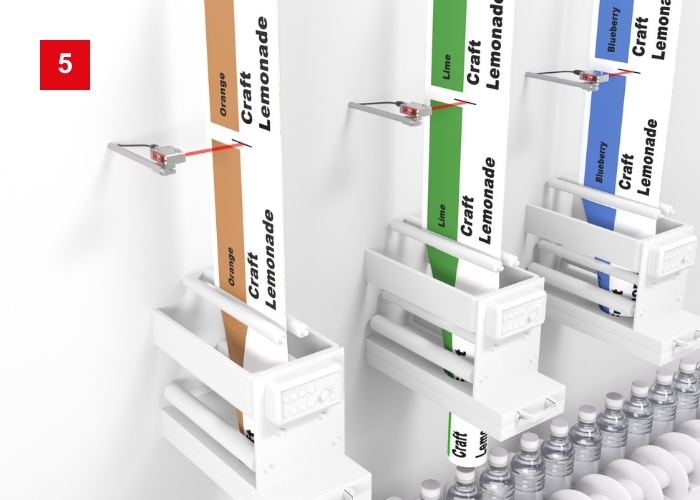
Detection of cut marks
Requirement:
Sleeve labeling is frequently used in the beverage industry. In this process, the label comes off the roll as a continuous film and is cut to the required length using print marks. The label is then slipped over the container. This mark detection requires special color mark or contrast sensors that are optimized for high precision and speed.
Solution:
KRT 18B contrast sensors with signal display and multicolor transmitter LEDs provide high flexibility for the detection of cut marks. The integrated IO-Link interface simplifies commissioning as well as the adjustment of the contrast sensor when changing labels.
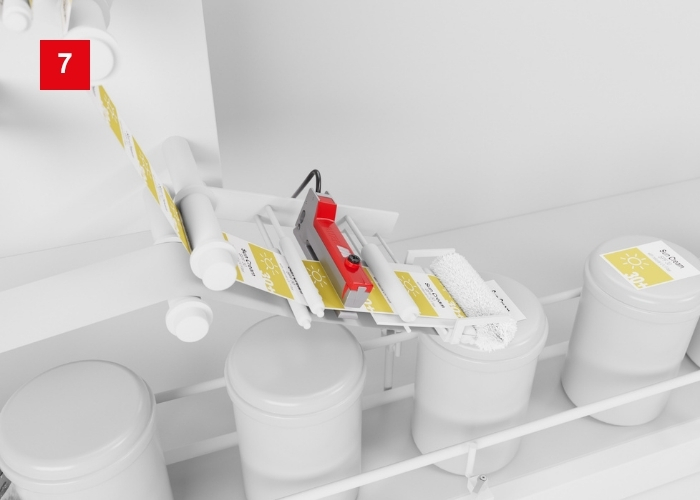
Detection of non-transparent labels
Requirement:
Non-transparent labels must be applied to packaging. To do this, the gap between two labels on the carrier tape must be precisely detected. The sensor must also reliably detect labels with complex shapes to prevent inaccurate dispensing or machine downtime.
Solution:
The GS 61 and GS 63B optical fork sensors reliably detect the complete range of non-transparent labels. The sensor can be adjusted either with a potentiometer or via a teach function. The slimline design of the lower fork enables installation directly at the dispensing edge.
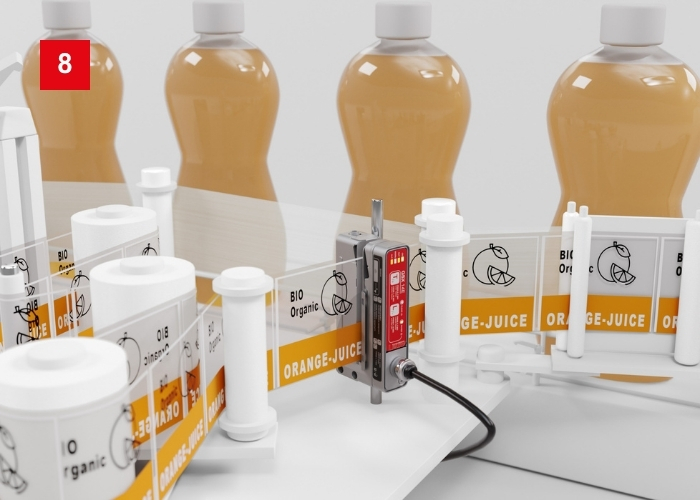
Detection of transparent labels
Requirement:
To ensure labels are dispensed onto products or objects with precise positioning, the labels must be detected on the carrier tape. Transparent, partially transparent or metallized labels in different shapes must also be detected precisely. The sensor should be easy to adjust for all types of labels.
Solution:
The GSU 12, GSU 14E and IGSU 14E ultrasonic fork sensors detect transparent and partially transparent labels. The GSX 14E sensor combines an ultrasonic and an optical detection system in one housing and can even process labels made of non-homogeneous material containing air pockets (cavitated BOPP). The IO-Link interface simplifies setup.
Applications for quality assurance

Checking of bottle alignment
Requirement:
Labels should be applied at specified positions on the bottle. To do this, the bottle's orientation must be detected and corrected based on small features, such as embossed lugs or the pressing seam. In compact machines, there is usually little installation space available for sensor systems.
Solution:
The GF glass fiber optics with different optical outlets and the LV 463 amplifiers are very well suited for checking bottle alignment. Fiber optic sensors are particularly slender yet powerful. The sensors have an IO-Link interface and an optional analog output.
Code reading for identification and testing
Requirement:
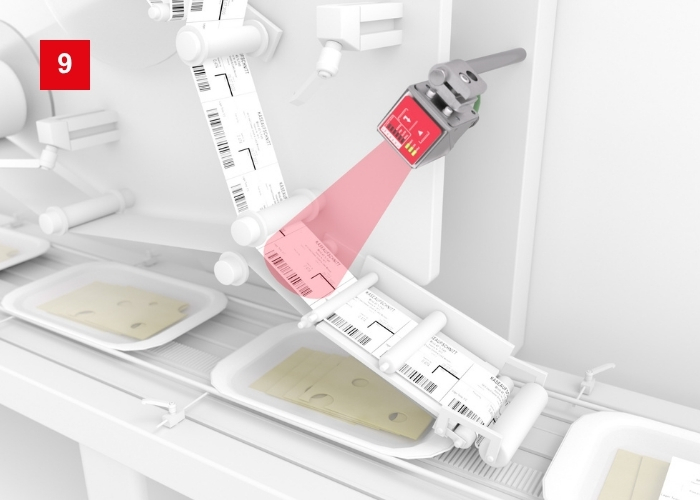
Primary packaged products are often provided with directly printed labels for high process flexibility. After printing, the readability of the codes on the labels as well as their plausibility should be checked.
Solution:
The DCR 200i universal code reader is suitable for identifying and checking bar codes or 2D-codes on labels. For use in the food industry, the sensor is also available in a stainless steel housing with plastic screen.
Label presence detection
Requirement:
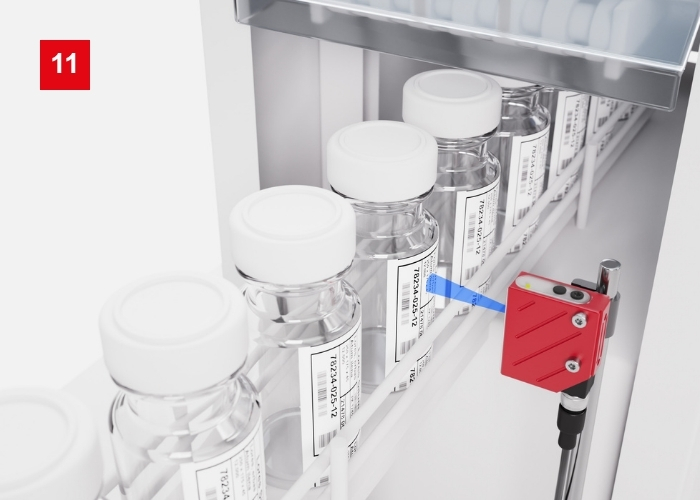
On containers such as bottles or vials, it is often necessary to check that the paper labels are on the objects after the dispensing process. The labels should be detected independently of the bottle or filling.
Solution:
The LRT 8 luminescence sensor detects paper labels very reliably on different objects, even at large distances. An alternative solution is energy-based diffuse sensors such as the FT 328IP1 or FT 5IP1 with infrared light and special parameter settings.
Checking of label alignment
Requirement:
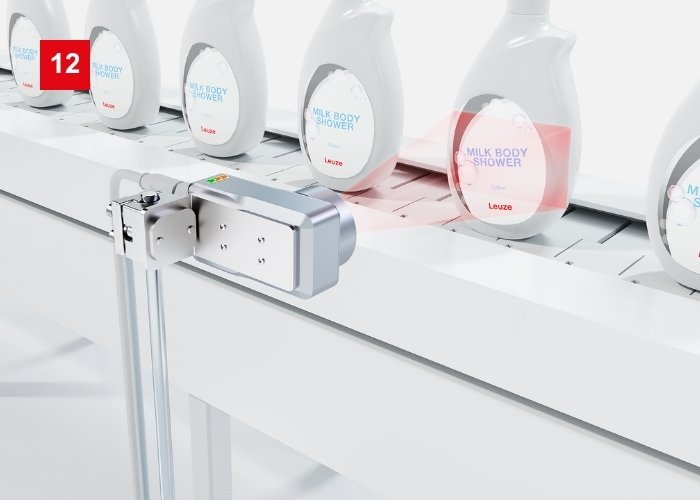
For high-value products or decorative labels, it must be ensured that the label is positioned correctly. Products with incorrectly aligned labels must be detected and ejected.
Solution:
Simple Vision sensors of the IVS 1000i series can easily detect labels on products with their large field of vision and check whether they have been attached correctly. They can be parameterized using the Leuze Vision Studio software. An integrated, switchable LED high-performance illumination ensures an optimal image.
Special challenges in labeling
The design of the label plays a key role in brand communication, especially for packaging that also serves as a display surface at the point of sale. At the same time, labels must function reliably even under demanding environmental conditions. These include, among other things, extreme temperatures and temperature fluctuations, humidity, chemical exposure, and mechanical stress.
Standards, legal requirements, and compliance requirements play a central role in the global movement of goods. Labels must meet industry-specific requirements, for example regarding product labeling, nutritional and allergen information for food products, or safety and warning labels for chemical products. At the same time, they must enable reliable automated data capture and end-to-end traceability.
This is supported by unique codes, serial numbers, and RFID technologies, which improve transparency and traceability throughout the supply chain. For industrial users, labeling is therefore much more than just a marking process: It is an essential component of regulatory compliance, brand communication, and a way to ensure efficient, transparent, and traceable supply chains.
The choice of materials and sustainability considerations are also becoming increasingly important. Label materials are continuously being developed with regard to durability, recyclability, and environmental sustainability. Technologies such as digital printing, serialization, anti-counterfeiting mechanisms and optimized pre-press stages help reduce costs while simultaneously improving the quality of labeling.
Other packaging process areas

Frequently asked questions about labeling in the packaging industry
Labeling is the technical term for (affixing) identification marks to a packaged item with information on its contents, shelf life, traceability, etc., in accordance with the relevant guidelines.
In addition to direct printing on products, various labeling methods are used. In the traditional wet-glue method, paper labels stored in a magazine are fed out one at a time, moistened, and rolled onto the (usually circular) product as it moves along the conveyor.
Another variant is continuous or wrap-around labeling. In this process, the label is fed from a roll, positioned using print mark detection, cut to size, and then wrapped around the product and bonded. In sleeve applications, however, the cut label is heat-sealed into a tube and then pulled over or slid onto the product.
Self-adhesive labeling is an increasingly popular and versatile solution. In this process, the labels are mounted on a carrier tape and are positioned using gap or edge detection, then precisely applied to the product using an applicator, such as a stamp.
Labels can be single- or multi-layer and made from a wide variety of materials. These include, among others, paper, transparent or metallized films, foams, and structured fabrics. The material combinations range from homogeneous to complex, inhomogeneous structures. Labels with an inhomogeneous structure pose a particular challenge for reliable detection, as different material properties and surface structures must be taken into account.
Precise edge detection for self-adhesive labels is crucial for accurate control of the labeling process. Fork sensors offer a highly focused detection point combined with easy installation and simplified alignment.