


Sensor solutions for order picking
Order picking is the process of collecting goods for customer or production orders. To do this, the products must be transported from their respective storage location to the picking station and clearly identified. There, the products are removed from the load carriers according to the order and added to the order based on their identification.
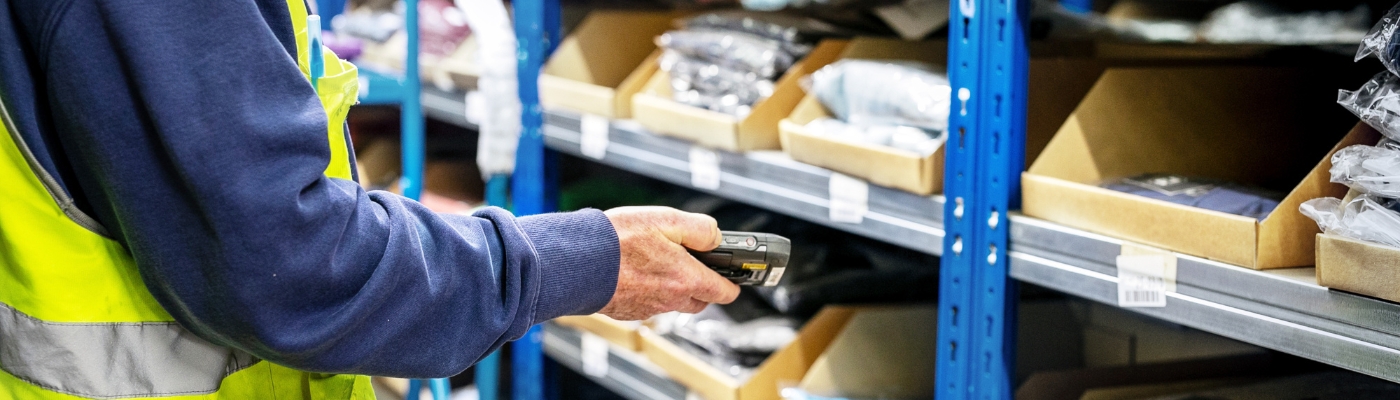
Our powerful code readers and handheld readers enable fast and reliable identification for both manual and automated picking processes. High-performance data collection increases the cost-effectiveness of order picking.
Your benefits with our order-picking solutions

Easy handling thanks to supercap
Reduced weight for comfortable, fatigue-free work

Battery life lasts an entire shift
Battery charge lasts for the entire shift without recharging
High-vis-tolerant detection
Optical sensors ensure stable processes even when used around high-vis vests
Reliable identification in order picking
Order picking is the process of collecting goods for customer or production orders. For this purpose, the goods have to be identified reliably and in a user-friendly manner at all times. Our code readers ensure that your orders are processed quickly, whether the goods are assigned to the respective order manually or automatically. Reliable and powerful identification increases the profitability of your order picking.
Click on the numbered applications to learn more about the respective sensor solutions.
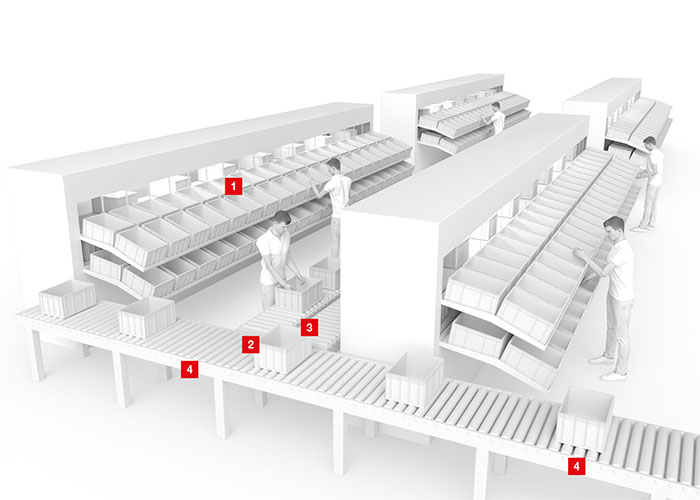
Applications in order picking
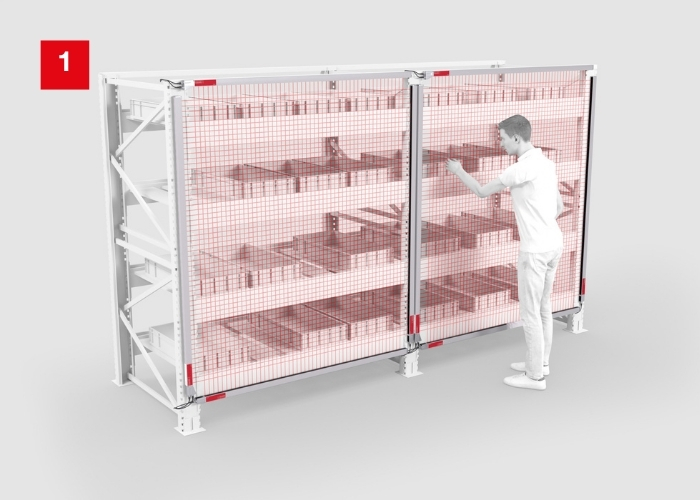
Detection of access (pick & place)
Requirement:
In order to detect from which compartment material has been removed, access to each compartment must be monitored.
Solution:
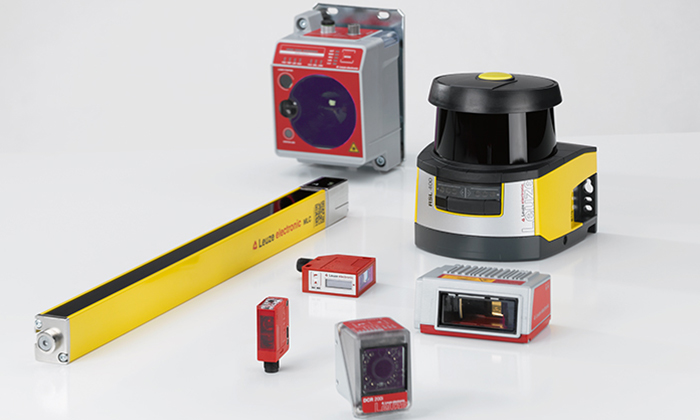
The CML 700i series measuring light curtains monitor large rack areas with measurement field lengths up to 2,960 mm and a resolution from 5 mm. The integrated interfaces make it easy to integrate the devices into various fieldbuses.

Mobile code reading
Requirement:
In order for goods to be assigned to a customer order, the goods code must be read in and transferred to the goods management system.
Solution:
The IT 1960 or IT 1472 series mobile bar code readers read all bar codes commonly used in warehousing and logistics. Depending on the application, versions with cable connection or radio transmission are available.
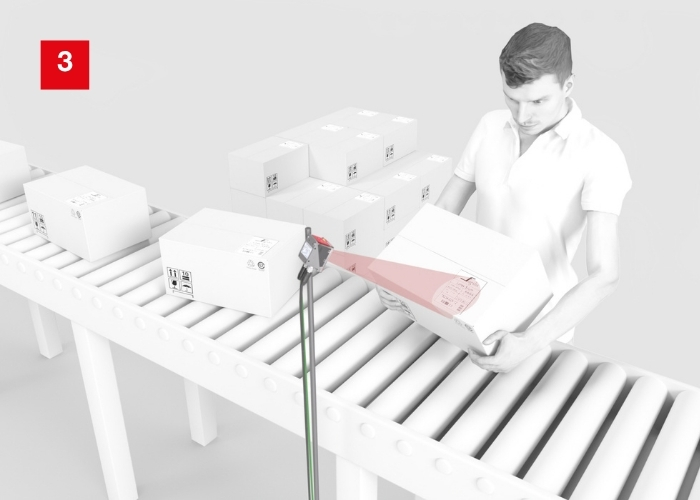
Stationary code reading
Requirement:
If the goods must be held with both hands for code reading, a stationary code reader must be used for reading the goods code.
Solution:
The compact, camera-based DCR 200i code reader reads both 1D- and 2D-codes. The device detects the codes by simply presenting them – no external activation is necessary. Standard interfaces such as PROFINET, EtherNet/IP and Ethernet-TCP/IP are available for fieldbus integration.